
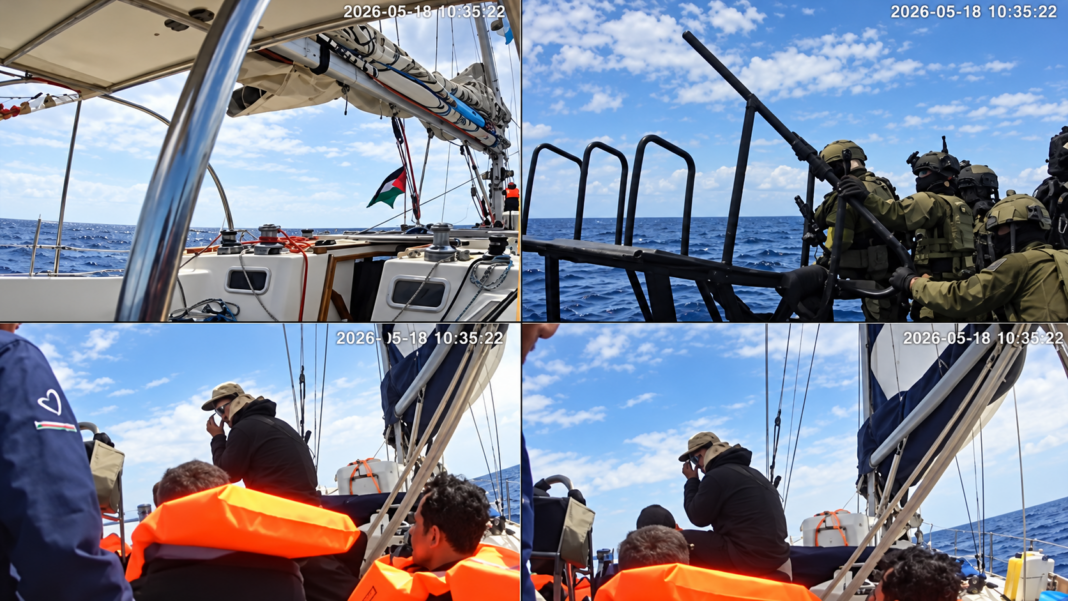

Turkish judges uphold arrest warrants against Israeli leaders, seek wider investigations into alleged genocide in Gaza and order inquiries into the mistreatment of humanitarian activists.
An Istanbul court has maintained arrest warrants against Israeli Prime Minister Benjamin Netanyahu and 34 other defendants accused of serious international crimes linked to Israel’s interception of the Global Sumud Flotilla, while opening the door to wider investigations into alleged genocide and crimes against humanity in Gaza.
At its first hearing on Friday, 23 October, the Istanbul 11th High Criminal Court upheld existing arrest warrants and measures relating to Interpol Red Notices against all 35 defendants. It also directed prosecutors to consider a new indictment examining Israel’s broader military actions against Palestinians beyond the interception of the humanitarian flotilla.
The proceedings represent another legal challenge to Israeli political and military leaders over their conduct in Gaza and the treatment of international activists attempting to deliver humanitarian assistance to Palestinians.
The defendants include Netanyahu, Defence Minister Israel Katz, Finance Minister Bezalel Smotrich, National Security Minister Itamar Ben Gvir, Heritage Minister Amichai Eliyahu, former Defence Minister Yoav Gallant and military Chief of Staff Eyal Zamir.
The indictment includes charges of genocide, crimes against humanity, unlawful deprivation of liberty, torment, property damage, aggravated robbery and the obstruction, hijacking or seizure of transport vessels.
Prosecutors are seeking aggravated life imprisonment alongside additional prison sentences ranging from 1,102 to 4,596 years for each defendant. These are penalties sought by prosecutors, not sentences imposed by the court.
The judges ordered existing arrest warrants to remain in force pending execution. However, Interpol Red Notices are requests for international police cooperation, not internationally enforceable arrest warrants, and countries cannot be compelled to make arrests.
One of the hearing’s most significant developments was the court’s decision to request prosecutorial consideration of a separate indictment addressing alleged genocide and crimes against humanity committed against Palestinians in Gaza.
The judges found that the existing indictment primarily concerned the interception of the Global Sumud Flotilla, while wider allegations involving Gaza’s civilian population were addressed only indirectly.
The court referred the matter to the Istanbul Chief Public Prosecutor’s Office for consideration under Turkish law, including provisions allowing certain international crimes to be investigated under specified conditions.
The decision does not constitute a finding of genocide or the filing of new charges. Prosecutors must first examine the evidence and determine whether further proceedings are warranted.
The court also ordered prosecutors to investigate individuals holding Turkish citizenship who were allegedly involved in abuses against Palestinians or detained flotilla activists.
During the hearing, one complainant testified that an Israeli soldier involved in her detention claimed to be from Yozgat, a city in central Türkiye.
Prosecutors were instructed to identify individuals mentioned in complainants’ statements and determine whether criminal action was justified.
Separately, the court referred evidence concerning 12 additional suspects, identified in submissions by the Global Sumud Flotilla’s legal team, for further investigation. The referrals do not establish criminal responsibility.
Flotilla participants described degrading treatment following their interception and transfer into Israeli custody.
According to testimony reported from the hearing, detainees alleged that Israeli personnel confiscated belongings, including women’s headscarves, conducted humiliating searches and subjected activists to intimidation, sleep deprivation and verbal abuse.
The allegations form part of the prosecution’s case and have not yet been established as judicial findings.
For the flotilla movement, the proceedings highlight concerns surrounding the treatment of civilians undertaking humanitarian missions to Gaza, where restrictions on essential supplies have intensified international scrutiny of Israel’s conduct.
The judges also instructed Turkish institutions to determine whether the defendants possess property or financial interests in Türkiye.
The inquiry covers real estate, bank accounts, company shareholdings, vehicles, aircraft and vessels.
However, the court did not order any immediate freezing or confiscation of assets. Decisions concerning possible asset restrictions and the formal designation of defendants as fugitives remain pending.
Several legal organisations, including MAZLUMDER, the Istanbul No. 2 Bar Association and the International Union of Jurists, were admitted to the proceedings.
The court also referred allegations concerning an earlier attack on the humanitarian vessel Conscience near Malta to prosecutors.
The Turkish proceedings follow separate legal action against Israeli leaders.
In November 2024, the International Criminal Court issued arrest warrants against Netanyahu and Gallant over alleged war crimes and crimes against humanity.
South Africa has separately pursued proceedings against Israel at the International Court of Justice under the Genocide Convention.
Although these cases involve different jurisdictions and legal processes, they underscore growing demands for accountability over Israel’s actions in Gaza.
The Istanbul court adjourned proceedings until 30 March 2027.
For Palestinians, the central question remains whether international legal mechanisms can move beyond allegations and arrest warrants towards enforceable accountability for alleged crimes committed against civilians.