
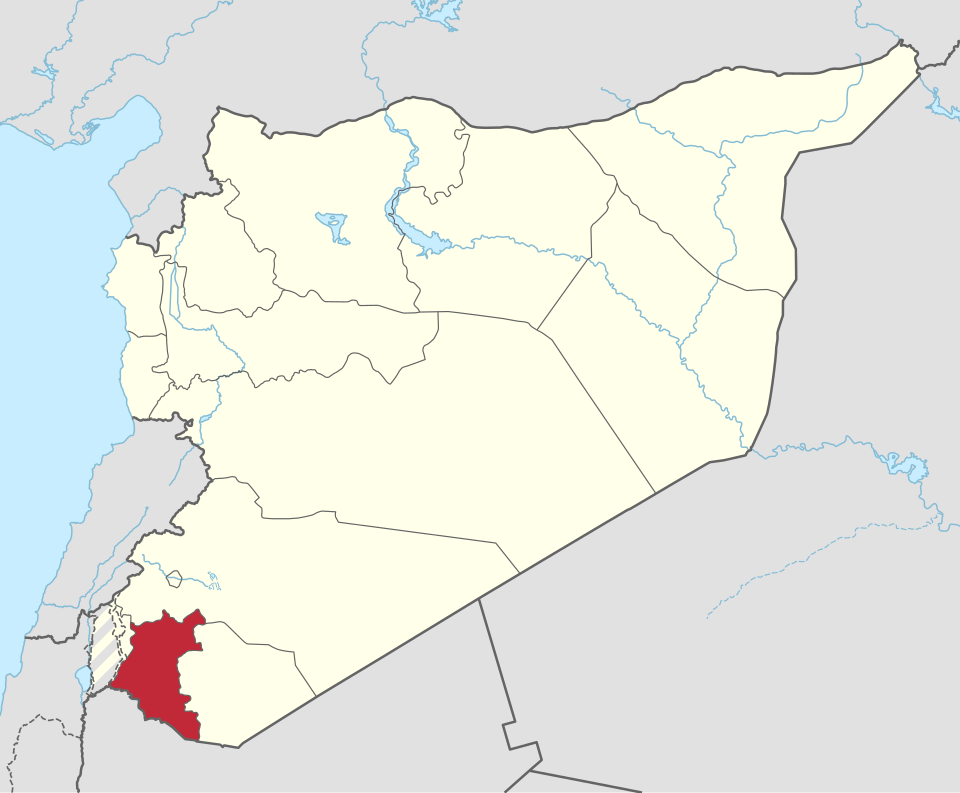

Jordanian airstrikes have killed at least seven people in southern Syria, including three children and a woman, after Amman launched retaliatory attacks over a deadly church shooting last week that left nine people dead.
The strikes on Monday, October 26, targeted several locations in Syria’s Daraa and Suwayda provinces, prompting Damascus to condemn the military operation and close its main border crossing with Jordan.
Jordan’s Armed Forces said its air force had targeted what it described as hideouts belonging to armed groups allegedly connected to Friday’s deadly attack on a Greek Orthodox church in Karak, southern Jordan.
The Jordanian military claimed the operation killed and wounded several militants and destroyed a number of their vehicles, although it did not identify the groups involved or provide evidence linking those targeted to the church shooting.
However, Syrian authorities reported civilian casualties, including women and children, raising questions over Jordan’s justification for the strikes.
Syrian civilians killed
According to Syria’s Civil Defence service, emergency crews responded to four locations struck by Jordanian aircraft in the countryside of Daraa and Suwayda.
Initial reports confirmed seven fatalities, including three men, a woman and three children.
Five members of one family were reportedly killed when an airstrike struck their tent in the village of Al-Tai in Daraa province. The victims included a man, his wife and three children.
Three other family members, including a child, were wounded.
Another strike reportedly killed an elderly man in Al-Shayyah, while an attack on a residential building in Shahba, Suwayda province, killed a 60-year-old man.
A separate strike hit a residential building in Muzayrib, Daraa province, without causing reported casualties.
Syrian health officials separately confirmed civilian deaths, while preliminary figures continued to emerge from the affected areas.
Syria rejects Jordan’s claims of coordination
Jordan’s military maintained that its operation had been carried out in coordination with the Syrian government.
However, Damascus categorically rejected that claim, insisting it had received no advance warning or notification of the strikes.
In an official statement, the Syrian government condemned the attacks, expressed solidarity with the families of those killed and announced an investigation into the circumstances surrounding the operation.
Syrian authorities also opened direct communication channels with Jordanian officials to address the incident.
The government emphasised the importance of respecting Syrian sovereignty and ensuring that any future security operations along the shared border are properly coordinated.
Following the strikes, Syria suspended passenger and commercial traffic through the Nassib border crossing, a major route connecting the two neighbouring countries.
Deadly church attack in Jordan
The Jordanian airstrikes followed a deadly shooting on Friday, October 23, when three gunmen attacked mourners attending a funeral at a Greek Orthodox church in Karak, approximately 90 kilometres south of the capital, Amman.
Nine people were killed and dozens wounded in the attack, which shocked Jordan’s minority Christian community.
On Monday, Jordanian security forces arrested three suspects, identified as two brothers and their brother-in-law, following an armed confrontation in the village of Al-Jadeeda.
Authorities said the suspects were injured during the confrontation and that weapons and ammunition had been recovered.
Jordanian officials have characterised the church shooting as an act of terrorism, although no organisation has publicly claimed responsibility.
King Abdullah vows harsh response
Jordan’s King Abdullah II pledged a forceful response to the church attack, ordering security authorities to pursue those responsible and review existing security arrangements.
The monarch also warned that those involved would face severe punishment under Jordanian law.
However, the subsequent airstrikes inside Syria have triggered a diplomatic dispute between the two countries, particularly over the reported killing of civilians and Jordan’s disputed claim that the operation had been coordinated with Damascus.
The incident has further exposed tensions along the Jordanian-Syrian border, with the Syrian government demanding respect for its sovereignty while Jordan maintains that its military operation targeted armed groups allegedly threatening its national security.


