
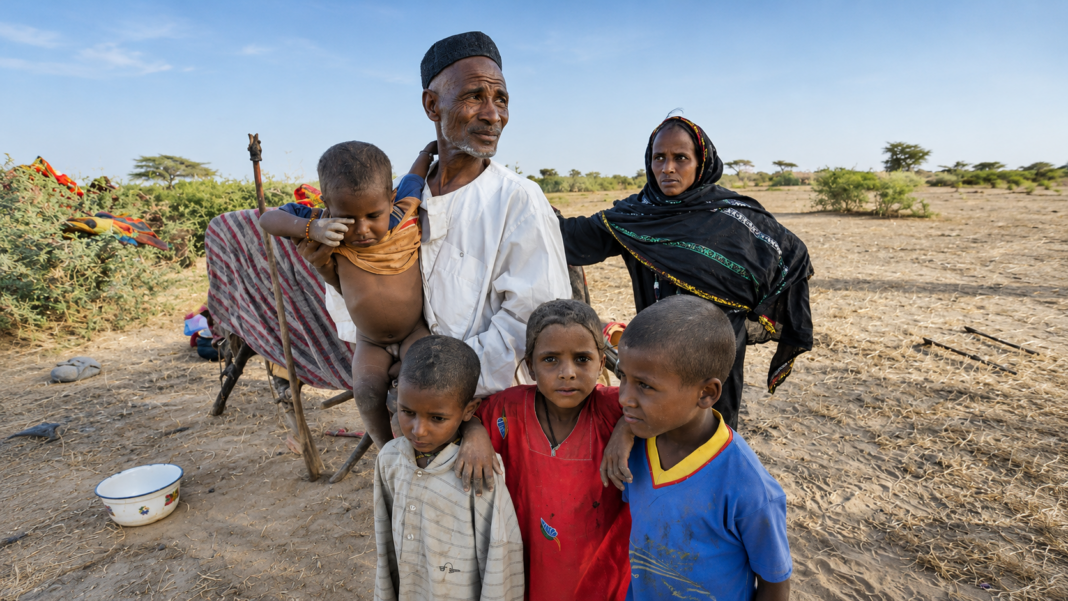

Mahamid Arab families who have lived in Niger for generations face an uncertain future as the government defends its security measures and Africa’s human rights body raises the alarm.
Mahamid Arab families living in Niger’s southeastern Diffa region have reportedly been given until the end of December 2026 to leave the country, following allegations that some members of the community are involved in illegal activities and have links to armed groups.
Reports of restrictions on access to water, education, healthcare and identity documents have raised concerns that an entire ethnic community could be punished for the alleged actions of some of its members.
Speaking to One Nation Media, independent Africa analyst Ayesha Kajee and author Maman Rabiou offered contrasting perspectives on the situation, highlighting the tension between national security and human rights.
Who are the Mahamid Arabs?
The Mahamid Arabs are an Arab community with historical roots in Chad and Sudan. Many Mahamid families have lived in Niger’s Diffa region for generations.
Kajee explained that many Arab communities across the Sahel have traditionally been nomadic herders, moving across national borders in search of water and grazing land or to escape drought and armed conflict.
Despite some Mahamid families being second- or third-generation residents born in Niger, Kajee said they have experienced discrimination for decades.
“The services provided to them have been discriminatory at times,” she said, explaining that the community has historically had limited access to essential services, including water, education and healthcare.
Disputes over nationality and citizenship have further contributed to tensions between the community and Nigerien authorities.
African rights body intervenes
On 6 November 2026, the African Commission on Human and Peoples’ Rights (ACHPR) sent a joint urgent appeal to Niger’s President, General Abdourahamane Tchiani.
In a declaration made public on 9 November, the Commission raised concerns over alleged violations of the Mahamid Arab community’s basic human rights, specifically restrictions on access to water, education, healthcare and identity documents.
African Perceptions reported that it had obtained a copy of an Interior Ministry instruction dated 7 October, numbered 002235, which allegedly ordered the closure of schools and borehole facilities, the withdrawal of identity documents and a requirement for community members to pay the full cost of healthcare.
If accurate, these measures would affect not only those accused of wrongdoing but entire families, including children, the elderly and the sick.
Niger’s security concerns
In a written response to One Nation Media (ONM), Maman Rabiou defended the measures taken by Nigerien authorities, arguing that they were necessary to protect the country’s population and maintain national security.
Rabiou explained that Diffa regularly faces terrorist threats and maintained that Niger’s actions were not motivated by ethnic discrimination.
“We are a united people that has never sought to discriminate against any of its own communities,” he said.
He compared Niger’s approach to that of France, the United States and Germany, where immigration laws allow authorities to deport foreign nationals who pose serious security threats.
He maintained that the measures were driven by the need to protect Niger’s territorial integrity rather than an intention to stigmatise a community.
However, his response did not directly address the alleged restrictions on basic services, nor did it clarify whether the departure instructions applied to individuals suspected of criminal activity or to the entire Mahamid community.
That distinction is central to the controversy.
Could discrimination worsen insecurity?
In contrast, Kajee argued that marginalising the Mahamid community could increase the very security threats Niger seeks to address.
She explained that discrimination creates frustration and resentment, leaving vulnerable communities more exposed to exploitation by armed groups, including Boko Haram and ISIS.
Kajee argued that providing equal access to essential services and ending threats of expulsion could help reduce this vulnerability.
Article 12(5) of the African Charter on Human and Peoples’ Rights prohibits the mass expulsion of foreign nationals targeting particular ethnic, racial, national or religious groups.
What can the Mahamid community do?
Kajee encouraged community leaders to educate vulnerable individuals, particularly young people, about the dangers of recruitment by armed groups seeking to exploit their circumstances.
She also emphasised the importance of resolving longstanding disputes between the Mahamid and neighbouring farming communities over access to water and grazing land.
Kajee encouraged communities to negotiate “peaceful coexistence and shared access to land, to grazing lands, to water resources” to improve safety and security for everyone in the region.
Islam condemns collective punishment
Islam emphasises individual accountability and teaches that innocent people should not bear responsibility for the wrongdoing of others.
Allah states in Surah Al-An’am (6:164): “And no bearer of burdens will bear the burden of another.”
While authorities have a responsibility to protect their citizens, this Islamic principle highlights the importance of distinguishing between individuals accused of criminal activity and innocent families who share their ethnic identity.
As the December deadline approaches, questions remain over the legal status of affected families and their access to basic needs and services.
Niger’s security concerns cannot be ignored, but neither can the rights and dignity of the people whose homes, livelihoods and futures are at stake.


