

The United Nations has formally ended its political mission in Somalia after more than three decades, marking a major shift towards Somali control over its political affairs amid continuing security challenges, electoral disputes and declining international assistance.
The United Nations Transitional Assistance Mission in Somalia (UNTMIS) ceased operations on Saturday, 31 October, following a two-year withdrawal process initiated at the request of the Somali government in 2024.
The closure brings an end to a succession of UN political missions that have operated in Somalia since 1995, supporting political reconciliation, governance, institution-building and efforts to restore stability following the country’s devastating civil war.
Under an agreement between Mogadishu and the UN, the mission’s responsibilities have been transferred to Somali government institutions, UN agencies and other bodies responsible for supporting security and development.
UN Secretary-General António Guterres welcomed the transition while emphasising the need for continued international support as Somalia confronts political instability, insecurity and worsening humanitarian conditions.
Somalia seeks greater political independence
The withdrawal follows years of tensions between successive Somali governments and the UN over the international organisation’s involvement in the country’s domestic political affairs.
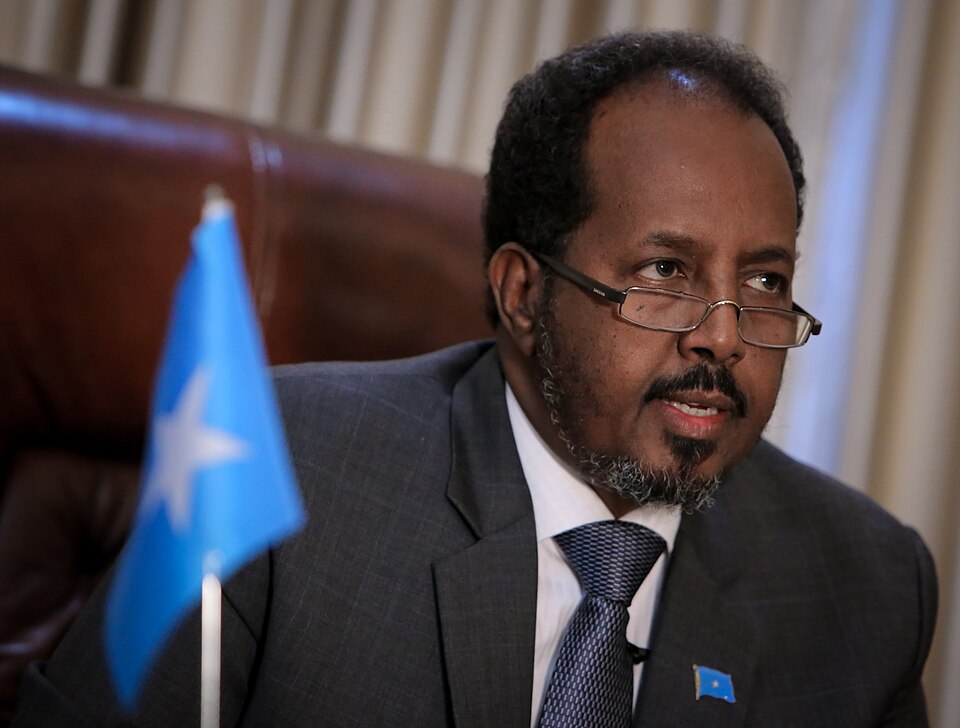
Somali authorities have repeatedly raised concerns about foreign interference, with President Hassan Sheikh Mohamud’s administration formally requesting the mission’s departure in 2024.
At a farewell ceremony in Mogadishu on 27 October, Deputy Prime Minister Salah Ahmed Jama described the closure as a significant national achievement, signalling Somalia’s determination to move beyond decades of externally supported political transition.
The government views the withdrawal as an opportunity to strengthen national institutions and assume greater responsibility for political decision-making, reconciliation and state-building.
However, the transition comes at a sensitive moment, with deep political disagreements threatening to undermine efforts to establish a stable political order.
Political divisions and Al-Shabaab insurgency
One of Somalia’s most pressing challenges concerns the dispute over constitutional amendments and the future of the country’s political leadership.
Opposition figures have rejected the government’s interpretation of constitutional changes that would allow President Mohamud and members of parliament to remain in office until 2027.
Relations between the federal government and several regional administrations also remain strained, complicating efforts to establish a unified approach to elections, governance and national security.
The UN mission previously played a role in facilitating negotiations between rival political leaders, particularly during disputes over electoral arrangements. Its departure leaves uncertainty over who will mediate future disagreements, with no equivalent replacement mechanism agreed.
President Mohamud has invited opposition leaders to participate in political talks, although major opposition groups have yet to confirm their involvement.
Meanwhile, the armed group Al-Shabaab continues its insurgency against Somali government forces, carrying out attacks and maintaining a presence in parts of the country.
Somali forces remain dependent on support from African Union troops as they attempt to regain and secure territory, particularly in areas where Al-Shabaab retains operational capabilities.
Aid cuts threaten humanitarian operations
The political transition is unfolding against a worsening humanitarian crisis, with declining international funding placing additional pressure on vulnerable communities.
Although UN humanitarian and development agencies will continue operating in Somalia, reductions in foreign assistance have already disrupted essential services.
In August, the UN children’s agency UNICEF reported that 205 health and nutrition facilities had closed because of funding cuts, undermining access to critical services for children and families.
Somalia continues to face food insecurity, displacement and the consequences of recurring droughts and floods, leaving millions dependent on humanitarian assistance.
The future of international security support is also uncertain.
African Union troops remain deployed alongside Somali forces, relying heavily on the United Nations Support Office in Somalia (UNSOS) for logistical assistance, including food, fuel, transport and medical services.
However, a US-backed proposal could see UNSOS close by December 2027, potentially creating further challenges for African Union operations and Somalia’s security forces.
The closure of UNTMIS therefore represents both a political milestone and a test of Somalia’s ability to manage its own affairs after decades of international involvement.
For Mogadishu, the immediate challenge will be translating greater national ownership into political stability, institutional capacity and lasting security.
Whether Somalia can achieve those objectives will depend on its ability to resolve internal political divisions, confront the continuing insurgency and maintain essential humanitarian and security support without the UN’s longstanding political mission.


