
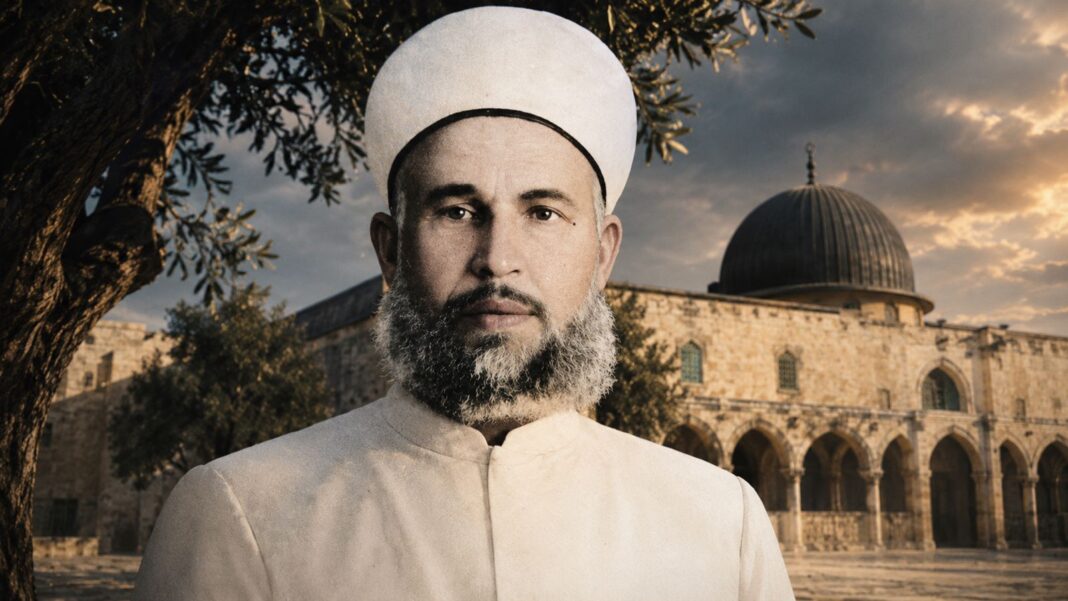

Ninety-one years ago today, in the wooded hills and caves near Jenin, Shaykh ʿIzz al-Dīn al-Qassām and a handful of companions faced a British force vastly larger than their own. Surrounded and called upon to surrender, they refused. For six hours, they held out as the fighting closed around them. Al-Qassām was killed by a bullet to the head, falling alongside men he had taught, inspired and led.
His death on 20 November 1935 brought a life of scholarship, service and sacrifice to an end. But the influence he left behind extended far beyond the hills where he fell, inspiring generations who would come to know his name.
Before that final morning, there had been years of teaching, organising and struggle. He had rallied support for Libya against the Italians, served in the Ottoman army and later resisted the French in Syria, then begun again in Palestine after being driven into exile. Wherever he went, his concern for the Muslims and his opposition to occupation went with him.
Today, many only know his name through Hamas’s armed wing and the al-Qassam rocket. His story, however, began decades earlier, in a coastal Syrian town, in the home of a teacher of the Qurʾān.
From Jabla to occupied Egypt
Born around 1882 in Jabla, south of Latakia, Muḥammad ʿIzz al-Dīn al-Qassām grew up in a household shaped by religious learning. His father, ʿAbd al-Qādir al-Qassām, taught children and served as a guide in the Qādirī Sufi tradition. It was within this environment that the young al-Qassām spent his formative years. Recognising his eagerness for knowledge, his father arranged for him to continue his studies at al-Azhar in Cairo.
Egypt was already under British occupation. At al-Azhar, alongside his study of Hanafi fiqh, tafsīr and the other religious sciences, al-Qassām encountered calls for Islamic revival and Muslim solidarity amid widespread opposition to foreign rule. Scholars and students debated the weakness of Muslim societies, how their countries might be freed and the responsibilities of the ulama. These discussions helped shape his understanding of the world, and he returned to Jabla carrying those concerns with him.
There, he took up teaching in his father’s school, helping children learn to read, write and memorise the Qurʾān. He became imam and preacher of al-Manṣūrī Mosque, where people gathered to hear his addresses. He undertook a campaign of social reform and religious revival that left a deep impression on the town, encouraging prayer and fasting and challenging the social ills and religious innovations he saw around him.
He was also remembered for his warmth, ready smile and good humour. Even in difficult times, he could laugh and reassure those around him.
His simplicity left its own impression: an official who came looking for him once found him sharing a modest lunch with the man who tended the furnace at the public bath. The respect he earned did not place him at a distance from ordinary people.
Then came news from Libya.
Libya: A responsibility beyond his own home
In September 1911, Italy invaded the Ottoman territories in what is now Libya, seeking a North African colony as the Ottoman state faced mounting pressure. Libyans resisted the invasion, supported by Ottoman officers and soldiers.
Across the Mediterranean, al-Qassām organised demonstrations in Jabla. He urged people to contribute and collected donations to support the Libyan mujahidin. But he was not content simply raising money. He wanted to join the resistance in person.
By June 1912, he was calling for volunteers to accompany him. The expedition numbered as many as 250 men, and arrangements were made and donations collected to support the families they would leave behind. They travelled to Alexandretta, expecting passage to Libya through Alexandria.
For more than a month, they waited.
The passage never came. With war approaching in the Balkans, the Ottoman government reached terms with Italy in October 1912 and ordered the volunteers home. Some of the money collected went towards establishing a school, while the remainder was retained for later needs.
Al-Qassām returned to Jabla, but the concern that had taken him to Alexandretta remained. Muslim lands were under attack. He understood that he had a religious responsibility to respond and rally other Muslims to their defence.
Military Preparation and Service in the Ottoman Army
When the First World War broke out, al-Qassām volunteered for service in the Ottoman army. The ʿulamāʾ were usually given clerical duties such as registering recruits, but the Shaykh insisted on a military posting. He was sent to a camp south of Damascus, where he received military training and served as the garrison’s religious guide.
Al-Qassām remained loyal to the Ottoman Caliphate and did not join the Arab Revolt. His concern was for the wider Muslim community as more of its lands came under threat from European powers. The collapse of the Ottoman Caliphate would soon bring him into direct confrontation with those powers.
Syria: Jihad against the French occupation
With the Ottoman Empire’s defeat, French forces advanced into Syria, and al-Qassām committed himself to resisting them.
He returned home to Jabla and immediately began organising and preparing able-bodied men to resist. He sold his family home and purchased twenty-four rifles with the proceeds to help arm his militia. He moved with his family to al-Ḥaffah, in the mountains inland from the coast, and took part in the resistance in the Jabal Ṣahyūn region.
From a base near Zanqufah, he and his companions resisted the French advance. His following included students and relatives who had known him before the fighting began. He trained his men in military tactics while continuing to teach them the Qurʾān and explain its meanings. He attended to their spiritual preparation alongside their physical training, seeking to strengthen the faith and discipline that would sustain them through the hardships of jihad.
As French pressure increased and support diminished, al-Qassām moved towards Aleppo and joined the resistance there.
The French also sought to persuade him to abandon the struggle. Through an intermediary, they offered him a safe return to Jabla and an appointment as a qāḍī under their administration if he laid down his arms. The shaykh flatly rejected the offer. He would not betray his religion and enter the service of the occupation he had fought to expel.
As the resistance faltered and French control tightened, a French military court sentenced him to death in absentia.
He left Syria with a small group of companions. Accounts of the escape describe a journey through Jisr al-Shughūr to Beirut, then to Sidon and by sea to Acre. Around 1920–21, he settled in Haifa. His family joined him later.
His departure from Syria did not mean surrender to occupation. In Palestine, he began gathering people around him once more, rebuilding his strength and preparing to continue the struggle.
Palestine: British rule and the Zionist project
Palestine was already under British authority when al-Qassām arrived, and the Zionist project was advancing with British support. Immigration and settlement were being facilitated by the occupying administration.
Much of the established Palestinian leadership favoured petitions, delegations and negotiations with British officials over direct confrontation with British rule. They hoped Britain could be persuaded to restrain Zionist expansion and protect Palestinian rights. Rivalries between prominent families and struggles for leadership further divided their efforts.
Al-Qassām regarded that reliance on Britain as misplaced. British occupation itself had to be resisted, and it could not be separated from the Zionist project it was helping establish. Appealing to the occupying power to halt the expansion it supported offered no path to liberation. Both the British and the Zionists had to be confronted.
He began the patient work of building a movement capable of doing so.
Haifa: A movement rooted among the people
He taught at al-Burj School and became imam and khaṭīb of al-Istiqlāl Mosque. His sermons spoke boldly against British rule. He also established night classes for working men who had never had the opportunity to learn to read.
Haifa was growing into a busy port and industrial centre. Among the men arriving in search of wages were farmers displaced by Zionist expansion. Families who had lived from the soil now crowded into poor neighbourhoods while men sought work on the docks, railways and building sites.
Al-Qassām came to know those families. He visited their homes, listened to their difficulties and taught them. Through these visits, he learned how they had lost their livelihoods and how hard they were struggling to support their families in the city.
He also reached beyond the regular congregation. Among the workers he approached were men with little religious commitment. He spent time with them, encouraged repentance and called them towards religious observance and participation in the struggle against occupation.
His work as a marriage registrar took him into the villages around Haifa. He met people at weddings, in mosques and in their homes, building relationships that would endure. He also helped establish the Haifa branch of the Young Men’s Muslim Association and became its president.
Al-Qassām understood his religious responsibilities to extend beyond the mosque. Defending the community against occupation was part of the duty he preached.
He challenged the expenditure of religious funds at a time when the community faced growing danger. He urged that waqf money be directed towards arms rather than mosque repairs, and criticised lavish decoration while Muslims lacked the means to defend themselves.
During the unrest of 1929, rumours spread that al-Istiqlāl Mosque might be burned. Some local notables proposed seeking British protection. Al-Qassām refused, insisting that Muslims must take responsibility for defending their community and its mosques.
His reported response was unequivocal: “Our blood protects Muslims and their mosques, not the blood of the occupiers.” The British were themselves occupiers whose rule had to be resisted.
Building a clandestine resistance
Al-Qassām began building his movement among the people he knew best: workers, displaced farmers, artisans and villagers. They heard his sermons, attended his lessons and welcomed him into their homes. His approachable nature meant that people regularly stopped him for advice and religious guidance.
Among those who gathered around him, he noticed men who responded earnestly to his teaching. He devoted more time to them, visiting their homes and helping them acquire the religious knowledge many had never had the opportunity to study. Railway workers, dockworkers, small shopkeepers and artisans became his students and, over time, his companions in resistance.
From these relationships grew a clandestine network of separate circles. Al-Qassām repeatedly stressed the importance of secrecy, with members generally knowing only those in their own circle. He taught his followers about jihad, its purpose and the responsibilities it placed upon them. He stressed faith, sincerity and good character, teaching that military strength alone did not determine the outcome of a struggle. His lessons also addressed sacrifice and the religious meaning of martyrdom.
He devoted himself to their religious and moral formation. Learning, worship and personal conduct remained central to their preparation. His followers recalled being encouraged to carry a Qurʾān and recite it whenever they had time, and to maintain dhikr and supplication.
Military preparation accompanied this religious instruction. Former Ottoman servicemen contributed their experience, while training in the mountains accustomed the men to difficult conditions. His companions remembered him as demanding, expecting endurance and discipline from those who joined him.
The movement gradually spread beyond Haifa through his journeys and his followers’ connections with their home villages.
This was a movement built from below. Its strength lay among men with little wealth or influence, many of whom had experienced dispossession themselves. They contributed from their wages and savings. Household possessions and wives’ jewellery were sold to help purchase arms for the resistance.
Al-Qassām also concerned himself with their livelihoods. Accounts describe him encouraging farmers to cooperate in growing and distributing crops. He secured land in the Beisan valley that a trusted companion cultivated, intending its income to help purchase weapons for the movement. Al-Qassām himself joined in planting during the summer.
During the early 1930s, members of these networks carried out attacks around Haifa and nearby settlements.
The attacks brought investigations and arrests, but the authorities struggled to uncover the full organisation behind them. Al-Qassām himself came under suspicion and was questioned without the police securing sufficient evidence to convict him.
His following continued to grow. Yet he resisted pressure to announce an uprising before he believed preparations were complete. After the violence of 1929, he had urged patience when others wanted immediate action. He wanted a movement capable of sustaining a struggle and knew how much remained to be done.
By 1935, expanding settlement, increasing immigration and the discovery of an arms shipment at Jaffa had deepened the sense of approaching danger. British surveillance was tightening around him. He feared that years of preparation might be brought to an end by arrests before the movement could act.
The final stand near Jenin
In November, al-Qassām left Haifa with a small group of his known associates and moved into the countryside near Jenin. There, they sought support among villagers and continued preparing for a wider struggle.
The final confrontation came before those plans could mature.
Members of the group became involved in an unplanned encounter with a Mandate police patrol near ʿAyn Ḥārūd and killed Moshe Rosenfeld, a Jewish sergeant serving in the force. The encounter set off an intensive search.
Another clash followed, killing one of his followers. The remaining men divided into two groups. Al-Qassām’s party moved towards Yaʿbad.
On 20 November, he and around ten companions were surrounded in the wooded hills near Shaykh Zayd by a British-led force estimated at four hundred men. The uprising he had envisaged had not yet taken shape. Now, vastly outnumbered, he faced the British with only a small band beside him.
He refused to surrender.
After several hours of fighting, al-Qassām and several companions lay dead. Others were wounded or captured.
But the confrontation that cut short his plans set in motion consequences reaching far beyond his small organisation.
A death that helped ignite a revolt
News reached Haifa, and the city went into mourning. The following day, shops and businesses closed. Thousands gathered for the funeral. The exile who had arrived from Syria was carried through a city where he had spent roughly fifteen years teaching, preaching and mobilising its people.
The absence of leading political figures angered the mourners and drew criticism in the press. Akram Zuʿaytir challenged the British description of the dead as bandits and addressed al-Qassām in words that captured the effect of his death:
“But, by Allah, today you are more eloquent than when you were alive.”
People who had never attended his lessons were now speaking about his life. Prayers were held for him and his companions beyond Haifa. His death brought the struggle into homes and gatherings far beyond the circles he had personally reached.
Al-Qassām’s death became a catalyst for the revolt that erupted in 1936. In the months after his killing, his followers continued organising and carrying out attacks, while new groups took shape. The struggle increasingly shifted from the petitions and negotiations of established elites towards the grassroots mobilisation he had spent years cultivating among workers, farmers and villagers.
His movement had given ordinary people a direct role in the fight against British rule. They could organise, resist and help shape their own future, rather than wait for political leaders to negotiate on their behalf. Men who had attended his lessons and prepared alongside him went on to play important roles in the wider revolt.
Later Palestinian movements drew upon his memory, and his name remains present in the conflict today, as does the legacy of the grassroots resistance he helped build.
A memory that endures
Al-Qassām was buried at Balad al-Shaykh, outside Haifa. Even in death, his memory has remained a source of unease for Israeli leaders. In 2025, nine decades after he fell fighting the British, Itamar Ben-Gvir called for the destruction of his grave.
His life brought together scholarship, worship, religious revival, service and jihad. The responsibilities he recognised towards the Ummah followed him wherever he went. In Jabla, they took him from his classroom to an attempted expedition for Libya. In Syria, they cost him his home and drove him into exile. In Palestine, they led him into the homes of displaced farmers and working men, and eventually to his final stand in the hills near Jenin.
He knew disappointment, setbacks and displacement. He lost his home and was forced from his country. Still, he continued teaching, organising and fighting. The demands of his faith would not allow otherwise.
Ninety-one years later, the Ummah still suffers occupation, dispossession and division. Al-Qassām answered the crises of his time through scholarship, service and jihad. Remembering him should awaken in us the same refusal to remain indifferent: to devote our knowledge, wealth and effort to the oppressed, and to act even when doing so demands sacrifice.


