
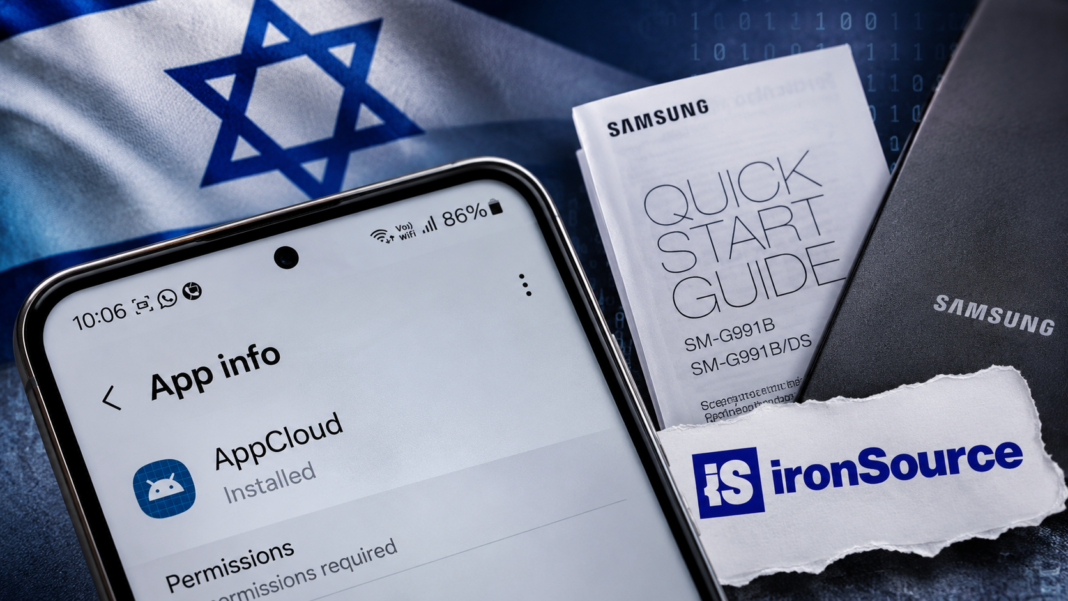

Samsung came under scrutiny after an investigation revealed that software developed by an Israeli-founded company was pre-installed on certain smartphones, raising concerns about digital surveillance.
From private conversations and family photographs to banking details and live locations, smartphones hold some of our most sensitive personal information. But how many consumers know what applications are installed on their phones, what information they collect and who has access to it?
In an interview with One Nation Media, cybersecurity analyst Amaan Flashman raised concerns about the risks associated with pre-installed applications and the lack of awareness among consumers when granting access to their personal information.
“You’re not actually fully aware of the application’s capabilities,” he said.
The hidden app on your Samsung
In February 2025, SMEX, a non-profit organisation advocating for digital rights, published an investigation into AppCloud, an application pre-installed on certain Samsung Galaxy A and M series smartphones sold across West Asia and North Africa.
The application was developed by ironSource, an Israeli-founded technology company acquired by American software company Unity Technologies in 2022. Its intended purpose is to recommend and facilitate the installation of additional applications.
However, SMEX raised concerns over the collection of sensitive information, including biometric data and IP addresses. The application is also reportedly difficult to uninstall and may reappear following software updates.
In May 2025, SMEX addressed an open letter to Samsung, demanding greater transparency over its data collection practices and calling on the company to reconsider pre-installing the software.
Is there a bigger agenda?
Speaking about the software’s Israeli origins, Flashman expressed concerns about a potential surveillance agenda involving the monitoring of people’s movements and communications.
“They want to control every single thing, every single communication we do, every single step we take,” he said.
He also referenced navigation applications such as Waze, which was founded in Israel and later acquired by Google, questioning how location data could potentially be used beyond its intended purpose.
“But we don’t know what their hidden agenda is on knowing where your location is constantly and monitoring your every move,” he said.
What happens to your personal information?
Flashman explained that while companies may collect personal information for legitimate business purposes, sensitive information falling into the wrong hands could leave individuals vulnerable to fraud, identity theft and other criminal activities.
“You’d see all this data being exfiltrated from big companies within South Africa and internationally based, where the data is actually sold on the dark web for malicious purpose and malicious intent,” he said.
For South Africans, the controversy also raises questions about compliance with the Protection of Personal Information Act (POPIA), which regulates the collection, processing and protection of personal information. While the SMEX investigation focused on West Asia and North Africa, it raises broader questions about digital privacy and the protection of South African consumers’ personal information.
Samsung responds
In November 2025, Samsung responded to the controversy in a statement to technology news publication SamMobile, saying it takes the protection of users’ data “very seriously” and operates “in strict compliance with local laws and regulations”.
Samsung maintained that customers have control over their personal information. However, its response did not specifically detail what information AppCloud collects, where it is transferred or why the application is so difficult to uninstall.
Privacy from an Islamic perspective
Islam strongly condemns spying and the invasion of another person’s privacy. In Surah Al-Hujurat (49:12), Allah says: “And do not spy, nor backbite one another.”
Although this verse was revealed long before the digital age, its principles remain relevant today. Secretly monitoring someone’s movements, accessing private conversations or collecting sensitive information without lawful justification raises ethical concerns about violating an individual’s privacy.
How can you protect yourself?
Broader research suggests Samsung users can check whether AppCloud is installed by opening Settings, selecting Apps and searching for AppCloud. If the application appears, users can review its permissions and disable it if the option is available.
Flashman also encouraged consumers to read terms and conditions, regularly review application permissions and restrict access to sensitive information to trusted applications.
We spend thousands of rands on smartphones and entrust them with some of our most private information. But do we really know what is on our phones and who could be watching?


