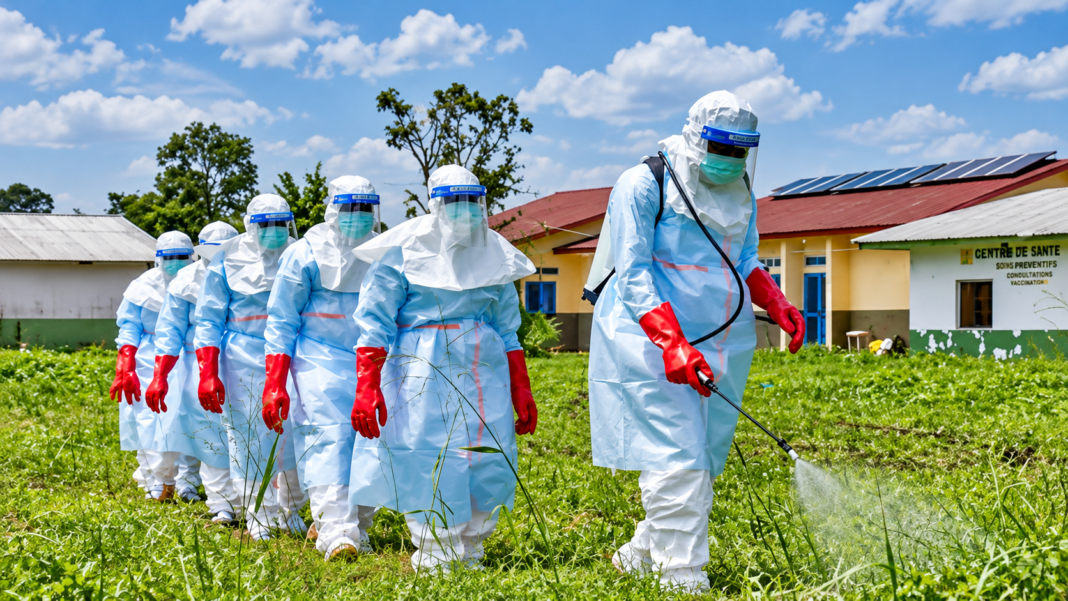

Nigeria has confirmed an imported Ebola case in its capital, Abuja, prompting an emergency public health response amid a deadly outbreak that has claimed thousands of lives across Central Africa. Health authorities have intensified surveillance and contact tracing, while the crisis has renewed concerns over fragile healthcare systems, cross-border transmission and the continent’s preparedness for infectious disease emergencies.
Ebola remains one of Africa’s most devastating infectious diseases, responsible for thousands of deaths, overwhelmed hospitals, economic disruption and lasting trauma in affected communities.
Nearly five decades after the virus was first identified, recurring outbreaks continue to expose weaknesses in healthcare systems and challenge governments’ ability to respond effectively to public health emergencies.
The latest outbreak, declared in the Democratic Republic of the Congo (DRC) in May 2026, has raised fresh concerns about preparedness across the continent.
The Bundibugyo virus responsible for the outbreak has also affected Uganda and Kenya, while Nigeria’s confirmation of an imported case on 20 October has highlighted the importance of early detection, international cooperation and effective disease surveillance.
Uganda declared its outbreak over in August, but transmission has continued elsewhere.
According to the World Health Organization (WHO), the DRC had recorded 9,704 confirmed cases and 4,687 deaths as of 20 October. Kenya had reported nine cases, including one death, while Nigeria confirmed its first imported case in Abuja.
Nigerian authorities have launched an emergency response, identifying and monitoring 44 contacts as health officials work to prevent further transmission.
Although there is currently no evidence of sustained local transmission in Nigeria, the case has reinforced the need for vigilance, particularly in countries with extensive international travel links.
A history of deadly outbreaks
Ebola was first identified in 1976 following outbreaks in what are now South Sudan and the Democratic Republic of the Congo, then known as Zaire.
The disease takes its name from the Ebola River near the site of the outbreak in the DRC.
Since then, outbreaks have occurred periodically, particularly in Central and West Africa.
Several viruses can cause Ebola disease, including Ebola virus, Sudan virus and Bundibugyo virus. These viruses differ, meaning vaccines or treatments developed for one type may not protect against another.
The deadliest recorded Ebola epidemic occurred between 2014 and 2016, when the disease devastated Guinea, Liberia and Sierra Leone.
The crisis resulted in more than 28,000 reported cases and over 11,000 deaths, making it the largest recorded Ebola epidemic.
Nigeria and several other countries also experienced imported cases or transmission associated with the epidemic.
The outbreak exposed serious weaknesses in disease surveillance, hospital preparedness and emergency coordination. It also demonstrated how quickly infectious diseases can cross international borders when cases are not identified and contained promptly.
The human cost of Ebola
Ebola’s devastating impact extends far beyond mortality figures.
The disease can cause fever, fatigue, muscle pain, vomiting and diarrhoea. Severe cases may involve complications affecting multiple organs, while some patients experience internal or external bleeding.
The average case fatality rate across Ebola outbreaks has been approximately 50%, although this varies depending on the virus, outbreak conditions and access to medical care.
Early supportive treatment, including rehydration and the management of complications, can significantly improve a patient’s chances of survival.
Behind these statistics are families losing parents, children, caregivers and breadwinners.
Survivors may experience prolonged physical and psychological difficulties, while some face discrimination, stigmatisation and social isolation.
Fear can also disrupt everyday life. Communities may avoid hospitals, hesitate to care for sick relatives or become suspicious of public health workers.
Misinformation can further undermine efforts to contain the disease.
Traditional burial practices can present additional risks because direct contact with the body of someone who has died from Ebola can transmit the virus.
Authorities must therefore work closely with families, religious leaders and traditional institutions to ensure that burials are conducted safely and with dignity.
The economic consequences can be equally devastating, disrupting markets, transport, trade and employment, particularly in communities where families depend on daily earnings.
How Ebola spreads
Ebola is primarily transmitted through direct contact with the blood or other bodily fluids of an infected person who has developed symptoms.
Transmission can also occur through contaminated objects and direct contact with the body of someone who has died from the disease.
The virus is believed to circulate naturally in animal populations, with fruit bats considered likely natural hosts. Humans can become infected through contact with infected wildlife.
Unlike measles, Ebola is not generally transmitted through the air. According to the WHO, infected individuals cannot transmit the disease before developing symptoms.
Rapid diagnosis, isolation, contact tracing and infection prevention are therefore central to controlling outbreaks.
Healthcare workers face particular risks when protective equipment is inadequate or established safety procedures are not followed.
Why the 2026 outbreak matters
The current outbreak presents particular challenges because the Bundibugyo virus differs from the Zaire ebolavirus responsible for the devastating 2014–2016 epidemic.
Although approved vaccines and specific treatments are available for Ebola disease caused by Zaire ebolavirus, there are currently no approved vaccines or specific treatments for Bundibugyo virus disease.
This makes early detection, supportive medical care, infection prevention and effective contact tracing especially critical.
The outbreak’s spread beyond the DRC also demonstrates the importance of cross-border surveillance and international cooperation.
Nigeria’s imported case does not automatically indicate widespread local transmission. However, it requires authorities to establish the patient’s exposure history, monitor contacts and investigate any possible additional infections.
The patient, a woman who had recently travelled from Uganda, developed symptoms on 7 October and sought medical care in Abuja on 11 October.
Laboratory testing confirmed Bundibugyo virus disease on 20 October. She remains in isolation and is receiving medical care.
Investigations are continuing to establish the likely source of infection and reconstruct her travel and exposure history.
Fragile health systems and poverty
The severity of Ebola outbreaks is shaped by conditions extending far beyond the virus itself.
In communities affected by poverty, conflict and displacement, access to hospitals, laboratories, clean water and trained medical personnel may be severely limited.
Insecurity can prevent health teams from reaching affected populations, while delays in diagnosis allow transmission to continue undetected.
These challenges are particularly significant in parts of the DRC and Nigeria, where prolonged conflict and humanitarian emergencies have placed additional pressure on already strained public services.
Ebola outbreaks can also disrupt routine healthcare.
When hospitals become overwhelmed or people avoid medical facilities out of fear, maternal care, childhood vaccination programmes and treatment for other illnesses may suffer.
Strengthening healthcare infrastructure is therefore essential not only for containing Ebola but also for protecting communities against future infectious disease emergencies.
Nigeria’s experience with Ebola
Nigeria previously confronted Ebola in 2014 after an infected traveller arrived in Lagos from Liberia.
Health authorities quickly identified the infection and initiated isolation, contact tracing and other containment measures.
The country recorded 20 cases, including eight deaths, before being declared free of Ebola transmission in October 2014.
The response demonstrated how coordinated action, trained disease investigators, effective laboratory services and public cooperation could contain a dangerous outbreak, even in a densely populated country with extensive international travel links.
Nigeria’s latest imported case presents another test of the country’s preparedness.
The response requires close coordination among federal and state health authorities, hospitals, laboratories and international partners.
Clear public communication is equally important to prevent panic, counter misinformation and ensure that people who may have been exposed seek appropriate medical advice.
Community trust and international cooperation
Ebola cannot be contained through medical interventions alone. Community participation and public trust are equally essential.
Religious leaders, traditional rulers and local organisations can help communicate public health guidance in familiar languages and culturally appropriate ways.
Their involvement is particularly important when authorities need communities to modify caregiving practices or adopt safer burial arrangements.
For Muslim communities, the Islamic principle of protecting human life provides an important foundation for encouraging preventive measures, responsible conduct and cooperation with healthcare professionals.
Mosques, Islamic institutions and community leaders can play a valuable role in spreading accurate information, discouraging stigmatisation and supporting affected families.
Survivors must also receive medical follow-up and social support rather than face discrimination or exclusion.
At the international level, governments and public health organisations must cooperate on disease surveillance, laboratory testing, research and emergency preparedness.
Investment in vaccines, treatments, protective equipment and trained healthcare workers remains vital, particularly for Ebola virus types without approved vaccines or specific treatments.
Crucially, preparedness must continue between outbreaks rather than depend entirely on emergency funding once infections have already spread.
Beyond the immediate crisis
Ebola’s history in Africa demonstrates both the devastating consequences of delayed responses and the effectiveness of coordinated public health action.
For affected communities, the immediate priorities remain early diagnosis, treatment, protection of healthcare workers, contact tracing and access to accurate information.
For governments, the longer-term challenge is building resilient healthcare systems capable of detecting and containing infectious diseases before they develop into major emergencies.
Nigeria’s latest case is a reminder that no country can afford complacency in an increasingly interconnected world.
However, an imported case does not necessarily lead to a wider epidemic when authorities respond promptly and effectively.
Ultimately, reducing Ebola’s devastating toll will require sustained investment, scientific cooperation, community trust and stronger healthcare systems across Africa.
The objective must not simply be to end each outbreak, but to ensure that African communities are better equipped, better informed and better protected when the next threat emerges.