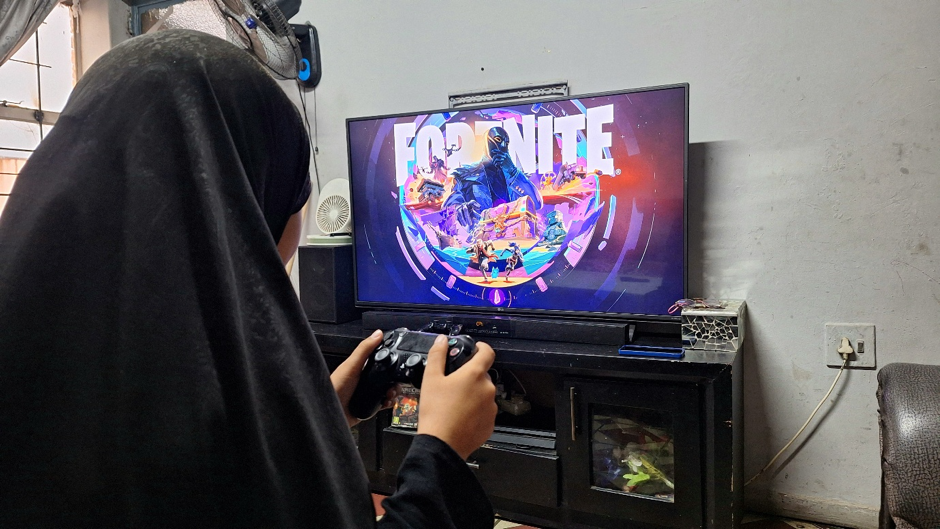

From exposure to inappropriate content and online predators to historical distortions and competing moral values, video games present a range of challenges for Muslim parents raising children in an increasingly digital world. Understanding what children play, who they interact with and the worldviews they encounter is an important part of the Islamic responsibility of raising and protecting children, writes Aitzaz Ahmed.
A child can start a video game with school friends and end up in a chat with someone they have never met. For parents, the questions go beyond screen time and violence. What can children see? Who can contact them? And what does the game reward or encourage them to accept as normal?
For Muslim families, guiding children through these choices is part of an amanah (trust) from Allah, which calls for protection, care and attention to their spiritual, moral and intellectual upbringing.
Online predators and the dangers of unrestricted communication
Many parents will recognise names such as Fortnite, Roblox and Call of Duty. However, a familiar name tells parents little about who can contact their child during play.
In US lawsuits involving Roblox and Discord, plaintiffs allege that adults made contact with them on Roblox when they were children and subsequently moved conversations to Discord.
Roblox says its chat features require age checks where available and that parents can manage communication settings through a linked account.
The cases raise an important question for gaming companies as well as families: how much protection is built in before a parent changes a single setting?
Before a child starts playing online, parents should check who can send friend requests or private messages and whether voice or text chat can be limited to people the child knows.
Parents should explain what to do if someone asks their child to keep a conversation secret, share personal information or move to another app. Children should know they can tell a trusted adult straight away, even if they have already replied.
Beyond age ratings: What are games teaching children?
Parents who check a film’s age rating can apply the same care to video games. South Africa’s Film and Publication Board uses age classifications and consumer advisories to help families understand what a game contains.
Parents should check both before looking separately at the game’s online features. A game’s storyline and its multiplayer chat can raise different concerns.
Grand Theft Auto VI, released on 19 November 2026, carries a PEGI 18 rating. Its popularity may explain why a child asks to play it, but the rating gives parents a clear basis for their decision.
However, age classifications alone do not necessarily address the religious and moral concerns of Muslim parents. A game deemed age-appropriate by a regulatory body may still contain themes or reward behaviour that conflicts with Islamic teachings.
It is worth looking at what a game asks players to do and which actions help them advance. This can lead to a conversation about how the choices rewarded in a game sit alongside the Islamic values children are learning at home.
Historical revisionism and the portrayal of Muslims
Video games create environments that can shape how players view different cultures, communities and historical periods. While some games reinforce stereotypes or present controversial interpretations of historical events, others approach their subject matter with greater cultural sensitivity and historical accuracy.
For example, in Call of Duty: Modern Warfare (2019), players travel through the fictional Middle Eastern country of Urzikstan, where the portrayal of local communities and military conflict raises questions about how Western entertainment depicts the region.
A mission titled “Highway of Death” generated considerable controversy for depicting a fictional Russian attack that drew parallels with the real-life US-led bombardment of retreating Iraqi forces in 1991. Critics accused the game of historical revisionism and shifting responsibility for the attack away from the United States, although the game’s developers defended the fictional narrative.
Another game, Assassin’s Creed Mirage, takes a different approach to portraying Muslim history and civilisation.
Set in ninth-century Baghdad during the Abbasid Caliphate, the game explores a period widely referred to as the Islamic Golden Age. Players can hear the adhan echoing across the city and access historical information about the House of Wisdom, Islamic science, architecture and culture.
While such portrayals can introduce younger generations to the achievements of Islamic civilisation, Muslim parents should also encourage their children to understand that its greatness cannot be measured solely by scientific and technological advancements.
From an Islamic perspective, the achievements of Muslim civilisation must also be understood in relation to its religious, intellectual, moral and societal foundations.
Comparing titles such as these gives parents an opportunity to discuss the different perspectives presented through video games, how historical events can be reinterpreted and how easily entire communities can be reduced to stereotypes.
Establishing boundaries in Muslim households
Two Muslim parents who spoke to One Nation Media (ONM) reflected on their experiences of managing video games in their household, the boundaries they have established and the impact gaming has had on their children.
While they were happy to see their children enjoying video games, they were also interested in how this form of entertainment could translate into real-world activities and experiences.
One positive development they observed was their children becoming more interested in football after years of playing FIFA, encouraging them to spend more time outdoors playing the sport.
However, the parents acknowledged that not all games are suitable for children, particularly those featuring violence and other mature themes.
They adopted a firm stance when their children requested games that were popular among their friends. If they determined that a game was not age-appropriate, their decision was non-negotiable.
This included disagreements over games such as PUBG, whose violent themes the parents were uncomfortable exposing their children to. They viewed determining which games their children could play as part of their parental responsibility.
Over time, the parents established rules to ensure that important responsibilities, including salaah and homework, were fulfilled while allowing their children sufficient time for recreation.
They also recognised that video games provide children with an opportunity to unwind and have fun. Living in a suburban area where their children cannot always play outdoors freely, they acknowledged the value of gaming as a form of entertainment, provided that their children understood and prioritised their responsibilities.
Gaming, recreation and Islamic parental responsibility
Games built around storytelling, cooperation or puzzles can give parents and children something to work through together.
Playing alongside children also allows parents to see how a game portrays different people, communities and values. If a game presents people from a Middle Eastern setting primarily as enemies, for example, parents can ask what the story tells players about those characters and whose perspective is missing.
Such conversations form part of a child’s tarbiyah (spiritual, moral and intellectual upbringing), encouraging them to critically assess the narratives they encounter rather than passively absorb them.
As children grow, they will encounter video games through friends as well as at home. Families can agree on when gaming fits around salaah, schoolwork, sleep, physical activity and family time, revisiting those boundaries as children get older.
The aim should not necessarily be to prohibit video games altogether, but to encourage moderation, responsible recreation and sound judgement. Children should also feel comfortable approaching their parents when something they encounter online makes them uncomfortable.
For Muslim parents, the challenge is not simply deciding how many hours their children spend playing video games, but understanding what those games are teaching them.
By remaining actively involved, establishing clear boundaries and nurturing an Islamic worldview, parents can help their children navigate digital entertainment without compromising their faith, values or responsibilities.