
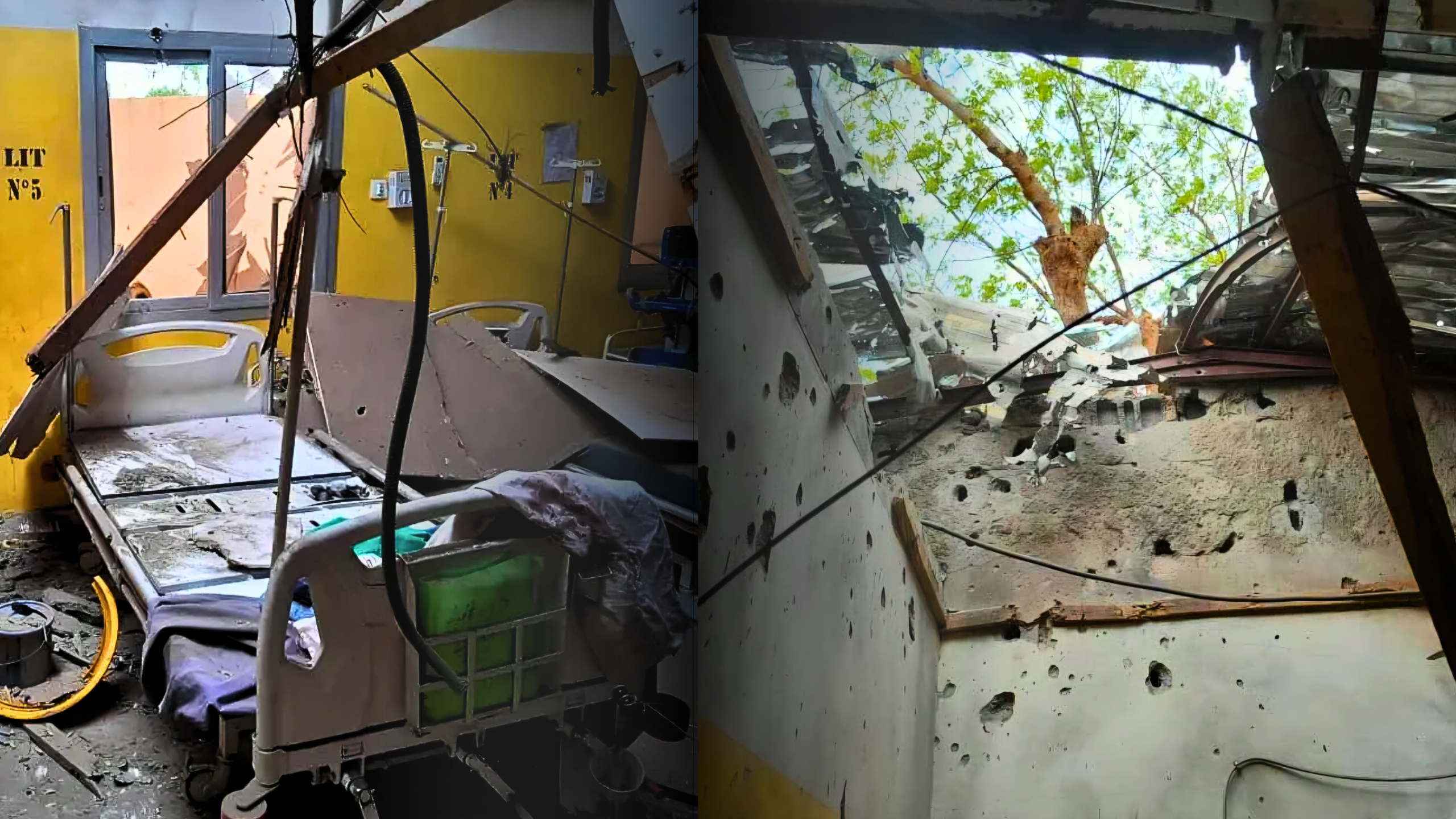

Jama’at Nusrat al-Islam wal-Muslimin (JNIM), the armed group operating across the Sahel, has accused Russian forces backing Mali’s military junta of shelling a healthcare facility in Niono, central Mali, condemning the attack amid a well-documented pattern of violence against civilians during the junta’s counterinsurgency operations.
In a statement issued on Tuesday, 24 November, JNIM categorically rejected allegations that its fighters were responsible for the attack on Saturday, 21 November, which resulted in significant casualties and extensive damage to the healthcare facility.
The group described the attack on the civilian medical institution as cowardly and treacherous, accusing Russian forces of striking the facility as part of an indiscriminate artillery bombardment of parts of the city during fighting in which JNIM captured the Niono military barracks.
JNIM pointed to photographs circulating on social media, claiming that they showed evidence of 120mm mortar shelling. The group maintained that its fighters had not employed the weapon in question during their operations in Niono that day. The photographic evidence and attribution of responsibility have not been independently verified.
The group extended its condolences to the families of the victims and wished those injured a swift and full recovery.
JNIM also reiterated its stated commitment to Islamic legal and humanitarian principles governing the protection of public infrastructure and non-military medical institutions, saying that it sought to exclude such facilities from its military targets and operations as far as possible.
The statement concluded by urging media outlets and social media users to verify information before disseminating it. JNIM accused its opponents of spreading misinformation intended to mislead public opinion in favour of Russian forces, whose presence in Mali it described as an occupation.
MSF confirms extensive damage to hospital
Médecins Sans Frontières (MSF) confirmed on Monday that the Niono referral health centre, where its teams work alongside Mali’s Ministry of Health, had sustained extensive damage during Saturday’s fighting.
A healthcare worker was killed, while two other healthcare workers, two caregivers and a child under the age of five were wounded inside the hospital.
Medical teams treated 26 wounded people. The hospital’s intensive care unit was rendered completely unusable, while other departments sustained partial damage. All four of the facility’s water tanks were also damaged, including two that had only recently been installed.
MSF warned that the destruction had severely compromised the hospital’s ability to provide life-saving medical care to the local population.
“Medical facilities are not targets,” said Julien Buha Collette, MSF’s head of operations in Mali.
MSF strongly condemned the attack but did not attribute responsibility to either party.
A wider pattern of attacks against civilians
The allegations against Russian forces come against the backdrop of a well-documented pattern of violence against civilians by the Malian military and its Russian allies, particularly in areas under JNIM control and among communities suspected of supporting the group.
Human Rights Watch has repeatedly documented summary executions, enforced disappearances, torture, indiscriminate airstrikes and the destruction of civilian infrastructure during the junta’s counterinsurgency operations.
In a report published on 19 October, the organisation documented an apparently indiscriminate Malian military strike on 29 July that partially destroyed a healthcare facility in Talahandak, in the northern Kidal region.
A subsequent report, published on 22 October, documented further atrocities committed by the Malian military and Russia’s Africa Corps in central Mali, including the torture of civilians suspected of association with JNIM and unlawful attacks on civilian communities.
“Civilians are bearing the brunt of the Mali junta’s failure to rein in its abusive forces and allies,” said Ilaria Allegrozzi, senior Sahel researcher at Human Rights Watch.
According to ACLED data cited by Reuters in April 2026, the junta’s military forces and their Russian allies killed 918 civilians in 2025, compared with 232 reported civilian deaths attributed collectively to non-state armed groups, including JNIM.
While these findings do not independently establish responsibility for the shelling of the Niono hospital, they demonstrate the extent of civilian harm associated with the junta’s counterinsurgency operations. Human Rights Watch has also documented serious abuses by insurgent groups.
The repeated destruction of civilian infrastructure raises fundamental questions about the military leadership in Bamako and its counterinsurgency strategy. Military operations that kill civilians and deprive communities of essential services can deepen resentment towards the junta and further erode its already fragile authority.