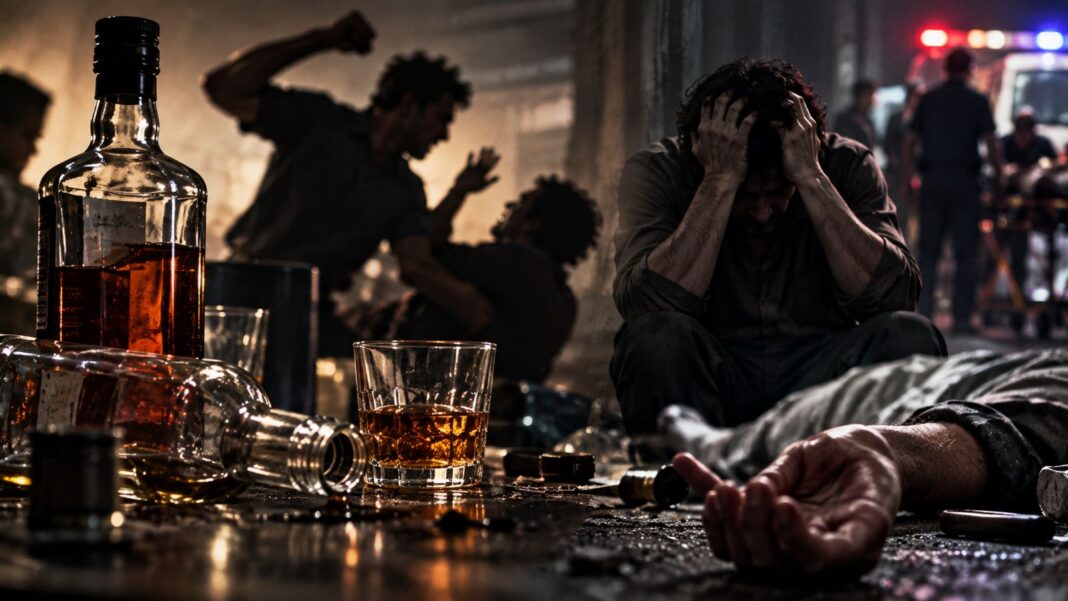

Excessive alcohol consumption is driving South Africa’s most intractable social problems, from pervasive violence and road deaths to domestic abuse, with devastating human and economic costs, experts warn.
“Approximately 27% of road fatalities are attributed to alcohol, according to South Africa’s national road traffic agency. Around 60% of reported gender-based violence cases involve alcohol, and South Africa has the highest reported rates of foetal alcohol spectrum disorder (FASD) in the world. The prevalence of FASD has been reported at particularly high levels in some South African communities,” said Aadialah Maker Diedericks, Secretary General of the Southern African Alcohol Policy Alliance (SAAPA SA).
Recent evidence, she said, estimates that alcohol contributes to approximately 37,000 preventable deaths every year, while the broader economic costs amount to between 10% and 12% of South Africa’s GDP. The warning underscores a growing consensus that alcohol is not merely a lifestyle issue but a major public health and safety crisis, one that permeates crime scenes, emergency rooms, courtrooms and homes across the country.
Moulana Kassim Hussein Akili, a Halaal auditor at the South African Halaal Authority (SANHA) told One Nation Media: “Islam treats alcohol as forbidden, not merely discouraged. The Qur’an names intoxicants among the works of Satan and commands believers to avoid them so that they may prosper (Qur’an 5:90–91). An earlier verse notes that wine has some worldly benefit, but that its harm is greater (2:219). The final ruling is a clear prohibition.”
“The reason is the protection of the mind. Alcohol clouds judgement, weakens self-control, and opens the door to harm that a person would not choose when sober: violence, broken homes, neglected children, wasted income, road deaths, and illness. Islamic teaching holds that anything which intoxicates in a large amount is forbidden even in a small amount, because the danger begins before a person realises they have lost control,” Ml Akili further added.
Alcohol is also indirectly linked to the mass shootings in recent times. In South Africa, the tavern is more than a place to drink. For many communities, it is a social space where people gather after work, celebrate, meet friends and spend their weekends. But behind the music, alcohol and socialising lies another reality: taverns and liquor outlets have repeatedly become scenes of shootings, assaults and other violent crimes.
South Africa has allowed harmful drinking, easy access to liquor and the normalisation of excessive alcohol consumption to become deeply embedded in society. The concern is not that alcohol can simply be blamed for every act of violence that occurs around a tavern or drinking environment, but whether a culture of heavy drinking has become so normalised that the harm surrounding it is increasingly accepted as an unfortunate part of everyday life.
Among people who drink alcohol, South Africans are among the heaviest drinkers in the world. Research based on World Health Organisation data has ranked South Africa fifth globally for alcohol consumption among drinkers, at nearly 29 litres of pure alcohol per drinker annually.
The Qur’an warns of the social consequences of intoxicants:
“They ask you about intoxicants and gambling. Say, ‘In them are gross sins and benefits for the people, and their sinfulness is greater than their benefits.’” — Surah Al-Baqarah (2:219)
For a country confronting persistent concerns around alcohol-related violence, road deaths, gender-based violence and harm to young people, the verse raises a moral question that extends beyond individual drinking habits to the values a society normalises.
South Africa’s recent wave of violent attacks at taverns and social gatherings has made the broader issue difficult to ignore.
In September, a mass shooting at a tavern in Wedela on Gauteng’s West Rand left 18 people dead and 18 others injured. Eight gunmen, reportedly armed with AK-47 rifles and pistols, opened fire on patrons before fleeing. Two vehicles were also set alight. Police have not established the motivation for the shooting, and investigations into the attack are continuing.
In Lwandle near Cape Town, during the same weekend, 10 people were killed and 11 injured after gunmen entered an entertainment venue that also operated as a shisanyama and opened fire on patrons. Five victims died at the scene and another five later succumbed to their injuries.
That same month, KwaMakhutha, south of Durban in KwaZulu-Natal, was shaken when three gunmen entered a house where a party was taking place and opened fire. Eleven people were killed, including a pregnant woman, while three others were wounded. Again, the motive remained under investigation.
These incidents cannot simply be described as “alcohol-fuelled” violence without evidence. Guns, organised crime, robbery, illegal mining, gang rivalries and other factors may be involved. But the repeated occurrence of serious violence in and around taverns and late-night social environments raises difficult questions about the safety of South Africa’s drinking culture and the conditions surrounding it.
On 2 August, four men were killed and a woman injured in a shooting at a tavern in Thulamtwana, De Deur, Gauteng.
On 21 December 2025, gunmen attacked the KwaNoxolo tavern in Bekkersdal on the West Rand. Nine people were initially reported dead and 10 injured after about 12 armed men opened fire on patrons and continued shooting as they fled the area. Some victims were shot outside the tavern.
Perhaps one of the most haunting examples of the dangers surrounding poorly regulated drinking establishments remains the Enyobeni Tavern tragedy.
On 26 June 2022, 21 teenagers aged between 13 and 17 died at the Enyobeni Tavern in Scenery Park, East London. Methanol was detected in all 21 victims, while alcohol was also found in their blood, but the levels detected were not sufficient to establish alcohol or methanol poisoning as the cause of death. Later testimony at the inquest identified asphyxia as the cause of death.
The tragedy raised far wider questions about overcrowding, liquor regulation and the sale of alcohol to underage children.
South Africa is a country known for its entertainment culture and major social events. “Pens down” celebrations for high school pupils after year-end examinations have also become increasingly normalised. Yet too often these celebrations are followed by reports of tragedy, violence, accidents or dangerous drinking.
The link between alcohol and violent crime remains a serious concern.
According to South African Police Service crime statistics for January to March 2026, 160 murders, 343 attempted murders and 4,197 assaults with intent to cause grievous bodily harm were recorded at liquor outlets during the period.
Diedericks told ONM: “Among the trends observed among young people are early initiation and extremely high incidences of binge drinking. Research shows that children are as young as 11 when they start drinking. Alcohol advertising, peer pressure, social media, and easy access to liquor contribute to underage drinking. We need stronger law enforcement and youth-focused prevention programmes.”
According to National Treasury calculations based on South African Wine Industry Statistics data, beer accounted for 70.8% of South Africa’s total liquor consumption by volume in 2022, followed by ready-to-drink beverages at 15.6%, wine at 10.1% and spirits at 3.4%.
But consumption figures tell only part of the story. Access, affordability and the sheer density of liquor outlets in many communities shape the environment in which harmful drinking takes place.
“High alcohol consumption in South Africa is due to easy access and affordability of alcohol as well as aggressive marketing, poverty, unemployment and the normalisation of heavy drinking. We must address the environments that encourage harmful drinking instead of placing the responsibility solely on individuals, as we often do,” Diedericks said.
She added that the consequences extend far beyond taverns.
Alcohol does not cause every murder, assault or act of gender-based violence, and intoxication cannot be used to absolve perpetrators of responsibility. But research has repeatedly identified alcohol as an important risk factor that can intensify aggression, impair judgement and increase vulnerability to violence and injury.
The question therefore extends beyond what happens after someone drinks.It is also about the environment South Africa has created around alcohol.
Billboards, television advertising, sponsorships, promotions and the widespread availability of liquor make alcohol highly visible, while taverns and liquor outlets are deeply embedded in many communities. Young people grow up seeing drinking portrayed as an ordinary part of celebration, adulthood, success and social life.
That normalisation has devastating consequences. The Islamic prohibition on intoxicants is not simply concerned with the drink itself, but with protecting the individual, family and society from the harms that can flow from losing judgement and self-control.
South Africa cannot blame alcohol for the actions of violent people. A person who assaults, abuses, shoots or kills another remains responsible for that act.
“So the Islamic position is not only a rule of worship. It is also a public-health and social warning: what destroys the intellect eventually destroys the person, the family, and the community around them,” Ml Akili said.
But neither can the country ignore an uncomfortable question: when excessive drinking becomes normal, when access is everywhere and when its social costs become familiar, do we eventually begin treating the violence and destruction surrounding it as normal too?