
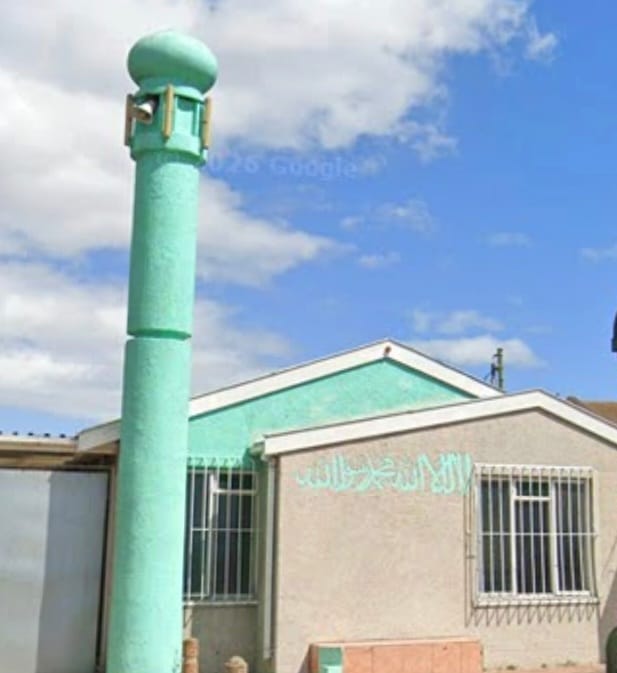

They call it ground zero. Not because nothing lives there, but because everything is tested there. Faith. Courage. Patience. Brotherhood. In Khayelitsha, where a funeral can follow a Friday prayer and a shooting can silence a street, the ulama have not retreated. They have moved in.
Khayelitsha is the second-largest Black township in South Africa after Soweto — the largest in Cape Town, with a population exceeding 500,000 residents living in formal houses, backyard dwellings and shacks, packed tightly together.
It is a place the world knows for one thing: crime.
In the latest SAPS statistics, Khayelitsha police station recorded 44 murders from April to June 2026, placing it 10th nationally. Mfuleni was No. 1 with 73, followed by Nyanga with 56, Philippi East and Delft with 53 each, and Harare with 49.
But that ranking is misleading. Khayelitsha is no longer policed by one station. It was split into four — Khayelitsha, Harare, Makhaza and Lingelethu-West. While murders in the Western Cape fell by 6.7% that quarter, from 1,148 to 1,071, the four-station cluster around Khayelitsha rose from 137 to 159, up 16% year on year.
“You’d swear everyone owns a gun,” a Khayelitsha Community Police Forum member said.
On the ground, mothers still march against guns, shops still pay extortion, and funerals still come every weekend. A recent march through Makhaza carried a banner that read “Silencing the Gun Walk” to the police station. They marched because they are tired of burying people.
Khayelitsha was created under apartheid as a place to push Black workers far from Cape Town’s centre, with deliberately under-resourced policing, lighting, roads and services. That legacy never disappeared. It continues to live on.
And yet, it is here — at this ground zero — that ulama are spreading Deen. Not with loudspeakers. Not with confrontation. Not with money. With character. With Quran. With food. With presence.
“We feel crime more directly”
One such leader is Sheikh Basheer Bamusi Swaleh, the imam at Darool Qur’an Masjid in Enkanini, Khayelitsha. The jamaat khana is small and is used for madrassah classes and dawah for children.
“We are located in an area surrounded mostly by non-Muslims and because we are small and surrounded by non-believers, we feel crime more directly,” he said.
“Sometimes our madrassah materials, speakers or even students’ shoes are stolen.”
“Parents are sometimes scared to send children to madrassah in the afternoon after coming back from school because of robbery and gang activity.”
“We also have to close early for safety,” he added.
Those most affected at the madrassah are the children and new reverts.
“They are young and vulnerable,” he said.
“As a small jamaat khana, we cannot solve crime by force. Our reaction is different.”
“We maintain good relationships with our non-Muslim neighbours. We show them good character, we greet them and we help them. This protects the jamaat khana because they know us as peaceful people.”
“We focus on tarbiyah. We keep children inside learning Quran instead of being outside where crime is, and we grow Islam slowly through character, not noise.”
“People around us see that our children don’t steal, don’t do drugs and don’t swear. That is our dawah,” he added.
“We do not preach with loudspeakers or confrontation. We do one-to-one dawah and naseehah.”
“We teach our students that Islam forbids harming neighbours: ‘He whose neighbour is not safe from his harm will not enter Jannah.'”
“We make dua for our neighbours and for peace in Khayelitsha. We teach that to be safe, one must leave crime and come to Allah,” he said.
“Alhamdulillah, despite being small and surrounded, Allah protects us and dawah is growing slowly. The non-Muslims around us now respect the jamaat khana as a place of peace,” the imam concluded.
Teaching the youth before the gangs do
Another Islamic leader working with the youth is Sheikh Ya’qoub Thupelo Motloung from the Fajrul Islam Centre, Dr Adam Masjid, who is constantly encouraging township learners and teaching them in accordance with Islam.
“So far, during the time that I have been here, there haven’t been many criminal incidents impacting the mosque and those who attend,” he said.
“The only thing that impacted the mosque was a break-in last year, which took place at night.”
“We teach and encourage young people on many issues that affect them,” he said.
“I do address what is relevant at certain points in time. However, it is not something that we could single-handedly eradicate,” he added.
His honesty reflects the reality facing every alim in Khayelitsha: they cannot end gangsterism alone. But they can give a young person a reason not to join.
From shebeen to masjid
Another masjid hard at work is in Harare. The building, bought in 2012 for R17,000, was previously a shebeen. Today, it serves Muslims in the area for all daily prayers, Jumu’ah, madrassah and adult classes.
The area where the masjid is located, close to Mew Way, experiences significant taxi violence.
The imam, Sheikh Nazeem Ntintili — also known to many as Chief — said they are serving a poor community affected by many challenges, noting that the masjid is there for the people.
“We understand the people. We are here for them. We will not allow any social ills to deter us in Islam,” he said.
“Our masjid is not negatively impacted by crime or the taxi violence in this area.”
“We are open to working with organisations to improve the area and help the people of Khayelitsha,” he said.
His masjid accommodates 50 people who cannot contribute financially due to unemployment and poverty. With donations, he cooks twice a week and provides meals from the masjid.
The imam, who is chief of an African tribe, is gearing up to join Islamic leaders on Saturday in Kuyasa, Khayelitsha. The event will see interfaith leaders address and feed the community in attendance.
One such leader expected to attend is Sheikh Habib Ahmed Al-Kaf, originally from Yemen, who has been working on the ground, going from door to door in Khayelitsha, doing dawah.
A shebeen became a masjid. That is Khayelitsha’s Islam in one sentence: what was once a place of drinking became a place of prayer.
“Crime is a scourge against humanity”
Sheikh Ahmad Malie experienced a break-in at the masjid in Site C, where he is the imam. Thieves stole the electricity box and tried to remove the geyser, causing flooding and damage to the mosque.
“Crime is bad out here, not only for the masjid and our worshippers, but for everyone. My neighbour, an organisation trying to help the community, was also broken into and everything was stolen. People fear coming here to work,” he said.
“Crime is a pervasive scourge against humanity.”
“Even if the perpetrator holds the highest office in the land, we cannot separate one from the other. Muslims are neither immune to nor unique in what the populace is facing. Rather, the wave of crime affects people from all walks of life,” he added.
The imam went on to state that the moral and institutional equilibrium articulated by Islamic tradition is not merely a private, spiritual ideal but a public, legal and political one. He believes the situation can improve through the knowledge and teachings of Islam.
“The Qur’an repeatedly calls believers to a middle, balanced way (al-wasat), and the Prophet ﷺ exemplified moderation and justice in personal conduct and communal governance,” he said.
“Classical Muslim scholars framed ethical equilibrium as integral to the objectives (maqasid) of Shari’ah — protecting religion, life, intellect, lineage and property.”
“Islamic methodology begins with the premise that knowledge (‘ilm) is a trust (amanah) from Allah, encompassing revelation (wahy) and reason (‘aql) as complementary sources. The Qur’an commands reflection and reason within the parameters of divine guidance,” the imam added.
The cycle they are trying to break
Khayelitsha recorded 6,362 crimes in the year to March 2026 and 1,547 crimes in just three months from April to June 2026. Drug-related crime was the most frequently reported category, with 1,832 cases in the year to March 2026 — a drug economy that feeds other social ills, including shebeens, taverns and late-night drinking spots where arguments can turn into shootings.
In the Western Cape during that same quarter, 663 of the 1,071 murders were committed with a firearm, while 217 of the 251 gang-related murders recorded nationally occurred in the province.
The pattern is familiar to anyone who lives there: a car pulls up, shots ring out, three men are dead in Town Two or Site C, and a funeral follows, which is then followed by revenge.
Khayelitsha Community Police Forum (CPF) spokesperson Mzolisi Malungisa has specifically blamed extortion-related shootings for driving up the murder rate in the precinct.
“Extortion syndicates now target spaza shops, taxis, builders, shebeens and even schools,” he said. “Pay, or get shot. Don’t pay, and your shop gets torched.”
“Many small business owners pay quietly because they do not trust that police can protect them,” he added.
Taxi violence, turf wars over drug corners and vigilante justice — which sees people take the law into their own hands after losing faith in the police — contribute to further revenge killings. It appears to be a cycle that is impossible to break.
Many cases go unsolved, emboldening criminals, while many crimes go unreported because of the fear of retaliation.
The Western Cape overall has the second-highest murder rate per 100,000 people in South Africa, at 13.9, despite ranking only third in total murders. The statistics indicate that violence is not evenly spread; it is concentrated in a handful of Cape Flats areas, with Khayelitsha at the centre.
And still, they stay
That is the context in which the ulama work.
They do not have armed guards. They do not have big budgets. Some cannot even afford to keep the lights on.
What they have is presence.
A masjid that opens for Fajr when it is still dark and dangerous. A madrassah that keeps children inside learning Quran instead of outside learning crime. A pot of food cooked twice a week for people who cannot pay. A neighbour greeted by name. A door knocked on in Kuyasa, in Enkanini, in Harare, in Site C, by a man from Yemen who came to Khayelitsha to say: As-salamu alaykum, we are here.
In Khayelitsha, Islam is not growing through noise. It is growing through character.
And in a township where it can seem as though everyone owns a gun, that might be the bravest thing of all.


