

HISTORY: Dismantle, co-opt and confine
With South Africa having held its municipal elections last Wednesdsy, our political arguments often begin in 1994, as though the modern nation state arrived with no intellectual or institutional history. It did not. The relationship between Islam and the contemporary political order cannot be understood without considering colonialism. Empire was not merely the seizure of land and wealth. It also reorganised law, education, religious institutions and the way conquered people understood themselves, writes Moulana Uwais Dockrat.
The familiar defence of colonial rule is that it built roads, railways, schools and hospitals. Some infrastructure certainly brought lasting benefits. But that observation does not settle the question of purpose. A railway that transports minerals to a port may also transport passengers. The existence of passengers does not erase the economics of extraction. Nor does a school become philosophically neutral simply because it teaches literacy. The deeper question is who designed the institution, who controlled it and what sort of person it was intended to produce.
Colonial power frequently approached Islamic institutions through three overlapping methods: dismantle, co-opt and confine. Dismantling meant replacing an existing court, removing its jurisdiction or weakening the resources that sustained it. Co-option meant preserving familiar religious offices or language while transferring interpretive authority to new rulers. Confinement meant permitting selected parts of the Sharīʿah to survive, especially in personal matters, inside a legal system whose highest authority lay elsewhere. These methods varied across empires; they were not one identical blueprint imposed in every country.
Napoleon’s invasion of Egypt in 1798 offers a particularly revealing example of co-option. His Arabic proclamation professed respect for Islam and even claimed that “the French also are sincere Muslims”. The purpose was hardly to place French military authority under Muslim scholarship. It was to enlist the language and credibility of religion in securing political obedience. The conqueror did not need to abolish the mosque when the mosque’s standing could be made useful to the conqueror. Accommodation and coercion were partners, not opposites.
In British India, Islamic legal scholarship was translated, selected and reorganised for colonial administration. Charles Hamilton’s 1791 English rendering of al-Hidāyah was prepared by order of the Governor-General and Council of Bengal. The issue was not that translation itself was sinful or dangerous; it was that fiqh increasingly operated through colonial courts, categories and procedures. What became known as Anglo-Muhammadan law reflected Islamic material administered within a new hierarchy, eventually narrowed largely to family and inheritance questions. The vocabulary endured while the governing structure changed.
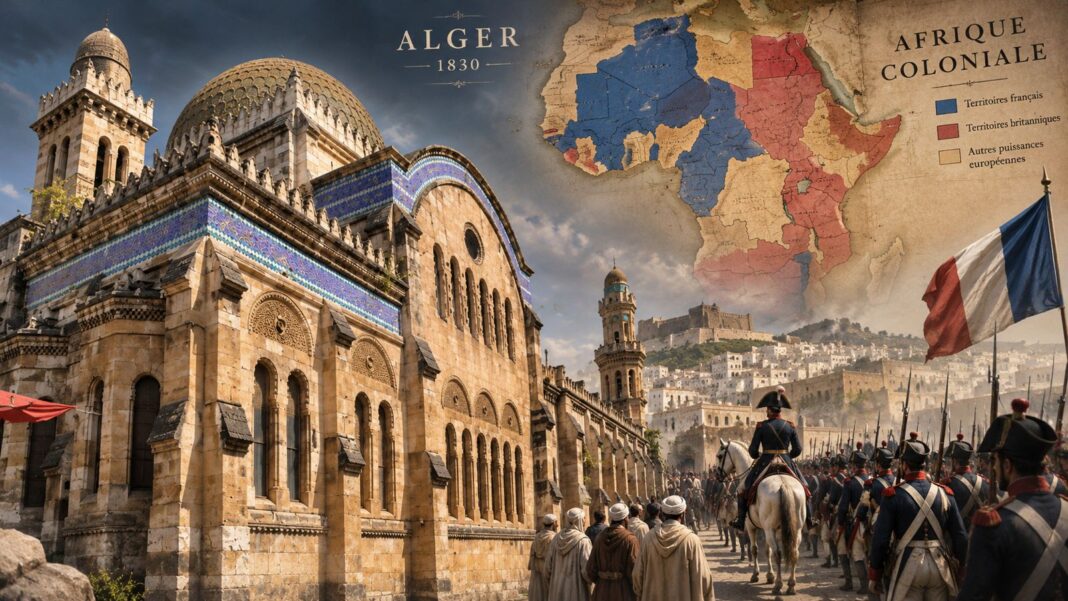
In French Algeria, the colonial contest over waqf property reveals the material dimension of the same process. Endowments had supported mosques, learning and welfare with resources not wholly dependent on a ruler’s annual budget. Colonial appropriation and control of such assets weakened the independence of religious institutions. Whoever controls the property can often influence the curriculum, appoint the administrator and determine which activities survive. Ideological power is considerably easier to exercise after financial independence has been dismantled.
Education completed the transformation. In 1835, Thomas Babington Macaulay argued for producing intermediaries who were “Indian in blood and colour, but English in taste, in opinions, in morals, and in intellect”. That was an unusually candid statement of a civilisational ambition: to produce local people who thought through imperial categories. Colonialism did not merely seek obedient subjects; it sought minds for whom the ruler’s worldview appeared superior and natural.
Modern political domination was capable of removing institutions, repurposing religious authority and narrowing Sharīʿah into administratively approved compartments. In the aftermath of South Africa’s municipal elections, we must recognise that inherited architecture as we engage with the present political system. Independence from foreign rulers does not automatically mean independence from every category through which they taught us to think.


