
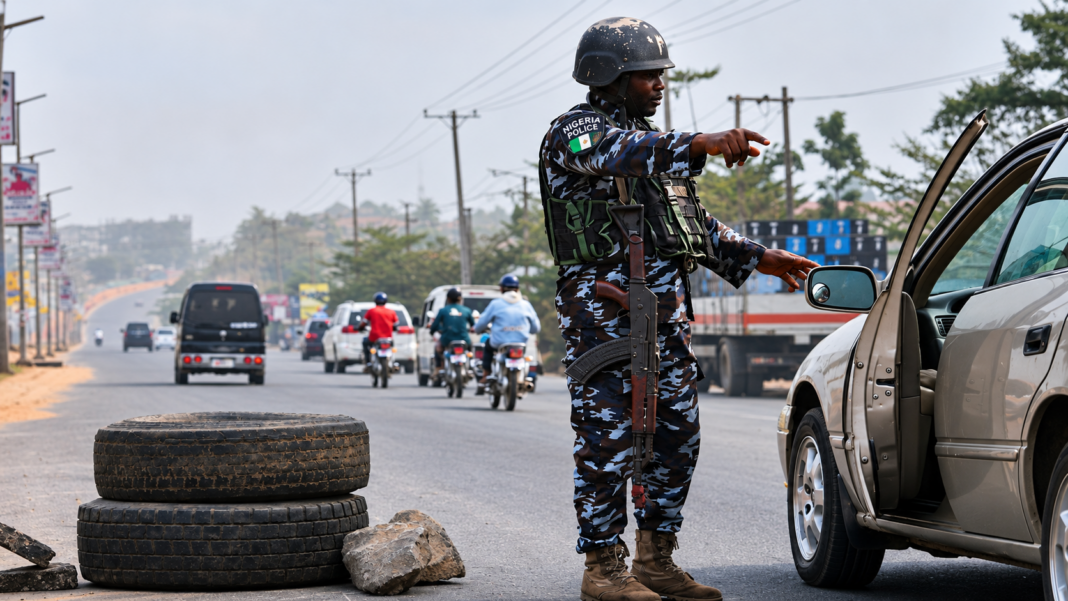

At a Nigerian police checkpoint, a motorist may be stopped not because of a suspected crime, but because an officer wants to inspect the vehicle’s documents, question its occupants or demand money before allowing the journey to continue. For commercial drivers, transport operators and ordinary commuters, such encounters have become a familiar source of anxiety.
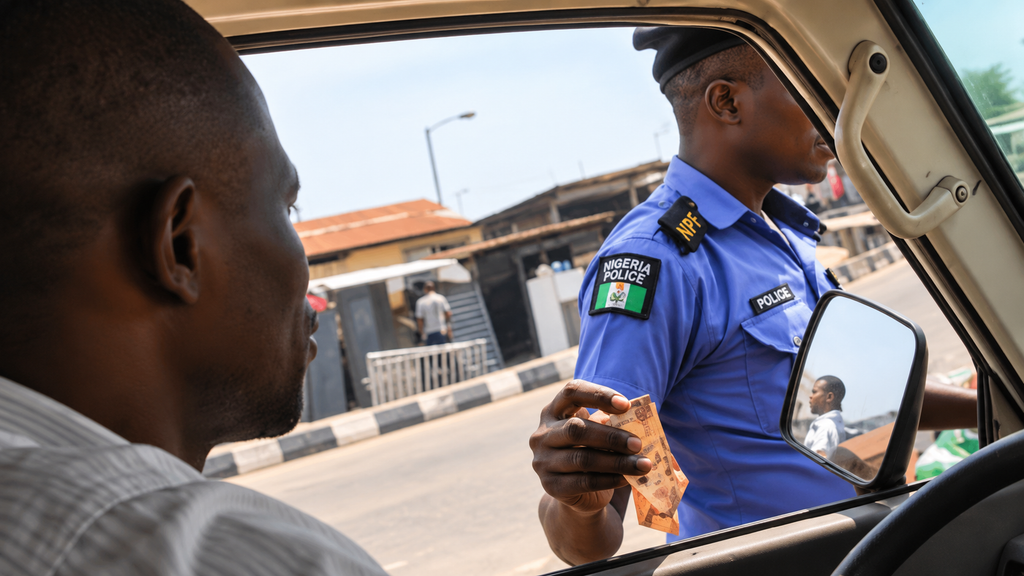
In some cases, motorists negotiate their way through multiple checkpoints, paying small amounts to avoid delays, intimidation or threats of arrest. Others encounter officers who turn routine traffic checks into opportunities for extortion.
What should be a public safety institution has, in the experience of many Nigerians, become a source of financial pressure and insecurity. The problem is not simply about individual officers collecting illegal payments. It raises deeper questions about institutional corruption, accountability and the relationship between law enforcement and the citizens it is supposed to protect.
Extortion on the streets, corruption within stations
Police corruption in Nigeria takes different forms, ranging from roadside bribery and illegal checkpoints to demands for money during investigations, arrests and bail procedures.
Commercial drivers are particularly exposed because their livelihoods depend on daily movement. Some report repeated financial demands from officers at checkpoints, while private motorists complain of being threatened with vehicle searches, accusations of document violations or detention unless they provide money.
For citizens seeking police assistance, the experience can be equally frustrating. Victims of theft, assault and other crimes have reported being asked to provide money for transportation, investigations or other services that should ordinarily be covered by public resources.
In some cases, relatives of detained suspects allege that officers demand money before granting access to detainees or facilitating their release, even where the law provides safeguards against arbitrary detention.
The National Bureau of Statistics, in collaboration with the United Nations Office on Drugs and Crime, provides a disturbing statistical context. Its 2023 corruption survey found that police officers were among the public officials Nigerians frequently encountered.
More revealingly, Afrobarometer’s 2023 survey found that 75 per cent of Nigerians who sought police assistance said they had to pay a bribe, while 55 per cent of those who encountered police officers in other circumstances reported paying bribes to avoid problems.
These findings suggest that corruption is not merely an allegation circulating on social media, but a measurable problem affecting citizens’ everyday interactions with law enforcement.
When the uniform becomes an instrument of intimidation
Beyond financial extortion, allegations of torture, unlawful detention and abuse of investigative powers have further damaged the police force’s reputation.
In February 2026, Amnesty International published an investigation into the Anti-Kidnapping Unit of the Imo State Police Command, popularly known as Tiger Base, in Owerri, southeastern Nigeria.
The organisation documented allegations of prolonged arbitrary detention, torture, extortion, enforced disappearances and deaths in custody. Its investigation, based on interviews with survivors, relatives of victims, lawyers and civil society representatives, described detention conditions involving severe overcrowding, poor ventilation and inadequate sanitation.
Amnesty also reported allegations that some individuals were arrested to extract money from their relatives, with payments reportedly facilitated through point-of-sale machines within the detention facility.
The findings concern a specific police unit and do not establish that every officer or police formation engages in such conduct. However, they expose the dangers of unchecked police powers and the consequences of failing to independently investigate allegations of misconduct.
The unfinished lessons of #EndSARS
Nigeria’s police corruption crisis cannot be separated from the nationwide #EndSARS protests of October 2020.
Thousands of young Nigerians took to the streets demanding an end to police brutality, unlawful arrests, profiling, extortion and abuses associated particularly with the Special Anti-Robbery Squad (SARS).
The government eventually disbanded SARS, but the protests represented a broader demand for institutional reform rather than simply the dissolution of one police unit.
Years later, Amnesty International continued to document allegations of police brutality, unlawful detention, extortion and extrajudicial killings. Its October 2024 assessment warned that accountability for abuses remained inadequate, including the failure of several states to establish judicial panels or fully compensate victims of police brutality.
The persistence of these concerns raises questions about whether the reforms promised after #EndSARS have translated into meaningful changes in everyday policing.
Why corruption threatens national security
The consequences reach beyond individual victims. Nigeria faces persistent security challenges, including kidnapping, armed banditry, terrorism, communal violence and organised criminal activity.
Addressing these threats requires cooperation between law enforcement agencies and local communities. Residents must be willing to report suspicious movements, identify criminal networks, provide intelligence and assist investigations.
However, citizens who associate police encounters with extortion, intimidation or unlawful detention may become reluctant to approach officers, even when they possess information that could prevent attacks or help rescue kidnapped victims.
This creates a dangerous cycle in which declining public trust weakens intelligence gathering, undermines investigations and gives criminal groups opportunities to operate.
Police corruption also disproportionately affects low-income citizens, who often lack the financial resources or influential connections to challenge officers or secure assistance through alternative channels.
Reform beyond official promises
The Nigeria Police Force has periodically condemned extortion and announced disciplinary action against officers accused of misconduct. In November 2024, police authorities announced the detention of four officers accused of extorting ₦10 million ($7,400) from young Nigerians in Bayelsa State, following the recovery of the money.
Such interventions demonstrate that disciplinary action is possible, but isolated announcements cannot substitute for consistent institutional accountability.
Reform requires independent investigations, transparent disciplinary procedures, prosecution of officers implicated in criminal conduct and accessible complaint mechanisms that protect victims from retaliation.
Improved police welfare, professional training, modern investigative equipment and stronger supervision are also necessary. However, poor working conditions cannot excuse the violation of citizens’ rights.
Ultimately, the challenge facing Nigeria is not simply how to make its police force more effective in fighting crime, but how to ensure that the institution itself operates within the law.
For a country battling multiple security threats, restoring public confidence in the police is a national security priority. Citizens should not have to pay for their security at checkpoints, purchase access to justice at police stations or fear the people entrusted with protecting them.


