

Mali’s military authorities are gradually recognising that an exclusively military response to insurgent groups will not be enough to resolve a security crisis that has gripped the country for more than a decade.
It is against this backdrop that the rapprochement between Bamako and Algiers, after nearly 15 months of tensions between the two countries, should be understood.
The central question now is whether reconciliation between Mali and Algeria can serve as the starting point for a new framework to address Mali’s crisis — one better adapted to the evolving insurgency and political realities of the Sahel.
Russian President Vladimir Putin, whose country is a major military partner of Mali’s military authorities, could also play an indirect role in this new dynamic. Several analysts have raised the possibility that Moscow may have encouraged Bamako to resume dialogue with Algiers and pursue further contacts and diplomatic initiatives.
Russia’s interest in de-escalation is understandable. Moscow maintains strategic relations with Algeria while developing increasingly close security cooperation with Mali. Continued tensions between Bamako and Algiers could therefore undermine Russian interests in a region already undergoing profound geopolitical realignment.
Algeria should not necessarily be regarded as a party to the conflict in the same way as Bamako or the insurgent groups. Rather, it should be recognised as a strategic actor and major stakeholder in any peace process.
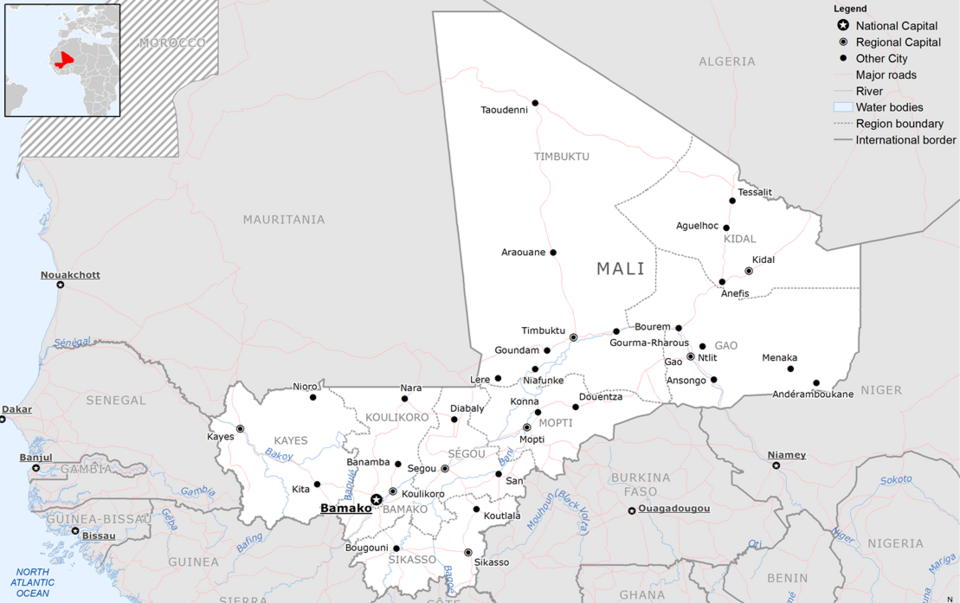
Its geographical position is decisive. Algeria shares a border of roughly 1,300km with Mali, and any lasting deterioration of the conflict in northern Mali could have direct consequences for Algerian security. These include the movement of armed groups, trafficking, the circulation of weapons, population displacement and the risk of instability spilling across the border.
Algiers also has considerable historical experience in managing Mali’s crises. The process that led to the 2015 Agreement on Peace and Reconciliation established Algeria as a key mediator in the Malian conflict.
Although that agreement ultimately failed, the experience remains an important diplomatic asset and a source of valuable lessons.
Any new process, therefore, should not simply reproduce the 2015 model.
The Sahel has changed profoundly over the past decade. Russia has strengthened its security influence, the Alliance of Sahel States (AES) has emerged as a new regional framework, and several regional and international powers are seeking to expand their influence.
For Algiers, this transformation represents a new strategic reality. Algeria wants to prevent the Sahel from becoming an arena for indirect confrontation between competing powers that could alter the security balance along its borders.
As Mustapha Kamal Damani, a researcher in security and strategic studies, points out: “The repercussions of any security turmoil in northern Mali could directly affect Algerian national security.”
Algiers is also seeking to deepen its economic relations with Africa and consolidate its position on the global energy map. Stability in the Sahel is therefore important for protecting investments, expanding trade and developing economic and energy projects.
According to Damani, these shared interests require the parties to seek common ground that allows for the gradual rebuilding of trust, particularly because the “stability of Mali” forms part of the wider “regional security system” directly affecting Algeria.
Several scenarios are now emerging for a possible settlement of the Malian crisis involving Algiers.
The first — and most ambitious — would involve establishing a dialogue framework bringing together Bamako, Algeria and the main insurgent groups, particularly the Azawad Liberation Front (FLA), while addressing Jama’at Nusrat al-Islam wal-Muslimin (JNIM) through a separate track.
Such an approach would better reflect the complexity of the current conflict while reducing the risk of instability spilling into neighbouring countries.
For Algeria, it would also offer an opportunity to safeguard its security interests and prevent the Sahel from becoming an arena for confrontation between competing powers.
Political analyst Dr Farouk Tayfour believes the next phase should go beyond political reconciliation and instead focus on building shared interests.
Algeria could contribute to stronger economic, energy, logistical and security cooperation with Mali, while Bamako could provide guarantees relating to good-neighbourly relations, border security and the maintenance of communication channels capable of preventing future crises.
A second scenario would involve an agreement between Bamako and the FLA, facilitated by Algeria, without the direct involvement of JNIM.
This would be easier to envisage politically, but its principal weakness is that it would leave the larger insurgent threat untouched. Continued attacks by an excluded JNIM could undermine any agreement and reproduce some of the shortcomings of the 2015 Algiers process.
A third option would be limited normalisation between Bamako and Algiers without the involvement of insurgent groups.
Such an arrangement could restore bilateral relations and strengthen border cooperation, but it would do little to resolve Mali’s wider security crisis.
Diplomatic reconciliation could therefore become little more than coexistence between two states without addressing the root causes or principal actors driving the conflict.
Mali–Algeria normalisation should consequently be viewed as a favourable precondition for a peace process rather than its end point.
A fourth possibility would involve building a broader regional framework bringing together Algeria and members of the Alliance of Sahel States.
With Mali, Burkina Faso and Niger now linked through increasingly close political and security cooperation, particularly in the field of defence, Mali’s crisis can no longer be viewed solely through a bilateral lens.
Algiers could retain a facilitating role between Bamako and actors in northern Mali, while the AES could become involved in wider regional security arrangements and monitoring mechanisms.
The question, then, is which path should be prioritised.
The most realistic option may be a combination of these approaches: first consolidating the normalisation between Bamako and Algiers, followed by political dialogue with the FLA and, in parallel, the establishment of regional mechanisms involving the AES.
The question of JNIM would require a separate approach and, where conditions permit, indirect initiatives aimed at reducing violence.
The challenge is therefore not to reproduce another Algiers agreement, but to construct a multi-level peace architecture based on credible guarantees, effective monitoring mechanisms and a realistic understanding of today’s political, security and regional landscape.
Only under those conditions could the rapprochement between Bamako and Algiers move beyond diplomatic normalisation and become a genuine lever for peace in Mali and across the wider Sahel.