

By Neelam Rahim in Johannesburg and Awa Macalo in Banjul
Tears of joy and duas of gratitude swept across The Gambia after the International Court of Justice (ICJ) found Myanmar responsible for committing genocide against the Rohingya Muslims, marking a historic victory for the small Muslim-majority West African nation that spearheaded the landmark legal battle. But beyond the celebrations, the ruling raises a far bigger question about the effectiveness of international law: Will justice actually be served, or will this become yet another landmark judgment that the international community fails to enforce?
Speaking to One Nation Media (ONM), South African human rights advocate Shabnam Mayet described the ruling as a crucial recognition of the atrocities suffered by the Rohingya and a significant precedent for genocide victims around the world.
“The ICJ has never ruled that a state has committed genocide before, but today, with 9 votes to 6, the judges of the ICJ have found that Myanmar committed genocide against the Rohingya. The ruling is a moment of truth and the recognition of the barbaric violence that the Rohingya have been subjected to. It sets a crucial precedent for genocide victims globally.”
Mayet, who practises at the Johannesburg Bar and specialises in human rights law, is also co-founder of Protect the Rohingya, a South African awareness organisation established in 2012.
She urged the international community not to lose sight of the people whose lives remain shaped by the violence and displacement.
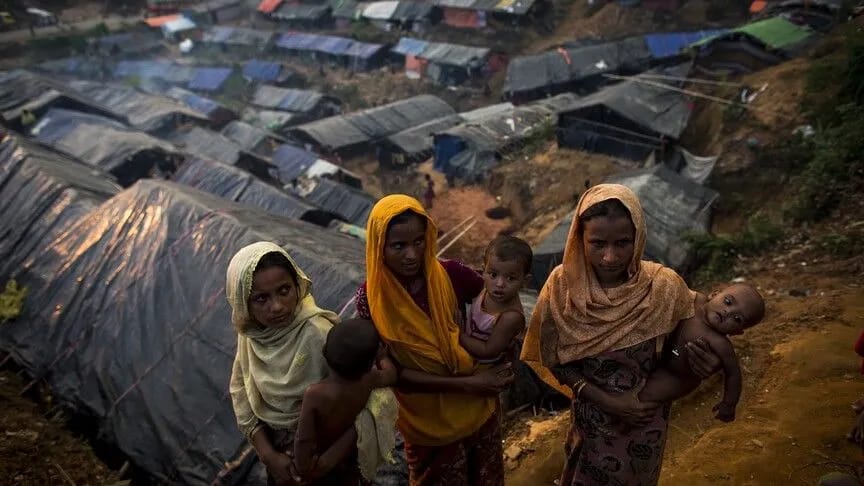
“With all eyes on The Hague, let us spare a thought for over a million Rohingya confined to the world’s largest refugee camp in Bangladesh, the half a million who remain trapped at the mercy of the junta and the Arakan Army in Rakhine State in Myanmar, and the thousands of Rohingya who continue to risk their lives at the hands of human traffickers. Ensuring justice, accountability and reparations for the victims of genocide is our collective duty. Today’s ruling is just the beginning.”
The judgment, delivered after proceedings lasting several years, marks the first time in the ICJ’s 80-year history that a state has been found responsible for committing genocide. The ruling followed a 9–6 vote and is final and binding, with no avenue for appeal.
The ruling also carries considerable legal significance beyond its immediate implications for the Rohingya. Human rights lawyer and policy advocate Nicole Fritz, in comments to ONM, highlighted the importance of the Court’s clarification on how genocidal intent is established.
“Importantly, the Court has clarified that genocidal intent need not be the exclusive intention of a perpetrator. Other objectives, including military or security objectives, may coexist with an intention to destroy a protected group. The Court has retained its demanding evidentiary standard but clarified how it should be applied,” Fritz explained.
How The Gambia took Myanmar to the ICJ
For The Gambia, however, the significance of the decision extends beyond the courtroom. It represents the culmination of a determined effort by a small country to hold a powerful state accountable for atrocities committed against a vulnerable Muslim population thousands of kilometres away.
The case was brought against Myanmar on 11 November 2019, when The Gambia took the country to the world court over its treatment of the Rohingya. The two countries have no direct historical or geographical connection, but The Gambia argued that the prohibition of genocide is a shared obligation under international law.
As both countries are parties to the 1948 Genocide Convention, The Gambia was entitled to institute proceedings under Article IX, which allows a signatory state to bring a case concerning the interpretation, application or fulfilment of the Convention. The principle recognises that preventing and punishing genocide is not solely the concern of the country where it occurs, but a responsibility owed to the international community.
The initiative was supported by the Organisation of Islamic Cooperation (OIC), which entrusted The Gambia with pursuing the case and provided diplomatic and financial backing.
The decision to act was driven in part by former Justice Minister Abubacarr Tambadou, who visited Rohingya refugees in Cox’s Bazar, Bangladesh, in May 2018. A former prosecutor at the UN tribunal for the Rwandan genocide, Tambadou said the testimonies he encountered brought back memories of the atrocities he had witnessed during his work on Rwanda.
The Gambia had emerged from 22 years of authoritarian rule under former president Yahya Jammeh in 2017 and was itself confronting a painful legacy of human rights abuses. Yet, despite its own challenges, the country chose to pursue justice for a people with whom it had no direct connection.
Current Justice Minister Dawda Jallow said The Gambia acted after receiving credible reports of brutal violence against a population that had endured years of persecution and dehumanisation.
The ICJ’s judgment centred on Myanmar’s military clearance operations in northern Rakhine State in August 2017. The operations were accompanied by mass killings, widespread sexual violence, attacks on children and the systematic destruction of Rohingya villages. Around 700,000 people fled across the border into Bangladesh, joining an already displaced population in what has become the world’s largest refugee settlement.
The Court rejected Myanmar’s argument that the military operations were merely a counter-insurgency response to attacks by the Arakan Rohingya Salvation Army. It found that the evidence, including the widespread destruction of villages and violence against civilians, supported the conclusion that Myanmar acted with genocidal intent.
The ruling was met with jubilation in The Gambia, where citizens and human rights advocates saw the outcome as an affirmation of their country’s role in the pursuit of international justice.
Human rights reporter Patience Loum described it as a defining moment for the country, saying The Gambia’s pursuit of accountability had made history at the ICJ.
Citizen Abdoulie Bah said the judgment demonstrated that even a small country could play a significant role in defending human rights and upholding international law. He stressed, however, that its significance would ultimately depend on whether the ruling was implemented and the Rohingya received justice.
Gambian President Adama Barrow praised the courage of Rohingya witnesses who had contributed to the proceedings and commended the work of Jallow, his predecessor Tambadou and the country’s legal team. He called on Myanmar to comply with the judgment without delay and urged the United Nations, the OIC and the wider international community to ensure its enforcement.
For Rohingya survivors, the decision carries a significance that goes beyond the legal recognition of what they endured.
Yasmin Ullah, a Rohingya activist and survivor who stood at The Hague as part of the Gambian delegation, said the ruling gave the world’s highest court an opportunity to name the crimes committed against her people.
“Today is a day of justice. I am a survivor of genocide, and I stood in the Court as part of The Gambia’s delegation. Today the world’s highest court has looked at what was done to the Rohingya and named it for what it was. Genocide. Let me say that again … genocide, the crime of crimes. The Rohingya never needed a court to tell us what happened to us. We needed the world to hear it, and today it has.”
What the ruling means for South Africa’s genocide case against Israel
The judgment also raises questions about the prospects of accountability in other cases before the ICJ, including South Africa’s genocide case against Israel over its assault on Gaza.
Asked what the ruling could mean for South Africa’s proceedings, Mayet cautioned against assuming that the outcome in one case would determine another.
“Well, the threshold for proving that acts of genocide were committed is incredibly high. That having been said, the judgement has set a historic precedent. It must be noted that the court will consider every case on its own merits and on the evidence before it.”
Fritz similarly highlighted the relevance of the judgment to South Africa’s case, particularly in light of Israel’s argument that its military operations in Gaza are directed at defeating Hamas.
“The Court has now clarified that the existence of such a military objective does not necessarily exclude genocidal intent. What matters is whether the totality of the evidence establishes that intent as the only reasonable inference. This clarification will undoubtedly be relevant to South Africa’s case, although the evidence in each case must be independently assessed and the judgment does not predetermine the outcome,” she told ONM.
The challenge of enforcing international justice
While the ICJ’s findings are legally binding, the uncomfortable reality is that international law has repeatedly struggled to deliver meaningful accountability, particularly when enforcement clashes with the geopolitical interests of powerful states.
The ICJ has no independent mechanism to enforce its judgments, leaving implementation largely dependent on state compliance and international political pressure. The Gambia could seek the intervention of the UN Security Council if Myanmar refuses to comply, but any meaningful action could be obstructed by powerful states wielding veto powers.
This exposes one of the most fundamental weaknesses of the international legal system: the same global powers that are expected to uphold international law can also obstruct its enforcement when doing so serves their strategic interests.
Fritz warned that the judgment, while historic, also exposed the wider challenges facing international justice, particularly when it comes to ensuring that states comply with international law.
“The judgment demonstrates that the Genocide Convention is not merely aspirational: states can be held legally responsible for its violation, even when proceedings are brought by another state not directly affected by the atrocities. But international justice remains vulnerable to political pressure, selective enforcement and the difficulty of securing compliance with judgments. The real test is whether the same legal principles are applied consistently, irrespective of the identity, power or alliances of the state accused. International law’s authority depends on precisely that consistency.”
The judgment therefore raises uncomfortable questions about the credibility of an international legal order in which accountability can depend less on the gravity of crimes committed than on the political influence and international alliances of those responsible.
For the Rohingya, a landmark legal victory offers little immediate protection from the consequences of genocide. A judgment cannot restore destroyed homes, reunite families or reverse years of persecution and displacement. More than a million remain in refugee camps in Bangladesh, while others continue to face insecurity in Myanmar and the dangers of trafficking and perilous journeys.
None of these shortcomings should diminish The Gambia’s extraordinary achievement. A small Muslim-majority African nation pursued a case that demonstrated remarkable courage, determination and solidarity with an oppressed people thousands of kilometres beyond its borders. Its actions have shown that a country’s size or geopolitical influence need not determine its willingness to confront injustice.
But The Gambia’s moral and legal victory must not be confused with the delivery of justice itself. That distinction is particularly important in a world where international law is frequently invoked against some states while violations by others are met with diplomatic protection, political excuses or outright inaction.
The real test is no longer whether Myanmar committed genocide. The ICJ has delivered its judgment. The question now is whether the international community has the political will to enforce it, or whether this historic ruling will become another example of international law’s inability to translate legal accountability into meaningful justice.
For the Rohingya, justice cannot end with a judgment in The Hague. It must mean accountability, reparations, protection and the ability to return to their homeland safely, voluntarily and with dignity. Until then, the gulf between the promises of international law and the realities faced by its victims will remain painfully exposed.


