

The Sahel has become one of the main epicentres of armed violence in Africa, but the conflict can no longer be understood simply as a confrontation between states and insurgent groups.
Across the region, several crises have converged and begun reinforcing one another: armed insurgencies, communal conflicts, weak state institutions, transnational crime, illicit trafficking, geopolitical rivalries, climate pressures and a deepening humanitarian emergency.
It is this convergence that helps explain both the intensity of the violence and why lasting stability has proved so difficult to achieve.
The crisis remains most pronounced in the central Sahel, particularly Mali, Burkina Faso and Niger. But the geography of instability is expanding. The movement of armed groups towards the borders of Benin, Nigeria and Togo demonstrates how a conflict once concentrated in the central Sahel is increasingly acquiring a wider regional dimension.
Border areas are becoming new lines of confrontation, while connections with the Lake Chad Basin and Nigeria are extending the geography of violence even further.
Figures for 2026 illustrate the scale of the crisis. According to officials from the Africa Center for Strategic Studies, 23,872 deaths linked to insurgent groups were recorded across Africa during the 12 months preceding mid-2026 — a 77% increase compared with 2021. The Sahel alone accounted for 42% of those deaths.
The figures underline how central the region has become to Africa’s evolving security crisis.
A crisis with deeper roots
The Sahelian crisis did not begin with the latest wave of insurgent violence.
West African observers have pointed to Algeria’s civil war in the 1990s and the subsequent movement of armed networks towards the Sahara-Sahel region as part of the longer history behind today’s conflict.
The Salafist Group for Preaching and Combat, known as the GSPC, later became Al-Qaeda in the Islamic Maghreb (AQIM) in 2007. Networks linked to these movements expanded their presence in northern Mali, where insurgency, kidnapping and cross-border criminal activity increasingly converged.
AQIM later became part of Jama’at Nusrat al-Islam wal-Muslimin (JNIM), which was formed in 2017.
The collapse of Libya in 2011 accelerated the process. Weapons spread across the region and experienced Sahelian fighters returned home, strengthening the capabilities of armed movements.
Mali’s 2012 crisis marked another major turning point, allowing armed organisations to move beyond clandestine operations towards territorial control. From there, violence progressively spread into Burkina Faso and Niger and, more recently, towards West Africa’s coastal states.
Local grievances are feeding armed groups
The insurgency has also exploited long-standing social and communal fractures.
Disputes over land, tensions between farmers and herders, access to grazing areas, cattle theft and competition over resources have created environments in which armed groups can recruit, establish influence and present themselves as alternative sources of protection or authority.
Climate pressures are intensifying these vulnerabilities.
In the Liptako-Gourma region, land degradation, erratic rainfall, demographic pressure and competition over water and grazing land have exacerbated existing tensions.
Climate change should not, however, be presented as an automatic cause of war. Rather, it acts as a risk multiplier. When resources become scarcer and institutions are too weak to resolve disputes fairly, existing tensions become more difficult to manage peacefully.
The war has become economic
One of the most significant changes in the Sahel conflict has been the growing intersection between armed violence and illicit economies.
Kidnapping, fuel smuggling and the trafficking of gold, weapons, cannabis, cocaine and other commodities provide armed groups with money, networks and influence.
In Burkina Faso, a government report cited by the US State Department estimated that rebel groups had generated about 70 billion CFA francs — approximately $126 million — since 2016 through attacks on gold-mining sites.
The growth in drug trafficking is similarly significant. According to the United Nations Office on Drugs and Crime (UNODC), cocaine seizures in Sahelian countries increased from an average of just 13kg a year between 2015 and 2020 to 1,466kg in 2022. The largest seizures that year were recorded in Burkina Faso, Mali and Niger.
Even those figures are likely to represent only a fraction of the illicit flows moving across the region.
Armed groups have also developed what increasingly resembles a strategy of economic warfare. Attacking convoys, disrupting supplies, imposing levies and pressuring transport operators can weaken the authority and functionality of the state without requiring insurgents to immediately capture a major city.
The battlefield is therefore no longer limited to military bases or remote villages. Roads, supply routes, mines, markets and transport networks have themselves become instruments of war.
Political upheaval changed the security landscape
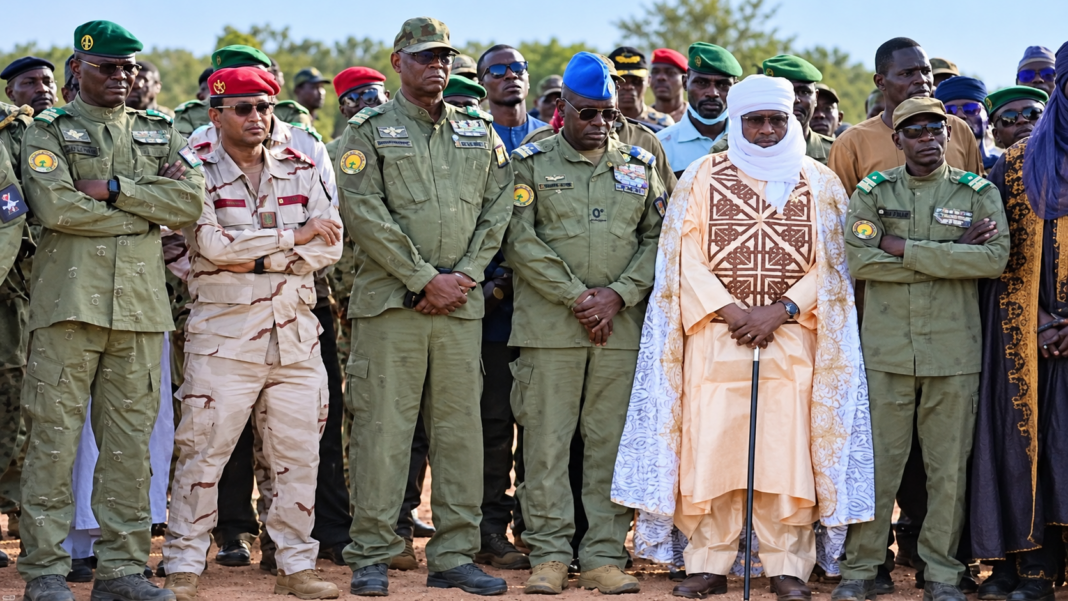
Coups in Mali, Burkina Faso and Niger have fundamentally reshaped the Sahel’s political and security architecture.
They were driven, in part, by widespread frustration over the perceived failure of previous governments and foreign-backed security strategies after years of military intervention failed to halt the insurgency.
But replacing one set of external partners with another does not automatically resolve the underlying crisis.
The new security arrangements must still demonstrate their ability to restore sustainable state control across rural areas, protect civilian populations and prevent armed organisations from rebuilding their networks.
The greater danger may ultimately be less the dramatic capture of national capitals than the gradual fragmentation of territory and state authority beyond them.
The Sahel becomes a geopolitical arena
The conflict has also become increasingly internationalised.
Al-Qaeda-linked groups, particularly JNIM, have expanded their activities from Mali into Burkina Faso and Niger and towards coastal West Africa, pushing the threat beyond its earlier geographic boundaries.
Al-Qaeda propaganda has continued to emphasise a long-term strategy based on prioritising adversaries, developing alliances and using periods of relative calm to rebuild capabilities, recruitment networks and influence. Hostage-taking has also been presented as a means of exerting pressure during negotiations.
Growing concern among US lawmakers over Al-Qaeda-linked organisations in Mali reflects how instability in the Sahel is increasingly being viewed as a security challenge extending beyond Africa.
At the same time, Russia’s role has expanded.
Moscow’s presence in Mali, initially associated with Wagner and subsequently the Africa Corps, has strengthened military cooperation between Russia and Bamako while drawing the Sahel into a wider geopolitical contest.
Published reports have also alleged the presence of Ukrainian operatives in the Sahel and accused them of providing intelligence to insurgents linked to the Azawad Liberation Front (FLA).
The region is consequently becoming an arena in which local insurgencies, state rivalries and competition between external powers increasingly overlap.
A war of attrition beyond the battlefield
The expansion and resilience of armed groups demonstrate the limits of an exclusively military response.
An army may retake a town or eliminate insurgent fighters, but those gains can prove temporary if government administration does not return, justice remains inaccessible, roads remain insecure and local grievances are left unresolved.
Armed groups can disperse, recruit and rebuild.
The result is increasingly a territorial, economic and social war of attrition characterised by ambushes, improvised explosive devices, attacks on infrastructure, economic coercion and sustained pressure on logistical routes.
This dynamic has also produced a vast humanitarian crisis. Displacement destroys livelihoods, disrupts markets and education, and places additional strain on communities already struggling with poverty and weak public services.
Conflict therefore creates new vulnerabilities which can, in turn, help perpetuate the conditions in which instability thrives.
An ecosystem of violence
The defining characteristic of the Sahel crisis may ultimately be that no single factor adequately explains it.
Vast territories that are difficult for governments to control, porous borders, pastoral mobility, uneven state presence, poverty and unemployment, communal disputes, weapons proliferation, informal economies, trafficking, pressure on natural resources, adaptable insurgent movements and weakening regional cooperation all interact.
Together, they have created what can be understood as an ecosystem of violence.
Insurgents thrive where institutional weakness intersects with economic grievance, local conflict, illicit economies, climate pressures and distrust of the state. Fighters may join an armed organisation for ideological reasons, but others may do so for income, protection, communal loyalty or in response to perceived injustice.
That makes the challenge far greater than simply eliminating individual fighters.
The long-term struggle is to rebuild enough state authority, justice, trust and economic opportunity to prevent local grievances from being transformed into regional insurgencies.
As long as the different dimensions of the crisis are treated separately, military offensives alone are unlikely to produce lasting stability.
The Sahel will remain vulnerable to armed movements capable of crossing borders, adapting to military pressure, controlling economic flows and exploiting institutional weakness.
It is precisely this convergence of insurgency, political fragility, economic warfare, humanitarian suffering and international rivalry that has made the Sahel one of Africa’s most intense and complex conflict zones.