
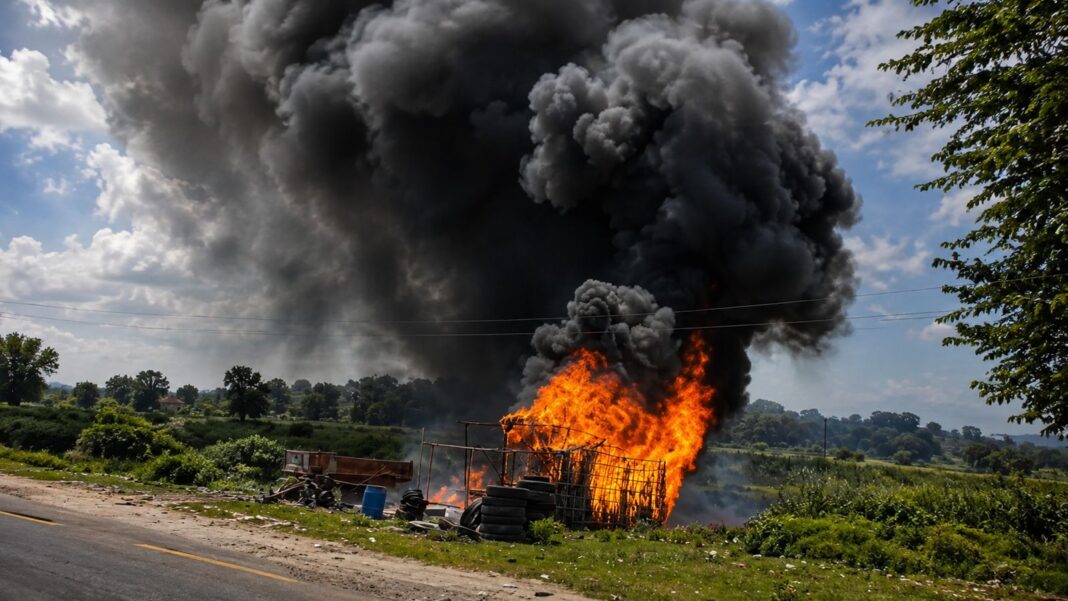

A fresh wave of communal violence in Nepal has heightened concerns over the safety of the country’s Muslim minority after clashes in Sunsari district left one person dead, dozens injured, homes and businesses damaged, and communities gripped by fear.
The violence erupted on 26 July in Kaptanganj, Dewanganj Rural Municipality, after a Hindu Bolbam religious procession passed a mosque. According to multiple reports, a dispute over loud music quickly escalated into stone-throwing, vandalism and violent confrontations between Hindu and Muslim groups.
As security forces struggled to restore order, police opened fire on the crowd. Om Prakash Mehta later died from gunshot wounds, while several civilians and police officers were injured. Authorities imposed curfews and movement restrictions across affected areas to prevent the unrest from spreading.
While officials have described the incident as a communal clash, Muslim organisations and independent observers argue that it reflects a broader pattern of growing hostility towards Nepal’s Muslim minority.
In a separate incident reported during the same period of heightened tensions, a Muslim street vendor was allegedly assaulted by a Hindu mob, further reinforcing fears that anti-Muslim hostility is spreading beyond isolated flashpoints.
The violence has intensified concerns among Muslims that their religious identity is making them increasingly vulnerable to intimidation and attack amid rising social and political polarisation.
According to Nepal News, the unrest in Sunsari did not occur in isolation but exposed “deeper structural and political factors” behind Nepal’s recurring communal tensions.
The publication reported that seemingly minor disputes involving religious processions have repeatedly escalated into communal confrontations, fuelled by inflammatory rhetoric, misinformation on social media, identity politics and inadequate mechanisms to prevent local disputes from spiralling into wider violence.
It further noted that local disagreements are increasingly being transformed into broader religious conflicts, placing greater pressure on minority communities and undermining long-standing social cohesion.
Despite the violence, local Muslim and Hindu leaders moved quickly to prevent further bloodshed. Community representatives reportedly held dialogue sessions to restore calm, while residents stressed that decades of peaceful coexistence should not be destroyed by those seeking to inflame religious divisions.
Although Nepal is constitutionally a secular republic, analysts say religious nationalism has gained influence in recent years. Muslims, who make up around five percent of the population, fear this shift has contributed to an increasingly hostile environment in which hate speech, mob violence and communal mobilisation are becoming more common.
Nepal’s National Human Rights Commission has launched an investigation into the Sunsari violence, calling for an impartial inquiry, accountability for those responsible, compensation for the family of the deceased and appropriate medical treatment for those injured.
For many Muslims, however, the events in Sunsari represent more than a single outbreak of violence. They are viewed as another warning sign of the growing challenges confronting Nepal’s religious minorities, with community leaders stressing that justice, accountability and interfaith harmony must be urgently protected.