
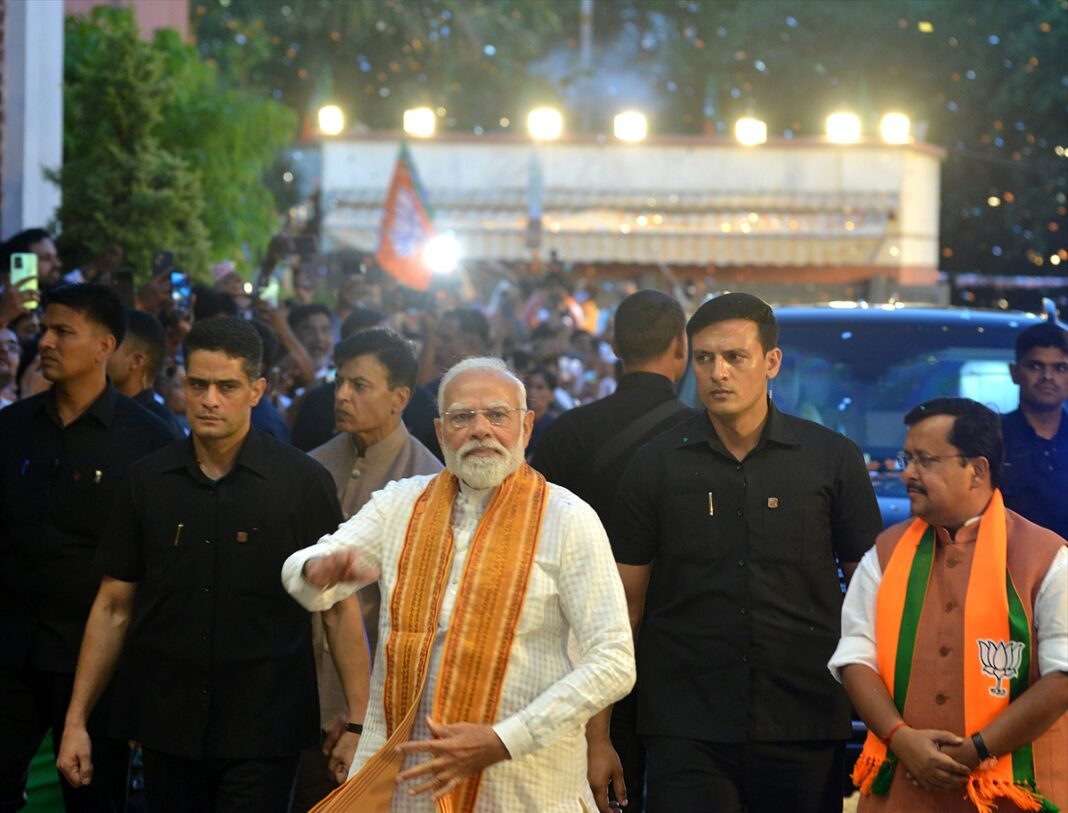

India’s long-serving Prime Minister Narendra Modi, one of Asia’s most entrenched political leaders, appears to have met an unexpected challenge in a youth movement born from a satirical joke.
In power since 2014, Modi has been credited with modernising and transforming parts of India’s economy, but has also been widely criticised for advancing an increasingly virulent Hindu-nationalist agenda through his Bharatiya Janata Party (BJP), with India’s roughly 200 million Muslims among those bearing the brunt of its politics.
India’s parliamentary opposition, meanwhile, has struggled to break the BJP’s dominance, with the Congress Party remaining out of power nationally and facing questions over its ability to regain mass appeal.
But a new challenge to Modi and the BJP may now be emerging from an unlikely source: a vibrant youth movement calling itself the Cockroach Janta Party (CJP) — a satirical play on the BJP that began as an internet meme before developing into a broader protest movement.
The catalyst came in May 2026, after India’s Chief Justice Surya Kant reportedly referred to certain unemployed young people and activists complaining about the system as “cockroaches” and “parasites”.
Political communications strategist Abhijeet Dipke responded on X by asking: “What if all the cockroaches come together?”
He subsequently launched a parody website for the fictional Cockroach Janta Party, presenting it as a voice for India’s unemployed and overlooked youth.
What began as an online joke quickly developed into a wider movement demanding government accountability, highlighting examination-leak scandals and challenging India’s political establishment.
The movement has increasingly become a vehicle for young Indians frustrated with the education system, unemployment and bleak job prospects.
It gained national prominence in June when large protests erupted in Delhi and other parts of the country over alleged irregularities in entrance examinations for undergraduate biomedical studies. The demonstrations placed significant pressure on the Modi government and culminated in the resignation of Education Minister Dharmendra Pradhan.
But the unrest has shown little sign of disappearing.
On Tuesday, police clashed with protesters in Patna, around 1,000 kilometres east of New Delhi, after crowds attempted to storm the office of the state’s chief minister. Demonstrators were protesting alleged irregularities in a civil-service entrance examination and demanding reforms to the testing system.
Similar protests and clashes have also erupted in neighbouring Jharkhand in recent weeks.
The Cockroach movement is now threatening to reignite protests nationwide, accusing the government of failing to honour promises made to its leaders.
Dipke, meanwhile, has taken his campaign on the road, assessing the condition of elementary-school classrooms and drawing further attention to deficiencies in India’s education system.
Movement leaders have also expressed doubts over the government’s willingness to meaningfully address their grievances.
As a result, another major protest march is being planned for 5 September — India’s Teachers’ Day — in Delhi.
Given the confrontations that have accompanied previous demonstrations, another large mobilisation could present Modi and the BJP with a fresh political headache.
For a movement that began with India’s disaffected youth being derided as “cockroaches”, the joke is increasingly appearing to be on the political establishment.