
As South Africa positions itself at the forefront of the international political and legal challenge to Israel’s conduct in Gaza, a parallel contest is unfolding at home over who shapes public debate, influences institutions and determines how fiercely Zionism can be challenged.
For Dr Tlaleng Mofokeng, that battle is increasingly being fought not only in political spaces, but through the courts, professional disciplinary processes and, she alleges, within the media.
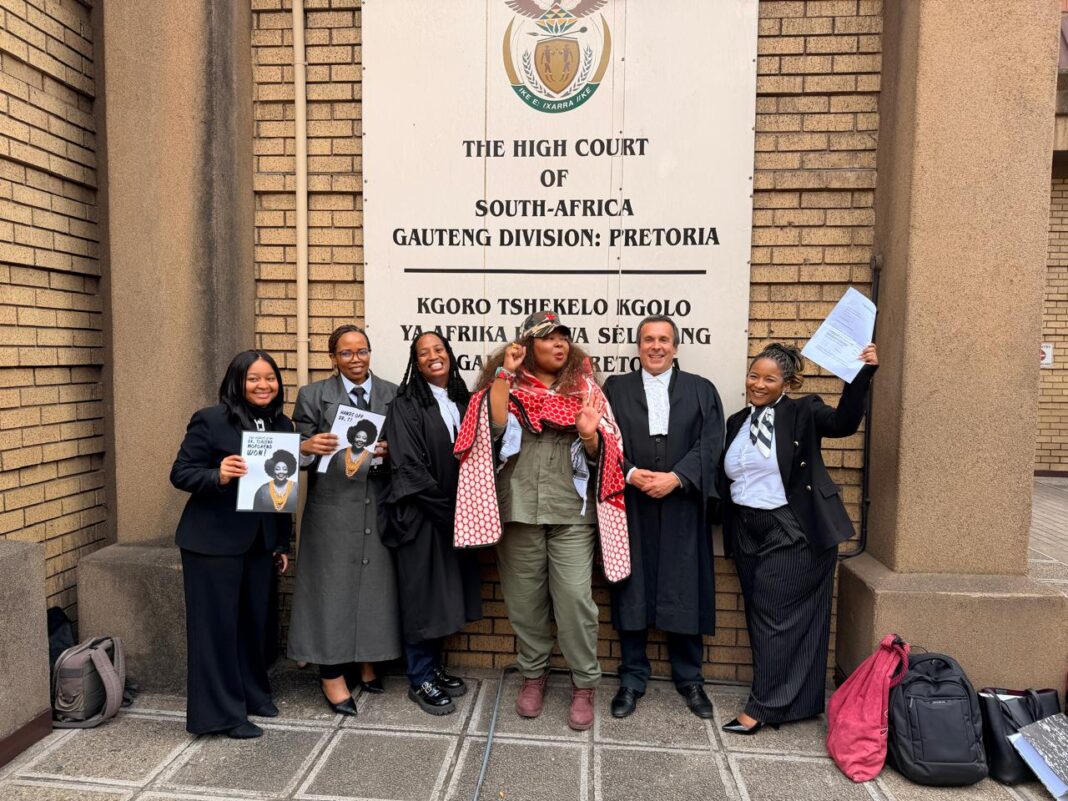
Speaking to One Nation Media (ONM), the former UN Special Rapporteur on the Right to Health reflected on her recent legal victory against the Health Professions Council of South Africa (HPCSA), saying the case exposed what she believes is the reach of organised Zionist advocacy in South Africa.
“They’ve been well-organised, well-funded, and their pockets run very deep,” Mofokeng said.
On 9 September, an agreement between the parties was made an order of the Pretoria High Court, setting aside the HPCSA’s finding of unprofessional conduct against Mofokeng and the R10,000 sanction imposed on her.
The original complaint, lodged by the South African Zionist Federation (SAZF) over social media posts concerning Israeli Prime Minister Benjamin Netanyahu and UN Watch executive director Hillel Neuer, was also dismissed.
Mofokeng maintained that the HPCSA should never have become involved in the dispute, arguing that her comments were connected to her work as a UN official and therefore fell within protections attached to that mandate.
But she believes the significance of the case extends far beyond her own professional battle.
“Historically, they do like using the courts processes and any disciplinary process for that matter to frustrate anyone who stands against Zionism,” she said.
“And so my case is perhaps the first one where they were taken on, head on, toe to toe.”
Mofokeng also criticised South Africa’s media environment, alleging that Zionist interests wield sufficient influence to affect which stories receive prominence and how they are framed.
“They have so much control, even in the media, that they can even decide what goes out and what goes on,” she said.
She pointed to what she described as a stark contrast between coverage of the original HPCSA finding against her and reporting on the High Court outcome that overturned it.
“When I won in the Pretoria High Court, not a single media covered that in the way that they did on television screens,” she said.
Her remarks speak to a broader contest surrounding Palestine advocacy in South Africa: whether influence is exercised solely through conventional political lobbying or also through professional bodies, legal processes and institutions that help shape public information.
For Mofokeng, that imbalance can be particularly difficult for activists who lack the financial and legal resources to defend themselves when complaints or disciplinary proceedings are brought against them.
“What this case did is actually bring to the fore what has been many activists that advocate suffering in silence and alone,” she said.
She views her legal fight as part of a wider international struggle involving academics, activists and professionals who, she says, have faced disciplinary action, dismissal or intimidation because of their support for Palestine.
“It’s not just about me as an individual healthcare worker,” she said. “It’s about pushing back against a global trend that seeks to punish … those who speak out and challenge its genocide.”
Mofokeng remains unapologetic about the language that led to the complaint, saying her words must be understood against the backdrop of the war in Gaza and the killing of healthcare workers.
“And when I was speaking against the genocide… as a medical doctor and having seen how my own medical doctors and colleagues, they had been killed, many raped and tortured to death,” she said.
“It’s absolutely correct to punch up to power in the way that I did.”
She also rejects the conflation of opposition to Zionism with hostility towards Judaism, drawing a distinction between a political ideology and a religious identity.
“Zionism is a very violent system that has nothing to do with people’s religion,” Mofokeng said.
“South Africans have always been very clear. We have never been confused about what imperialism is, what racism it was, what apartheid is, and what this genocide is.”
The legal battle comes as Mofokeng moves from international human-rights advocacy into electoral politics. After completing her term as UN Special Rapporteur, she was announced in July as the Economic Freedom Fighters’ mayoral candidate for Johannesburg.
The transition adds another dimension to her criticism of institutional power and influence. Mofokeng says she accepted the EFF’s deployment because she believes Johannesburg cannot be surrendered to political forces she regards as hostile to its residents and to the Palestinian cause.
Her mayoral campaign, however, extends well beyond foreign policy. She has placed municipal governance, corruption, infrastructure, water losses, inequality, safety and accountability among the major issues confronting Johannesburg, arguing that the city’s resources must be directed towards the people who live in it.
For Mofokeng, however, the lesson of her legal battle is broader.
“It’s done for a chilling effect,” she said. “If you can silence a medical doctor, a well-known feminist in the country, a UN official while doing UN work in her home country for doing that work, it would be a complete disaster.”
Her case has therefore become part of a larger South African debate over the limits of political speech, the influence of organised advocacy and the increasingly contested space surrounding Palestine, with Mofokeng insisting that those who challenge Zionism must not be intimidated into silence.