
“And among His signs is that He created for you spouses from among yourselves so that you may find tranquility in them, and He placed between you love and mercy. Surely in this are signs for people who reflect.” — Surah Ar-Rum (30:21)
Marriage is described in the Qur’an as one of the signs of Allah — a sacred bond built on tranquillity, love and mercy.
Yet for many young Muslims today, getting married has become increasingly difficult.
What should be a commitment between two people seeking to build a life pleasing to Allah has, in many communities, become surrounded by expectations about money, status, appearance, culture, education, careers, weddings and lifestyles.
Marriage can sometimes feel less like finding a suitable life partner and more like satisfying a long list of requirements.
The challenge can be even more complicated for reverts to Islam, particularly when marriage becomes intertwined with questions about whether a person embraced Islam sincerely or simply to make a relationship acceptable to a Muslim family.
“At the same time, we must be cautious of situations where someone takes shahādah merely in order to marry a Muslim, with little or no commitment to learning or practising Islam. Sometimes the relationship already exists and the shahādah is treated simply as a way of making the marriage acceptable to the family. This is a serious matter and should not be approached casually,” Moulana Owais Docrat told One Nation Media [ONM].
It raises an uncomfortable question: Have we made marriage harder than Allah intended it to be?
When culture becomes more powerful than religion
Culture remains an important part of Muslim communities. Different cultures have their own traditions, celebrations and ways of bringing families together.
The problem begins when cultural expectations become so influential that they overshadow Islamic principles.
A marriage may be delayed or rejected because a family expects an expensive wedding, a particular bride price, a certain venue, or a spouse from a particular cultural, ethnic or social background.
Reverts can face another layer of scrutiny, particularly where families question whether they will fit into established cultural traditions.
“Marriage is not only about the two individuals involved. Families must also think about the future: the Islamic environment of the home, the upbringing of the children and ultimately the protection of their īmān. Our communities need to support sincere reverts while also taking responsibility to distinguish genuine commitment from a purely marriage-driven conversion,” said Docrat.
In some cases, a potential spouse may have good character and religious commitment but still be considered unsuitable because they do not satisfy a family’s cultural expectations or social standards.
For reverts, the search for marriage can also be closely connected to the search for belonging.
“Reverts may suddenly lose part of their previous social world and is trying to build a new Muslim identity, family and sense of belonging. Marriage can therefore appear to offer stability, companionship and a Muslim home very quickly. That desire is understandable, but it also means reverts need strong mentorship and community support so that loneliness or the need to belong does not push them into an unsuitable marriage,” said Docrat.
There is nothing inherently wrong with culture. It gives communities identity, tradition and continuity. But culture should not become a barrier to something Islam has made permissible.
When cultural practices become more important than the qualities Islam encourages Muslims to seek in a spouse, communities may need to reconsider their priorities.
The pressure to have everything before marriage
Another major challenge confronting young Muslims is financial pressure.
Many young people believe they need a degree, successful career, car, house, savings and complete financial security before they can even consider marriage.
Financial responsibility is undoubtedly important. Marriage comes with obligations, and entering it without considering one’s ability to provide and manage those responsibilities can create serious difficulties.
But there is a difference between being responsible and believing that someone must already have their entire life established before they are considered ready to marry.
Young Muslims are entering adulthood in difficult economic conditions. Unemployment, rising living costs and expensive housing have made financial independence increasingly difficult.
For some, the expectation is no longer simply to be responsible. It is to have everything.
Marriage is therefore continually postponed until some imagined future in which the career, salary, home and lifestyle are all perfect and meet society’s expectations.
But does that future ever arrive?
From compatibility to “vibes”
Modern relationship culture has also changed how people think about choosing a spouse.
Social media and popular culture often present romance as being built around chemistry, attraction, excitement and lifestyle compatibility.
People speak about wanting someone who gives them “butterflies”, matches their lifestyle and creates instant chemistry.
Attraction and compatibility are important. A person should be comfortable with and attracted to the person they intend to marry.
But marriage requires more than a temporary feeling.
The excitement of meeting someone can change. Physical appearance changes. Financial circumstances change. Couples experience illness, grief, stress and hardship.
What becomes critical during those moments is character.
Can the person communicate? Can they be patient? Can they accept responsibility? Can they apologise? Can they remain respectful during disagreements? And, importantly, what is their relationship with Allah?
Those questions may appear less exciting than whether someone gives you “butterflies”, but they can become far more important when the excitement of a new relationship fades.
Are social media standards making marriage unrealistic?
Social media has created another definition of what marriage is supposed to look like.
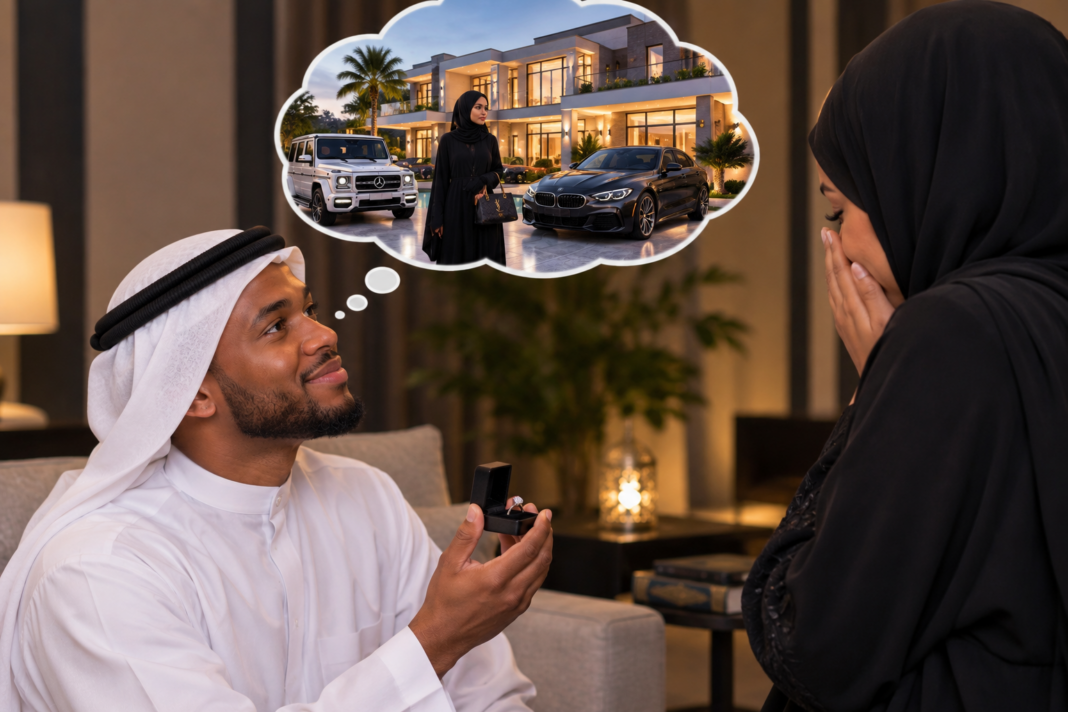
Young Muslims are constantly exposed to engagement rings, extravagant weddings, luxury holidays, elaborate proposals, romantic surprises and carefully curated images of seemingly perfect couples.
What social media rarely shows is the difficult side of marriage.
People do not usually post their arguments, financial struggles, disagreements with in-laws, periods of emotional distance or the work required to sustain a healthy relationship.
Instead, audiences see the polished final picture.
That can create unrealistic expectations, particularly when people begin comparing the realities of their own lives with carefully selected moments from somebody else’s.
Sheikh Laja Yasini, a director at the Islamic Independent Court (IIC), told ONM that material considerations were increasingly overshadowing the qualities Islam emphasises when choosing a spouse.
“Too often, wealth, status, career, property and lifestyle are given greater importance than deen and character. The Prophet (peace be upon him) said: “If there comes to you one whose religion and character please you, then marry him.” (Jami’ at-Tirmidhi 1084/1085 and Sunan Inb Majah 1967). Yet many marriages are delayed until a person meets increasingly unrealistic financial standards.”
The danger is that a young person may eventually stop searching simply for a suitable spouse and begin searching for an entire lifestyle.
The fear of choosing the wrong person
Not every delay in marriage is driven by materialism or culture.
Some young Muslims are genuinely afraid of marriage.
They may have grown up witnessing unhappy relationships, divorce, betrayal, abuse or constant conflict in their families and communities.
For someone whose primary experience of marriage has been watching one fail, committing to another person for life can be frightening.
Those fears should not simply be dismissed.
Marriage is a serious commitment, and young Muslims should not be encouraged to marry without understanding the responsibilities that accompany it.
But the answer may not be to avoid marriage altogether.
“O humanity! Be mindful of your Lord Who created you from a single soul, and from it He created its mate, and through both He spread countless men and women.” — Surah An-Nisa (4:1)
Instead, Muslim communities may need to place greater emphasis on marriage preparation.
Young people need to understand communication, financial responsibility, emotional maturity, conflict resolution and the rights and responsibilities of both spouses.
People can spend years preparing themselves for a career while receiving very little preparation for one of the most important relationships they may ever enter.
Families can help — or complicate the process
Marriage in Islam is not simply about two individuals. Families can play an important role in providing wisdom, guidance and protection.
Parents may recognise concerns that a young person, blinded by emotional attachment, does not immediately see.
But family involvement can also become a source of difficulty when preferences turn into demands.
A potential spouse may be rejected because of nationality, race, family background, financial position, profession or social standing.
Sometimes the central question is no longer whether the person has good character and commitment to Islam, but whether they fit the image a family has created of the “ideal” husband or wife.
Young Muslims can then find themselves trapped between competing expectations.
They are encouraged to marry, but when they find someone they believe is suitable, that person may not satisfy every requirement placed upon them.
It raises another difficult question: Who are we ultimately trying to satisfy — Allah, our families, our communities or society?
The dating dilemma
Young Muslims are frequently told not to date, yet many are never taught what a healthy Islamic process of getting to know a potential spouse should actually look like.
This can create confusion.
Some may avoid the subject of marriage altogether, while others drift into relationships without clear intentions or move repeatedly between partners.
Imam Omar Suleiman once said during a discussion: “Going from relationship to relationship kills our own ability to have meaningful relationships.”
Islam does not require two complete strangers to marry without learning anything about one another.
“Islam therefore does not require two complete strangers to marry blindly. Prospective spouses may see and speak to one another for the purpose of marriage while observing the Islamic prohibition of khalwah – being together in isolation and maintaining appropriate boundaries and family involvement.” said Docrat.
Sunan Ibn Majah 1865 records the Prophet Muhammad (peace be upon him) telling a man considering marriage: “Go and look at her, for that is more likely to create love [or lasting affection] between you.”
At the same time, Islam establishes boundaries around private interaction between unrelated men and women.
“Marriage has become more difficult while avenues to impermissible relationships have become easier and more socially accepted. Liberal social norms, dating culture and easy access to illicit relationships reduce the incentive to pursue marriage early. The Prophet (PBUH) warned that marriage is a means of safeguarding chastity and lowering the gaze (Sahih al-Bukhari 5066),” said Yasini.
Getting to know a potential spouse can therefore involve meaningful discussions about religion, family, finances, children, careers, responsibilities, expectations and the future while maintaining appropriate Islamic boundaries.
Have we made marriage too complicated?
Marriage today has become surrounded by so many expectations that some young Muslims no longer know what they are supposed to achieve before taking the step.
They are expected to be financially established, emotionally mature, physically attractive, professionally successful and socially accepted.
They may be expected to afford a particular wedding, home and lifestyle.
At the same time, they are searching for someone who is religious, attractive, educated, financially secure, emotionally intelligent, culturally compatible and somehow perfect.
But perfection does not exist.
Marriage is itself a journey through which two imperfect people build, learn and grow together.
“They are a clothing for you, and you are a clothing for them.” — Surah Al-Baqarah (2:187)
That does not mean young Muslims should rush into marriage, ignore genuine incompatibility or overlook warning signs.
It means the standards by which potential spouses are judged deserve closer examination.
Financial responsibility matters. Attraction matters. Compatibility matters. Family guidance matters.
But when wealth, status, ethnicity, lavish weddings, social approval and imagined perfection begin outweighing faith and character, something has shifted.
Perhaps the question facing Muslim communities is no longer simply why young people are struggling to get married.
It is whether we have created a culture around marriage that has made something encouraged by Islam unnecessarily difficult.
And when a young Muslim stands before the choice of a spouse, perhaps the questions should become simpler: Are we prioritising faith or status, character or appearance, a lifelong companion or a lifestyle?