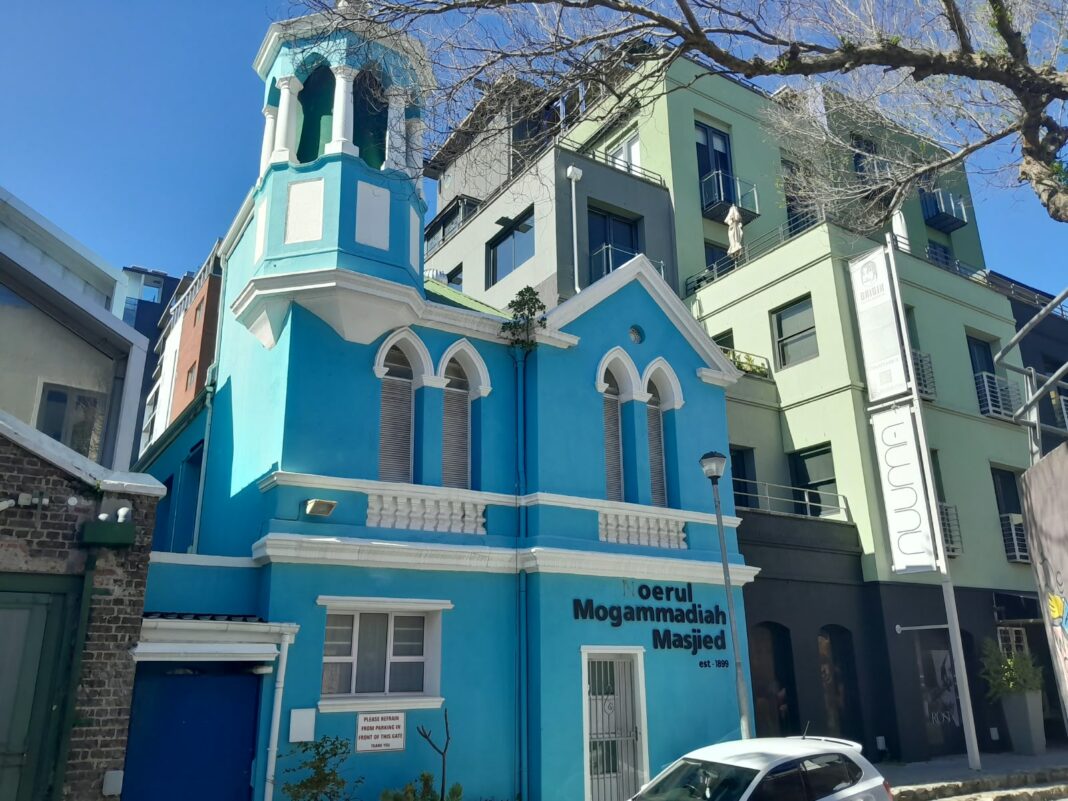

Tourist guides describe De Waterkant as a picturesque neighbourhood of Georgian and Cape Dutch cottages on the edge of Cape Town’s city bowl.
But behind its postcard appearance lies a painful history.
The mixed community that once called the area home was torn apart after apartheid authorities declared it a white area and imposed the Group Areas Act, forcing people of colour from their homes and separating them from their churches, schools and community institutions.
Amid that upheaval, one institution remained standing: the Noerul Mohammadiyyah Masjied, commonly known as the Vos Street Mosque.
More than half a century later, the mosque now finds itself surrounded by another transformation as property prices rise and gentrification reshapes De Waterkant.
Its message, however, is unequivocal: the mosque will not be sold.
Despite what its imam says have been numerous offers for the property, its leadership insists that neither dollars, euros, pounds nor any other currency will persuade it to surrender ground it regards as sacred.
A 127-year-old landmark
The mosque is situated in Loader Street, below the slopes where the sacred Islamic shrine of Imam Abdullah Kadi Abdus Salaam — Tuan Guru — lies within the historic Tana Baru Cemetery in Bo-Kaap.
Tuan Guru was born in 1712 as a royal prince from Tidore in Indonesia. In 1793, he established South Africa’s first madrasah and helped found the Auwal Masjied in Dorp Street, regarded as the country’s oldest mosque.
The lane where the Vos Street Mosque stands was once known as Vosgang, before apartheid-era forced removals scattered much of its congregation.
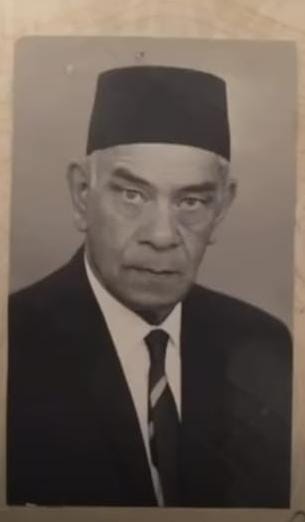
The mosque was built in 1899 after the land was purchased in 1894 by Salie Jacobs, who bequeathed it to the Muslim community.
Today a recognised heritage site, the distinctive mosque is also known for its melodious post-Tarawih supplications and cultural songs, known as poejies or thikrs, during Ramadan.
“We are not interested in their dollars”
Resident Imam Madinee Mayman has been involved with the mosque since the mid-1990s and became its imam in 2018 following the death of his predecessor.
Speaking to One Nation Media about the mosque’s history, congregation and the pressures it now faces, Mayman said gentrification has become a persistent challenge.
“We are faced with gentrification issues all the time. It is very, very rife here, gentrification in the sense of everything is an issue in the surrounding area and it is not even South Africans,” he said.
“These foreigners came into Cape Town with their mega dollars and euros and they want to dictate to the Muslims what their likes and dislikes are.”
Mayman said the mosque had received repeated approaches from potential buyers but had rejected them.
“We have had numerous offers to sell this building. We are not interested in their pounds, euros or dollars or whatever currency they are offering. We have flatly refused and made it impossible for anyone to buy. This is our place of worship and here in Cape Town, South Africa, the grounds and building of our masjied is sacred and not to be sold,” the Imam added.
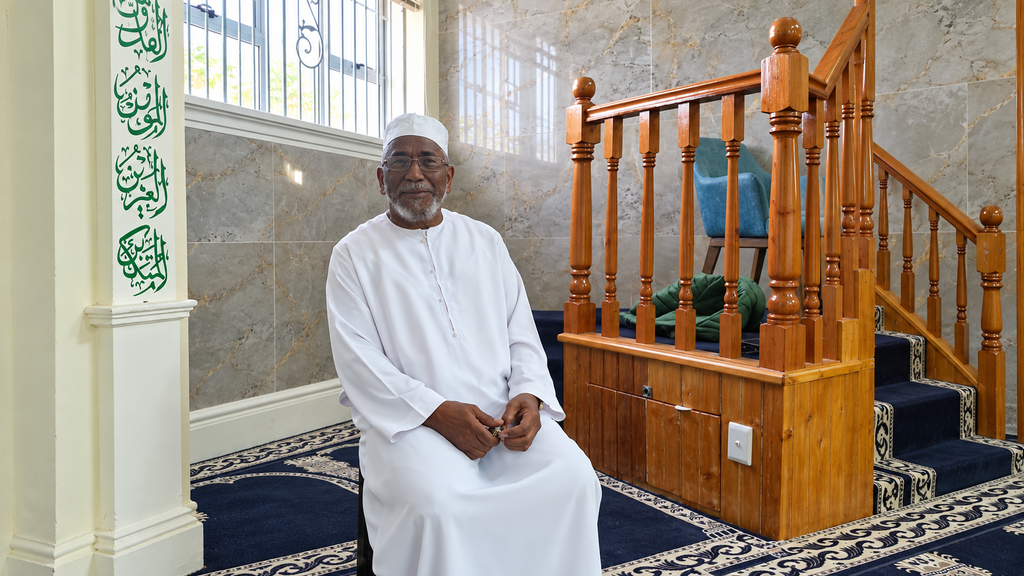
The 57-year-old imam, who is from Salt River, said tensions have also arisen with some newer residents surrounding the mosque.
“Everything is an issue for them. I don’t know why they came here and bought properties. They are rude and have no respect. They are not bothered that this is a religious place and this happens anytime, even just before one has to start prayer sermons,” he said.
Emptied by the Group Areas Act
Before apartheid-era forced removals, the mosque served a much larger Muslim community living in and around De Waterkant.
“In 1966, the government wanted this as a white area. This was a very well-frequented mosque. The surrounding area filled this masjied previously,” Imam Mayman said.
“The forceful removal by the apartheid government saw a big loss of those in attendance as people had to leave. Some managed to buy in Bo-Kaap and others were scattered into places like Bonteheuwel, Hanover Park, Manenberg, Surrey Estate and Mitchells Plain.”
Today, much of the congregation consists of people who work nearby, while former residents and their descendants return particularly during Ramadan and Eid.
“Nowadays, it’s the people in our area that work here who come for prayer times and we have a Syrian family that also comes to the mosque often. It’s only on special occasions such as Eid and during the month of Ramadan that we see more people in attendance, and that is the people from back then who were originally from here before they were evicted,” he explained.
Like several other mosques in Cape Town, Vos Street Mosque has also had to navigate tensions surrounding the athaan and parking.
Its leadership has chosen to keep its own call to prayer inside the mosque.
“We have limited activity at our masjied because we do not have members. We do not sound the call of prayer. We do all our athaan inside so that we don’t have issues with the foreign neighbours. We depend on and accept what we hear from the Chiappini Street Mosque’s athaan for the call of prayer, which is very close and can be heard very well.
“We already have parking issues here with neighbours, so when we know that we are expecting cars, we don’t ask, we inform them thereof because we are allowed parking,” he added.
The mosque, one of 12 affiliated to the Bo-Kaap body, has a small committee and no contributing membership base. It relies largely on collections made during prayer times and donations to meet its running costs.
Yet Mayman believes its role extends beyond maintaining a place of worship.
“The masjied has a very important role to play. My wish is to have an open day here and invite this predominantly white community around us, to educate them in what Islam has to offer,” Imam Mayman concluded.
“We lived as one big family”
For former residents, the mosque and surrounding streets are also reminders of a community that existed before apartheid fractured it.
Seventy-seven-year-old Alwieya Price, née Salie, was born in Bo-Kaap and grew up in Loader Street before her family was relocated to Grassy Park in 1968.
She remembers a neighbourhood whose residents crossed racial, cultural and religious lines.
“There were many people living with us in the area — Muslims, Christians, Xhosas, Portuguese, Italians, a bit of everyone — and the love we had for one another was beyond race, denominations or anything. We got along very well and looked out for one another and lived in peace and harmony. It wasn’t a problem,” she said.
“We were poor but didn’t even realise it because we all lived well together. Our street was like one big family. Our playgrounds were huge and in close proximity we had Signal Hill, Sea Point beach, parks, and we had the city down the road with all the shops for everything. We loved playing in the road where we all played together. It was like one big family living in the road.”
Price was in her final year of school when she first heard that forced removals could reach her community.
“I was in matric and thought it was rumours about District Six only and thought it’s not us and they would not touch us. The people were informed and said they were not going to move, but had no alternatives and they couldn’t protest because the Special Branch, known as law enforcement at that time, would jail you if you protested.”
What followed, she said, left a wound that never fully disappeared.
“It was very, very sad. Deep pain was created. We were wrenched from our roots and it was like it didn’t matter what they were doing to our people. It felt like they were moving people as if they were busy on a chess board,” she said.
Her family was initially offered a house in Manenberg, which her father rejected. They were later offered a property in Grassy Park that required a deposit.
“My father refused the house in Manenberg because the area had no roads, just sand, no lights, no buses, and the neighbours that were relocated from other areas to there were sitting drinking on the streets. My parents chose a house from a map and went with a Grassy Park house which they got from the Divisional Council, but it cost R365 deposit, which was a lot of money at the time that we didn’t have. I started working at Cape Town Municipality after matric and we saved for the deposit.”
Then came the day they were removed.
“We left the area and we were moved with army trucks to Grassy Park. Nobody said goodbye to one another. We just left and didn’t want to turn around to even look back at our places. It was not goodbye to our neighbours who all had to leave and be scattered all over, it was till we meet again,” she said.
Residents from Napier, Hudson, De Waterkant, Rose, Smith and Somerset roads, extending towards Dock Road, were among those removed. Price recalled that Portuguese and Italian residents classified as white under apartheid legislation were permitted to remain.
“The experience was very traumatic and the hurt cut deep for everyone,” said Price, who never came to regard Grassy Park as the home she had lost in Loader Street.
Decades later, she was given an opportunity to return to her former family home as part of a short documentary.
The experience brought back emotions she had carried since the forced removals.
“An Austrian guy got permission to film the short documentary in our house with me and I could not allow others to see the extent of hurt that was created by the forced evictions. I told myself that I cannot cry, I have to be strong. I didn’t portray any emotions because I didn’t want to give them the satisfaction to see how deeply it hurts me,” she concluded.
More than five decades after apartheid scattered the community that once filled its prayer rows, the Vos Street Mosque remains.
Its congregation may be smaller and the neighbourhood around it transformed, but the building continues to carry the memory of those who were forced out — and the insistence of those who remain that some things are not commodities.
For this mosque, sacred ground is not for sale.