

Algeria’s parliament has approved the deployment of military forces to neighbouring Niger to protect strategic energy infrastructure, marking a significant shift in the North African country’s longstanding policy of avoiding military operations beyond its borders.
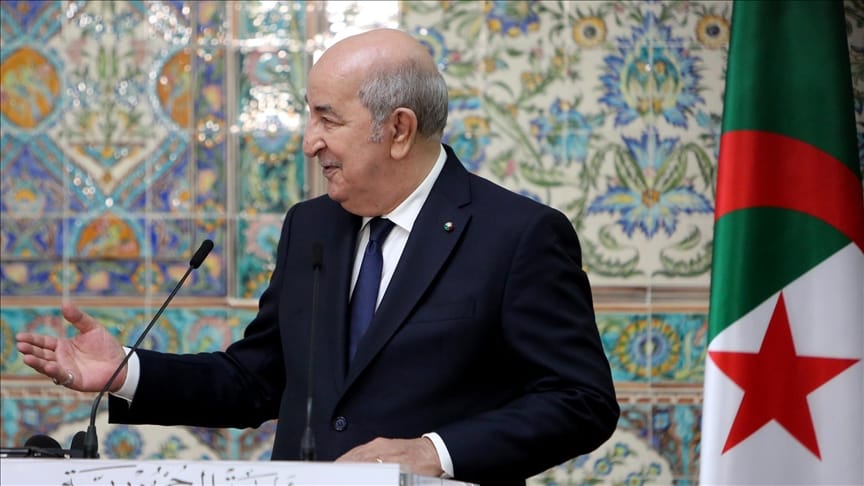
Both chambers of Algeria’s parliament endorsed the decision on Sunday, 25 October, following a request by President Abdelmadjid Tebboune, paving the way for what would be the country’s first overseas ground troop deployment since the 1973 Arab-Israeli war.
The Council of the Nation, Algeria’s upper parliamentary chamber, unanimously approved the proposal during an emergency closed-door session, with all 148 participating members voting in favour.
The People’s National Assembly, the lower chamber, subsequently approved the deployment, completing the parliamentary authorisation required under Algeria’s constitution.
Article 91 of the constitution allows the president to deploy military forces abroad with the approval of a two-thirds majority in both chambers of parliament.
The proposed operation is expected to focus on protecting Algerian energy investments and strategic infrastructure in Niger, particularly projects operated by the state-owned oil and gas company Sonatrach.
According to Algerian media, the deployment will involve a military detachment responsible for securing personnel and facilities belonging to Sonatrach’s international exploration and production subsidiary, SIPEX.
The number of troops involved and the precise timetable for their deployment have not been officially disclosed.
A historic shift in Algeria’s military doctrine
The decision represents a major development in Algeria’s defence policy, which has historically prioritised territorial sovereignty, border security and non-intervention in foreign conflicts.
Algeria last deployed conventional ground forces abroad during the October 1973 Arab-Israeli war, when its military supported Egypt against Israel.
The proposed mission in Niger would therefore mark its first such deployment in more than five decades.
Unlike the 1973 conflict, however, the latest operation is primarily intended to protect strategic infrastructure and strengthen bilateral security cooperation rather than participate in a conventional war.
Reuters reported that Algerian forces are expected to deploy to Madama in northern Niger, close to the Libyan border, where French troops previously maintained a military presence.
The planned deployment comes amid mounting security challenges across the Sahel, where armed groups, cross-border trafficking networks and political instability continue to threaten regional security.
Algeria and Niger strengthen military cooperation
The parliamentary approval follows a visit to Algeria last week by Niger’s Defence Minister, General Salifou Mody, who held discussions with President Tebboune and the Algerian military’s chief of staff, General Saïd Chanegriha.
During the visit, both countries signed a military cooperation agreement aimed at strengthening their strategic partnership, securing their shared borders and improving coordination against regional security threats.
Relations between Algiers and Niamey have improved considerably in recent months following a period of diplomatic tension.
In late August, Algeria deployed Sukhoi Su-30 fighter jets and an aerial refuelling aircraft to Niger following an attempted military mutiny that threatened the government in Niamey.
The Algerian government said the operation was conducted at the request of Nigerien authorities to support their efforts to restore stability.
President Tebboune subsequently confirmed Algeria’s involvement, highlighting the growing defence partnership between the neighbouring countries.
The two countries share an extensive desert border and face common challenges involving armed groups, smuggling networks and insecurity across the wider Sahel.
Energy security and strategic interests
Beyond military cooperation, Algeria and Niger have increasingly sought to deepen economic ties, particularly in the energy sector.
Sonatrach maintains oil exploration interests in northern Niger, while both countries are involved in plans for the Trans-Saharan Gas Pipeline, a proposed infrastructure project designed to transport Nigerian natural gas through Niger and Algeria towards European markets.
Protecting these investments has become an important strategic priority as Algeria seeks to strengthen its regional energy position and expand economic cooperation with its southern neighbours.
Niger, meanwhile, has been working to diversify its security and diplomatic partnerships following years of political instability and the withdrawal of French military forces.
The planned Algerian deployment therefore reflects a convergence of interests between the two countries, with Niamey seeking additional security assistance and Algiers looking to protect its investments and consolidate its influence in the Sahel.
The decision also raises wider questions about Algeria’s evolving regional role, as the country moves beyond its traditionally cautious military posture towards a more active security presence in neighbouring states.
With parliamentary approval secured, attention will now turn to the scale, timing and operational mandate of the deployment, and whether it signals a broader transformation in Algeria’s approach to regional security.


