
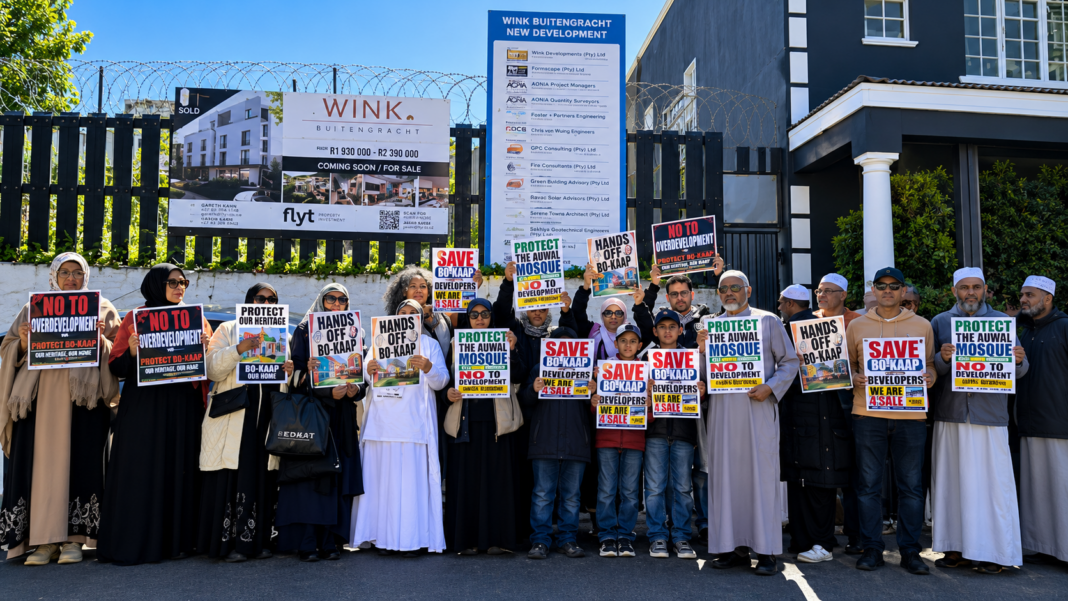

As cranes move into the historic streets of Bo-Kaap, residents of Cape Town’s centuries-old Muslim community fear the neighbourhood’s Islamic identity is being steadily eroded by development, short-term rentals and a wave of gentrification.
For generations, Bo-Kaap has been more than a collection of colourful houses on the slopes of Signal Hill. Its mosques, homes and narrow streets carry the history of Islam at the Cape, including the Auwal Masjid, established in 1794 and regarded as South Africa’s oldest mosque.
Now, as new developments get under way and others await construction, residents and civic organisations say they will resist what they view as the unchecked commercialisation of their neighbourhood. One resident estimated that as much as 30% of property in Bo-Kaap has already been acquired by people from outside the community.
The latest protests centre on a six-storey development approved by the City of Cape Town on land purchased in 2017. Once completed, residents fear the building will tower over the nearby Auwal Masjid and fundamentally alter the character of the surrounding area.
While much of Bo-Kaap is residential, the property earmarked for the development is zoned for mixed use. Residents nevertheless argue that the scale and purpose of the project are incompatible with the historic and predominantly residential character of the neighbourhood.
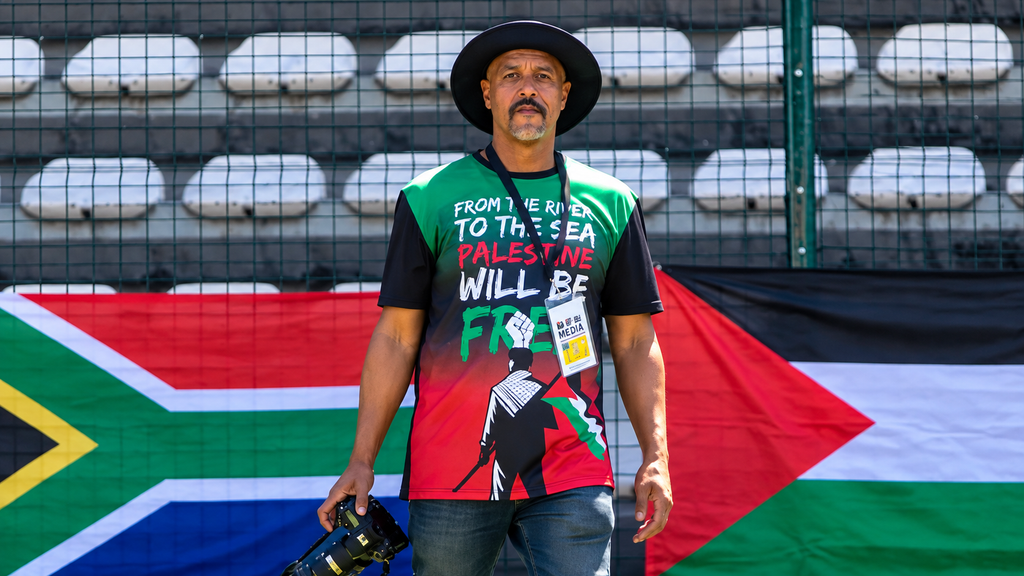
Ebrahim Christian, vice-chairman of the Bo-Kaap Ratepayers Association and a lifelong Dorp Street resident, said the community would continue opposing developments it believed threatened its heritage.
“This is gentrification happening in our area with the approval of the City. We will not stop the fight against what is happening here,” he said.
Christian maintains that the City’s planning decisions are increasingly allowing commercial developments to encroach on a community historically shaped around residential life, mosques and family networks.
“Our area is zoned for residential only, yet the City approved this development,” Christian said. “It is the City that does the zoning, but they are going against what they put in place and allowing these developers to come and take over. They are going against their own processes. It is contradictory.”
Residents have staged protests in the area over the past few weeks, with particular concern about the development’s proximity to Auwal Masjid.
Cassiem Abdullah, committee secretary of Auwal Masjid, said the project would be less than 30 metres from the historic mosque and could place additional pressure on an already congested part of Bo-Kaap.
“We are protesting against this development, which is just around the corner from this historic mosque, which is frequented all the time by our people and many tourists throughout the day.
“This development is not even 30 metres away, in the same street as the Buitengracht Masjid. This is a very narrow road and there is not much parking, and if this development goes ahead, then it is definitely going to impact the mosque,” he said.
For residents, however, the concern stretches beyond congestion and parking. It is also about whether Muslim religious life will remain protected as more visitors, businesses and short-term accommodation establishments enter the neighbourhood.
“Another concern is that these businesses do not want the Athaan [call to prayer] to sound too loud in the area, and that is going to be a problem for our people,” Abdullah added.
The mosque committee has taken legal action in an attempt to halt the development, with the Bo-Kaap Ratepayers Association supporting its efforts.
“We, the ratepayers association, are standing with the mosque to stop this development from going ahead,” Christian said.
For protesting residents, the dispute has become symbolic of a much wider battle over who Bo-Kaap is ultimately being developed for.
One protester, who asked not to be named, said: “We will not stand for this. This is our heritage. We will continue our protests against this and all other developments in this area.
“These businesses don’t belong here. We will not allow rich foreign business owners who don’t even live in South Africa to come and strip us of our heritage and make Bo-Kaap a business hub.”
Objections to the development date back several years. The matter went through a consultative process in 2023 involving residents, the City, the developer and heritage authorities. Approval from the relevant heritage authority was obtained, while the City’s final decision remained outstanding until July this year.
Residents and civic leaders argue, however, that the consultation process failed to adequately address their concerns about the impact on Bo-Kaap’s heritage and community life.
“The Ratepayers Association is also busy lodging complaints and the deadline is later this month, but the City and developer have already claimed that public participation did take place,” Christian said.
“We know that their public participation processes are flawed. Whether we object or not, they still do as they please or find ways to dismiss the people’s concerns. They are not looking at our people and our concerns. This is not a municipality for its people. To them, it’s all about the money they receive from foreign investors.
“That means more to them than our people and our heritage. We are totally against any further gentrification in this area and we will not stop fighting against it.”
Short-term accommodation has become another flashpoint. Christian said a growing number of properties in Bo-Kaap had been converted into Airbnb-style accommodation, including several in Dorp Street itself.
“As it stands, we are having verbal and physical confrontations with the guests who book these places because they have no respect for our people, our heritage and our religious activities,” he said.
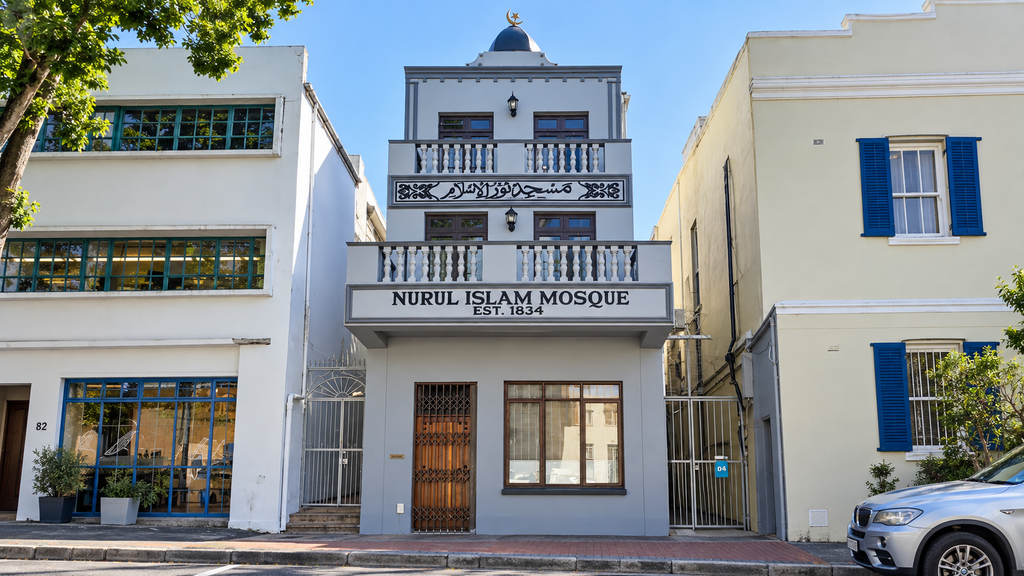
The current dispute is not Bo-Kaap’s first confrontation with large-scale development. Residents previously opposed the Dorp Hotel development near the Noon Gun complex, with the developer later fined R750,000 by the City for construction-related breaches.
Christian said a number of properties owned by people living outside South Africa had also been converted into short-term rentals. According to him, Dorp Street, where Auwal Masjid is situated, now has six such businesses.
For Bo-Kaap residents, the battle is therefore about far more than one six-storey building.
It is about whether a neighbourhood shaped over centuries by Muslim families, mosques, the Athaan and a distinctive Cape Muslim heritage can remain a living community — or whether its history will increasingly become a backdrop for tourism, property investment and commercial development.
As construction moves closer to some of the most important symbols of Islam at the Cape, residents insist they will continue fighting to ensure that Bo-Kaap remains not merely a heritage attraction, but a home.