
Ra’eesah Hassim reflects on her family’s painful experience of losing their Umrah savings and asks what protections are now in place to prevent pilgrims from being exploited by those entrusted with facilitating their journey to the House of Allah.
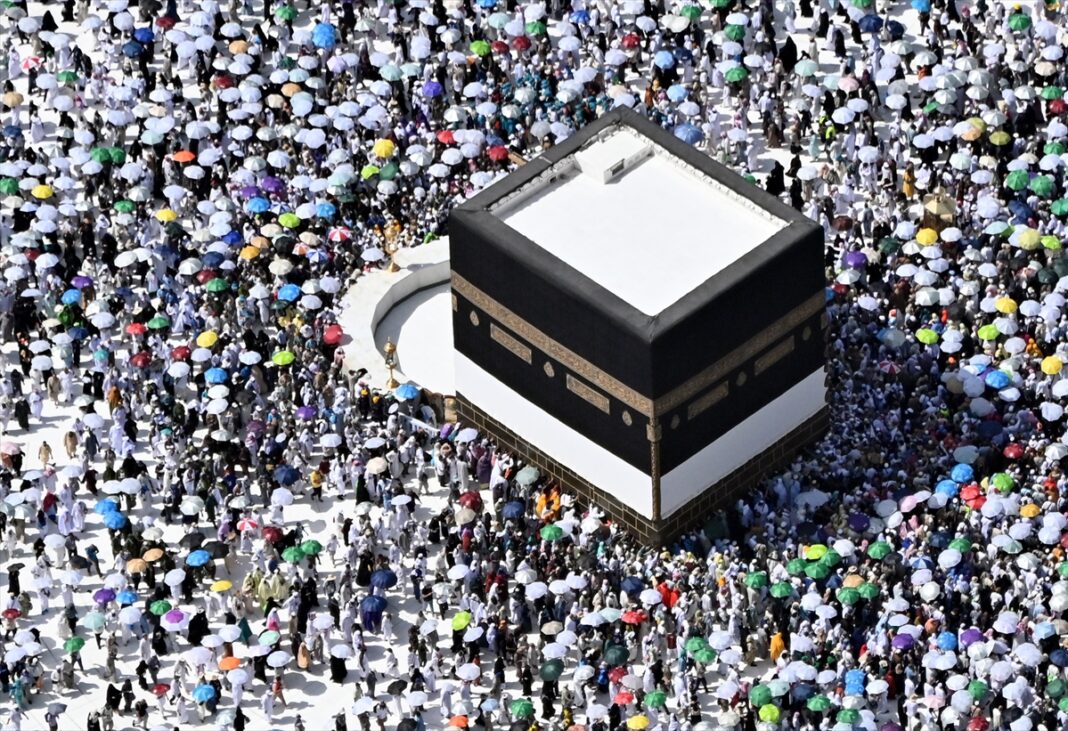
It was never about luxury. It was about answering a calling that sits deeply within the heart of a Muslim — the hope of one day standing before the Kaaba and visiting the sacred places of Makkah and Madinah.
In 2019, that hope became a financial nightmare.
My family entrusted our savings to a travel operator, which later became the subject of criminal and civil proceedings, and my family, like other affected pilgrims, are yet to recover the money we paid.
The experience left me with a question that extends far beyond my own family: how do you protect people whose desire to worship can be exploited by those they trust?
Such exploitation preys on the very sincerity that makes pilgrims vulnerable — our eagerness to answer the call of Allah and our trust that a fellow Muslim offering to help us get there would not betray that trust.
For Muslims, Hajj and Umrah are not ordinary trips. They are acts of worship, sacrifice and devotion. Saving for them can take years. For many families, every payment represents months, sometimes years, of putting money aside.
When that money disappears, it is not simply a failed holiday.
It is the crushing of an aspiration to answer a religious calling.
The Prophet Muhammad (SAW) warned against deception, saying: “He who cheats us is not of us.” That warning carries particular weight when the deception occurs within an industry built around facilitating acts of worship.
To understand how pilgrims can better protect themselves, I spoke to former president of the South African Hajj and Umrah Council (SAHUC), Shaheen Essop, who has been involved in SAHUC’s leadership since 2005.
His explanation revealed an industry that has changed considerably since the system my family encountered in 2019.
SAHUC was appointed in 1996 to regulate and administer South Africa’s Hajj processes. Under Essop’s leadership, the accreditation system for operators was tightened. Operators were required to demonstrate their bona fides, financial capability and registration with relevant travel bodies, including the International Air Transport Association (IATA) and the Association of Southern African Travel Agents (ASATA). Their track records and any outstanding matters were also scrutinised before accreditation was granted.
The number of operators subsequently declined significantly, from 42 in 2005 to around 15 or fewer by 2020, according to Essop. The intention was to reduce the risks faced by pilgrims.
But accreditation could never provide an absolute guarantee.
“You don’t sit in the presence of that particular operator to see his or her day-to-day business dealings,” Essop explained.
That distinction matters.
In the New Heights case, Essop recalled being at the airport when pilgrims were unable to board their flight because their visas had not been issued. According to him, the necessary funds had not been paid into the system to generate those visas. He stressed that he could not discuss the case in detail because matters remain before the courts.
The broader warning is clear: a business can appear legitimate while its financial management remains invisible to the customer.
Essop explained that one of the risks within the industry was cross-financing. This could happen when an operator took deposits from Hajj pilgrims and used those funds to cover expenses elsewhere, such as Umrah accommodation. While the operator might intend to fulfil its obligations later, serious problems arise when money belonging to one group of pilgrims is being used to meet obligations owed to another.
That is why the biggest lesson from my family’s experience is not simply to find a reputable operator. It is to understand where your money is actually going.
And that landscape has now changed.
According to Essop, the Saudi Ministry of Hajj and Umrah’s implementation of Nusuk has fundamentally altered the Hajj process. For South African pilgrims, 2026 was the first year under the new system. Pilgrims now pay directly into the Saudi Ministry’s system rather than handing their Hajj funds to a South African Hajj operating company.
South African Hajj operating companies are no longer accredited by SAHUC. Instead, individuals who have performed Hajj themselves can register with the Ministry as independent guides. These guides can then market packages offered by Saudi-based service providers to pilgrims in South Africa.
Essop’s advice is unequivocal: pilgrims must use Nusuk for Hajj. If someone in South Africa claims they can guarantee your Hajj and asks you to hand over your money as an intermediary, he says that should itself be treated as a red flag.
My family’s experience cannot be undone. The years of saving, the anticipation and the opportunity we lost cannot simply be refunded.
But perhaps something constructive can come from it.
For anyone intending to visit the House of Allah (SWT), the lesson is simple: your sincerity should never replace your due diligence.
Ask where your money is going. Understand who is receiving it. Verify the process. And above all, do not assume that someone operating in the name of pilgrimage is automatically worthy of your trust.
The desire to stand before the Kaaba should be a source of hope, not fear.
Pilgrims deserve the freedom to pursue that calling without having their trust exploited.