
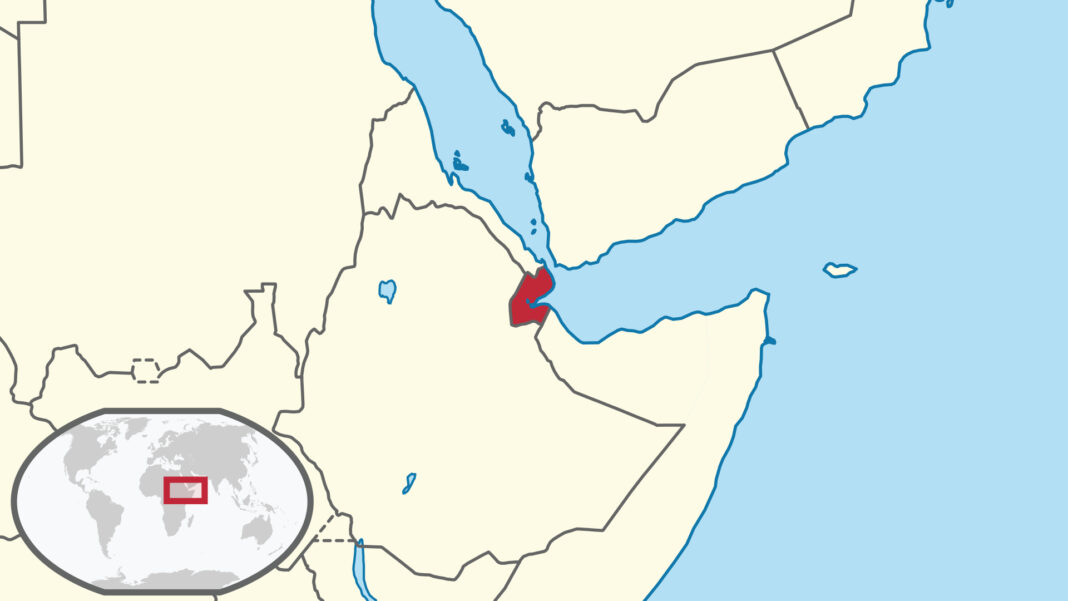

At least 139 migrants, including 15 children, have died and another 84 remain missing after an overcrowded boat carrying more than 300 people capsized off the coast of Djibouti while attempting to reach Yemen, according to the United Nations.
The vessel, carrying 305 passengers, sank near Guhere, north of the port town of Obock, during the night of October 8-9. Only 82 people survived the disaster, all of them Ethiopian nationals.
The International Organization for Migration (IOM) confirmed on Sunday that the death toll had risen from 109 to 139 after another 30 bodies were recovered, making it one of the deadliest tragedies along the migration route connecting the Horn of Africa to the Arabian Peninsula.
Rescue operations remain underway, with authorities warning that the death toll could rise further as dozens of passengers remain unaccounted for.
IOM Chief of Mission in Djibouti Alexandre Coissac described the tragedy as a devastating loss of life and warned of the dangers facing migrants attempting to reach the Gulf.
“This is a devastating loss of life. Our thoughts are with the survivors and the families who have lost loved ones or remain without news of their relatives,” he said.
Djiboutian authorities have been coordinating search and rescue operations, recovering bodies and arranging burials, while humanitarian teams provide medical assistance to survivors.
The IOM is supporting 64 survivors at its migrant response centre in Obock, providing healthcare, psychological support, food and assistance in re-establishing contact with their families.
Dangerous journey to the Gulf
Every year, tens of thousands of migrants, primarily from Ethiopia and other parts of the Horn of Africa, undertake the dangerous journey through Djibouti and across the Bab el-Mandeb Strait to Yemen.
Most hope to travel onwards to Saudi Arabia and other Gulf countries in search of employment, security and improved living conditions.
Known as the Eastern Route, the migration corridor is among the world’s most dangerous, exposing travellers to overcrowded boats, shipwrecks, human trafficking, exploitation and abuse.
Despite the risks, poverty, unemployment, political instability, insecurity and the growing effects of climate change continue to drive people to undertake the journey.
According to the IOM, more than 20,000 movements from Ethiopia into Djibouti have been recorded since September 10, highlighting the continuing scale of migration towards the Arabian Peninsula.
The latest disaster follows a series of deadly incidents along the same route.
More than 900 migrants died or went missing attempting the journey in 2025, when the number of people travelling along the corridor increased by 18%, according to IOM statistics.
In March 2026, another boat disaster left nine people dead and 45 missing, underscoring the persistent dangers facing migrants crossing the narrow but treacherous waters between Africa and Yemen.
Yemen’s worsening humanitarian crisis
The latest tragedy comes amid renewed instability in Yemen, where more than a decade of conflict has devastated infrastructure, displaced millions and left much of the population dependent on humanitarian assistance.
Fighting between Houthi forces and the internationally recognised Yemeni government, backed by Saudi Arabia, has intensified in recent weeks, triggering further displacement and worsening an already severe humanitarian crisis.
According to the IOM, more than 200,000 people have been displaced across Yemen since early September following renewed fighting, while thousands of Yemenis have fled across the sea to Djibouti in search of safety.
Despite Yemen’s instability, the country remains a major transit point for African migrants seeking to reach wealthier Gulf states.
Djibouti, a small country strategically located on the Horn of Africa, lies across the Bab el-Mandeb Strait from Yemen and has become both a departure point for migrants travelling towards the Arabian Peninsula and a destination for Yemenis fleeing conflict.
The IOM said it was working closely with Djiboutian authorities to assist survivors, support affected families and strengthen measures aimed at preventing further deaths at sea and along migration routes.
The UN agency has repeatedly called for safer migration pathways and greater international cooperation to address the humanitarian and economic pressures driving people to risk their lives on dangerous journeys.
With dozens still missing and recovery operations continuing, the latest shipwreck has once again exposed the deadly consequences of irregular migration across one of the world’s busiest and most hazardous maritime corridors.