
By Hasina Kathrada
Hasina Kathrada explores how veteran South African photographer and journalist Jimi Matthews connects the forced removals of District Six with generations of Palestinian dispossession in his exhibition, From District Six to Palestine.
For veteran photographer and journalist Jimi Matthews, the warning that “the old will die and the young won’t remember” sits at the heart of From District Six to Palestine, his exhibition at Museum Africa in Johannesburg, bringing together photographs made across decades and two histories of forced displacement.
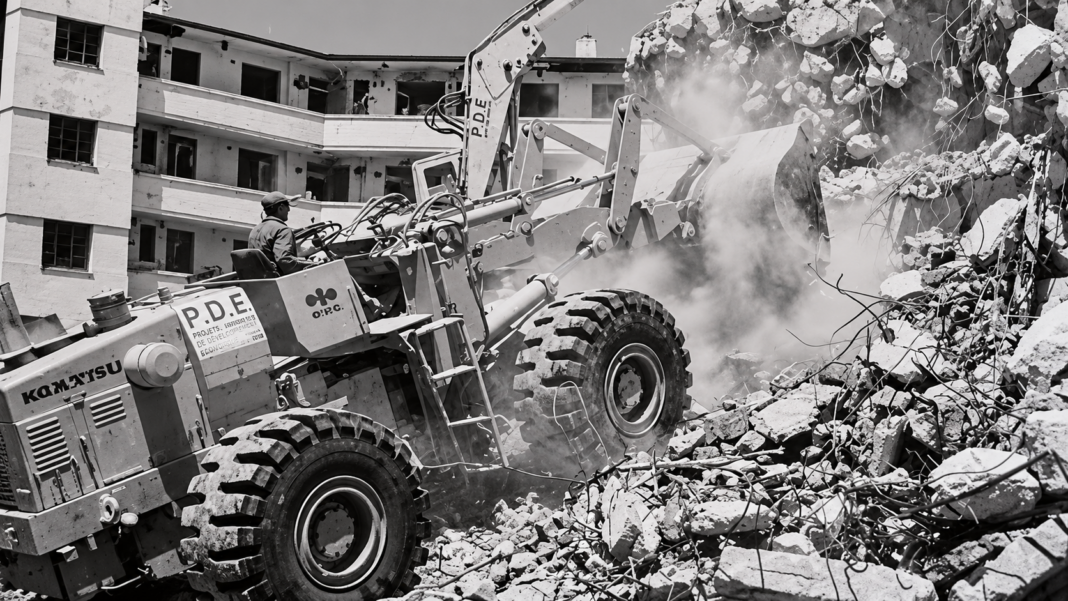
Matthews’s connection to District Six is deeply personal. Members of his family were among those forced to leave after the area was declared white under the Group Areas Act in 1966. More than 60,000 people were forcibly removed, mainly to the Cape Flats.
He remembers trucks piled high with furniture and belongings, heading into the unknown as neighbours watched.
“I vaguely remember the muted conversations as the axe swung ever closer,” he says.
For Matthews, forced removal was never simply about moving people from one place to another.
“Forced removals were not simply about the displacement of people but the destruction of communities,” he says.
Families and neighbours were separated, while many were moved far from their jobs to areas without adequate schools, clinics or public transport.
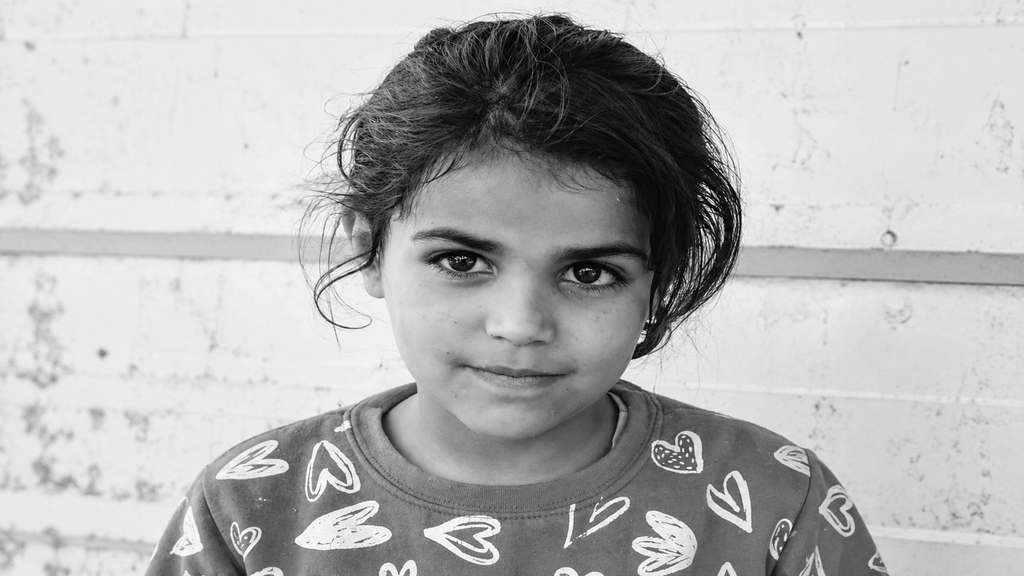
“This forced displacement resulted in massive trauma for the communities involved and it often led to the breakdown in social cohesion,” Matthews says.
“This trauma has had generational impact which we are still dealing with three generations later.”
That experience has shaped the way Matthews thinks about Palestine.
“For the past 80 years the Palestinian population have been subjected to an even more extreme case of forced removals from their ancestral land,” he says.
He traces that history from the Nakba of 1947–48 to the present day, through the expulsion of Palestinian families and the destruction of homes and villages across Palestine.
Matthews first travelled to Palestine in 1989 to cover the First Intifada and says he was struck by the similarities with South Africa.
In March 2023, he returned to the occupied West Bank to make photographs commemorating the 75th anniversary of the Nakba and the first anniversary of the killing of Palestinian journalist Shireen Abu Akleh.
This time, Matthews turned his camera towards ordinary Palestinian life.
“It was an opportunity for me to share, through my photographs, the beauty and generosity of the people that I had experienced on previous visits,” he says.
“Through my images I wanted to share a slice of the ordinary.”
Then came 7 October 2023 and the genocide in Gaza that followed.
Matthews returned to the West Bank that December, when Christian clergy appealed to Christians around the world to join them in Bethlehem in solidarity over Christmas. A small South African contingent made the journey, and Matthews added to the body of photographs he had produced earlier that year.
Three years later, he still finds himself thinking about the people he photographed.
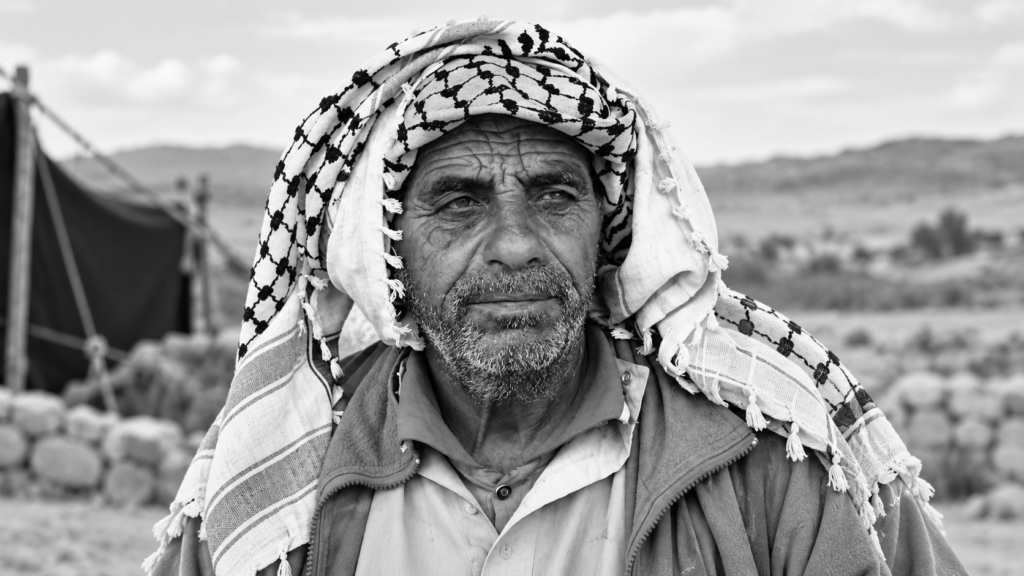
“Despite the occupation, ordinary Palestinians are determined to carry on living life to the full. Something I tried to bring to the fore in my pictures,” Matthews says.
“Now I often wonder how they are coping with the occupation and with the genocide.”
Bringing his Palestine photographs together with his District Six archive has reinforced a question that has followed Matthews for decades.
He has seen how the consequences of apartheid-era forced removals continue to be felt three generations later. He now wonders what generations of dispossession, occupation and displacement will mean for Palestinians.
“How many generations will it take for the Palestinian people, in Palestine, and those in the diaspora, to recover from the brutality that has been visited on them for generations now?”
For Matthews, preserving these histories is also about ensuring they remain visible to generations who did not witness them.
“The old will die and the young won’t remember.”
From District Six to Palestine is at Museum Africa in Newtown, Johannesburg, until 31 October, as part of Khanya College’s House of Movements 40th anniversary celebrations.