
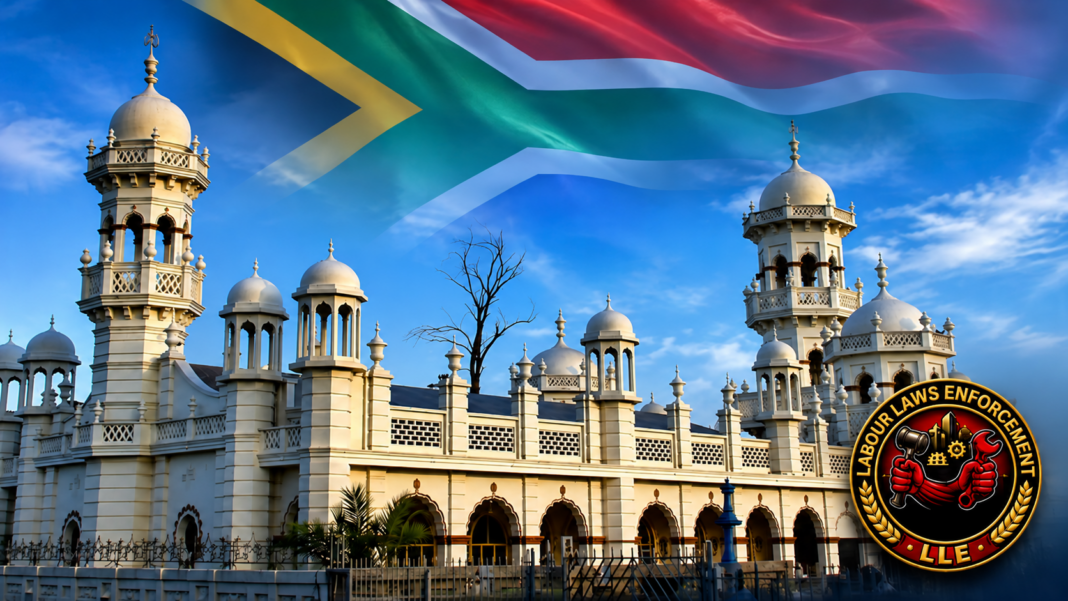

South African Muslim leaders have raised concerns over the deliberate targeting of Islamic institutions following calls by Labour Laws Enforcement (LLE) to conduct inspections at madrasahs.
In a statement issued on 15 November, LLE alleged that qualified South African sheikhs and moulanas were being overlooked in favour of foreign nationals. The organisation further raised concerns over the underpayment of Islamic educators.
However, the statement has raised questions about why Islamic institutions have been singled out, who is behind these campaigns and whether organisations such as LLE have any legal authority to enforce South African labour laws.
Speaking to One Nation Media (ONM), Dr Faisal Suliman, chairperson of the South African Muslim Network (SAMNET), expressed concerns that the targeting of mosques could form part of a wider campaign against the Muslim community.
“And we do think this is part of an orchestrated campaign to demonise the Muslim community, an anti-Islam campaign that is being spread from the West, probably funded most likely from the United States, whether it comes through Israel or at Israel’s direction or cooperation with Zionist entities,” said Suliman.
Suliman linked his suspicions to South Africa’s solidarity with Palestine and its genocide case against Israel at the International Court of Justice (ICJ). However, evidence establishing a direct connection between LLE and foreign governments has yet to be presented.
Who gave LLE the authority?
Despite its official-sounding name, Labour Laws Enforcement is not a government body and has no statutory authority to conduct labour inspections.
On 28 July 2026, the Department of Employment and Labour issued a statement specifically identifying LLE among several pressure groups that had become self-appointed labour inspectors. The department condemned such conduct, stressing that labour inspections must be carried out by legally authorised officials.
Speaking to ONM, attorney Ismail Mahomed, legal adviser to the United Ulama Council of South Africa (UUCSA), condemned the organisation’s proposed inspections.
“They have no right to come and visit any place of business, any place of education, any place of worship to conduct any inspections,” said Mahomed.
He further explained that mosques, madrasahs and other Islamic institutions were under no legal obligation to cooperate with LLE’s inspections, describing such conduct as vigilantism.
Suliman warned that allowing independent organisations to assume the responsibilities of the state could open the door to intimidation, harassment, corruption and extortion.
The dangers of social media misinformation
Similar concerns emerged during anti-immigration campaigns led by movements such as March and March. Earlier this year, a fake notice bearing South Africa’s coat of arms circulated on social media, claiming that undocumented foreign nationals had been ordered to leave the country by 30 June.
The South African Police Service (SAPS) dismissed the notice as fake, confirming that no such government directive had been issued. The incident highlights how easily unofficial announcements can be mistaken for government instructions, particularly when circulated through WhatsApp and other social media platforms.
Are Islamic institutions being unfairly targeted?
While acknowledging that all institutions must comply with South African labour laws, Suliman questioned why LLE’s statement specifically targeted Islamic institutions rather than religious institutions more broadly.
He drew parallels with campaigns against halal certification and what he described as disproportionate scrutiny of Muslim-owned businesses employing foreign nationals. He warned that existing anti-immigration sentiments could be exploited to fuel hostility towards Muslims.
However, Suliman also acknowledged that racial divisions exist within the South African Muslim community and need to be addressed at an institutional level.
“I think it’d be silly to not recognise that there is resentment from many indigenous black Africans about many of the institutions traditionally established and run in the majority by Indians, of having been isolated or not given prominent positions,” said Suliman.
Suliman emphasised that qualified black South African ulama are equally capable of fulfilling religious and leadership roles within Islamic institutions.
“You know, it’s self-defeating to not acknowledge the presence of qualified black alims who are perfectly capable of delivering sermons and performing the duties of imamate,” he said.
Are our religious educators being treated fairly?
Mahomed clarified that UUCSA does not condone the employment of foreign nationals who are not legally permitted to work in South Africa. However, he explained that there is no legal obligation requiring madrasahs to pay Islamic educators salaries equivalent to those of schoolteachers.
Despite condemning LLE’s approach, both Mahomed and Suliman acknowledged that Islamic institutions could do more to improve the working conditions and remuneration of their employees.
Mahomed criticised mosque and madrasah committees whose members fight for their own employment rights but fail to extend those same rights to their employees.
Suliman also called on Muslim communities to recognise the importance of investing in religious education, while acknowledging that not all mosques have the financial resources to offer high salaries.
“A moulana is the investment in the future of your country, in the moral compass of your community,” said Suliman.
Islam demands justice, not discrimination
In Surah Al-Ma’idah (5:8), Allah commands believers to stand firmly for justice and not allow their hatred of others to cause them to act unjustly.
This verse is particularly relevant amid growing anti-immigration sentiments, as concerns over unemployment cannot justify discrimination, intimidation or the unfair targeting of individuals and institutions based on their nationality or religion.
Equally, Islamic institutions have a responsibility to uphold the rights of their employees and ensure that those entrusted with educating future generations are treated with fairness and dignity.
While genuine labour concerns must be addressed through lawful channels, they should never become a means of demonising an entire religious community. The question remains: is this really about labour law enforcement, or are South African Muslims becoming the target of something far greater?


