
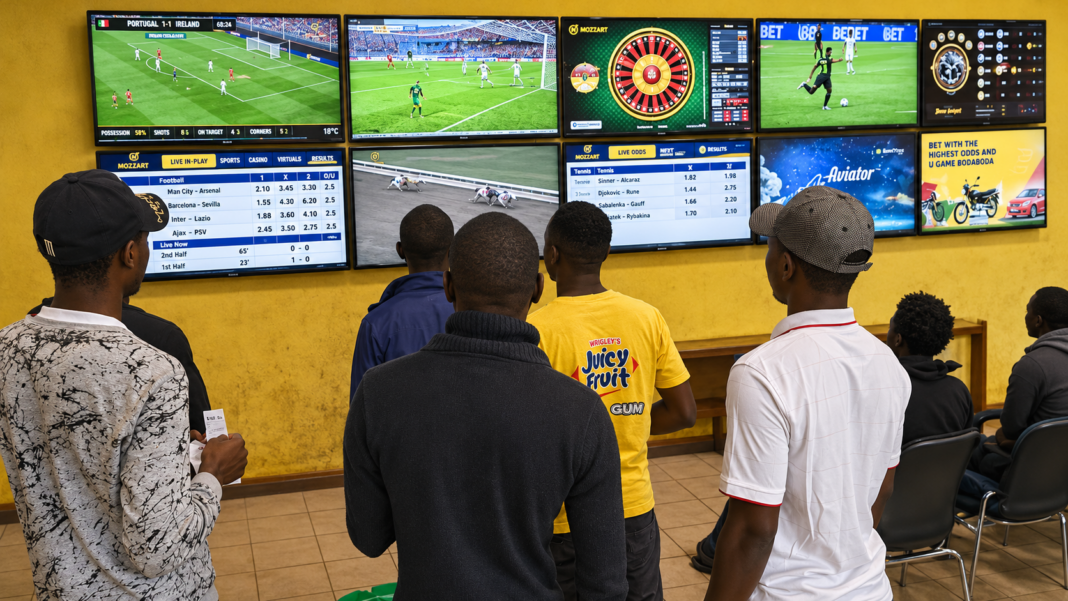

Millions of Nigerians are chasing a winning ticket as Islamic scholars warn that the pursuit is costing households, faith and futures.
From roadside kiosks in Lagos to lecture halls in Kano, from buses in Abuja to living rooms in Port Harcourt, the pitch is the same: pick the right score, win big, change your life.
Sports betting has become an everyday feature of Nigerian life. For some, it is an escape from financial hardship. For others, it has become a habit they cannot abandon.
The scale is vast. Some estimates suggest that more than 60 million Nigerians, many aged between 18 and 40, gamble regularly in an industry estimated to be worth $3.63 billion in 2025. Its popularity raises urgent questions about household finances, youth welfare, addiction and moral responsibility in a country where religious teachings shape public life.
For Muslims, the issue carries a clear religious dimension: Islam explicitly prohibits gambling.
When hardship meets a promise
Nigeria’s economic pressures provide the context. Rising living costs, unemployment, underemployment and limited pathways to financial independence have made the prospect of instant wealth attractive, particularly to young people.
The promise, however, conceals a different reality: repeated losses, mounting debts, damaged relationships and addiction.
Digital technology has made participation easier than ever. Betting apps from Bet9ja, SportyBet and 1xBet allow wagers without visiting a shop. Live betting enables repeated stakes during a single match, while bonuses and celebrity endorsements make gambling appear normal and rewarding.
What Islam says
Respected Nigerian preacher Sheikh Muhammad Khalid represents an important religious voice in the debate. From an Islamic perspective, gambling is not merely unwise — it is haram.
The Qur’an addresses gambling alongside intoxicants in Surah Al-Ma’idah, verses 90–91: “O you who have believed, indeed, intoxicants, gambling, [sacrificing on] stone altars [to other than Allah], and divining arrows are but defilement from the work of Satan, so avoid it that you may be successful.”
The verses warn that these practices can generate hostility, resentment and distraction from the remembrance of Allah and prayer.
The prohibition reflects a broader principle: wealth should be acquired through legitimate, productive and ethical means, not games of chance that expose participants to loss.
Islam encourages lawful trade, entrepreneurship, employment, charity and responsible investment — avenues that promote effort, fairness and accountability. Gambling, by contrast, encourages staking money on uncertain outcomes for gains that may never materialise.
For Muslim families, the consequences become serious when money intended for food, rent, sadaqah, school fees or healthcare is diverted into betting.
Islamic teachings also emphasise moderation, self-discipline and hifz al-mal, the protection of wealth. When bettors chase losses with larger wagers, the pursuit becomes a destructive cycle.
Who bears the cost?
The harm extends beyond the person placing the bet.
Families face unpaid bills, borrowing, secrecy and conflict when household income is repeatedly diverted. Young people are particularly vulnerable when financial desperation combines with peer pressure, enthusiasm for football and constant exposure to promotions. A losing bet can trigger another in the hope of recovery, deepening the burden.
People experiencing compulsive gambling may also suffer anxiety, shame and social isolation. Some conceal losses or delay seeking help for fear of condemnation.
Religious leaders, including Muslim clerics, therefore have a dual role: promoting awareness while encouraging compassion. Public humiliation can discourage people from seeking assistance. Families, mosques and community organisations can instead support counselling, early intervention and responsible financial habits.
Beyond the pulpit
Warnings alone will not stem the epidemic.
Regulators need to strengthen age restrictions, scrutinise misleading advertising, improve transparency around promotions and support accessible treatment for gambling-related harm. The Supreme Court’s November 2024 nullification of the National Lottery Act, which left regulation to individual states — some of which lack dedicated gaming authorities — has created regulatory gaps that need urgent attention.
Schools, universities, religious institutions and youth organisations can educate young people about financial risk, how odds are designed to favour the house and the warning signs of compulsive behaviour. Independent research is necessary to establish prevalence and assess safeguards. Gamble Alert’s 2025 snapshot, which found that 93% of those receiving treatment were male and 45% were heavy users of virtual-only betting platforms, is a start.
Ultimately, Nigeria must address both gambling and the economic pressures that make instant wealth attractive. Employment, vocational training and accessible routes to legitimate income can reduce the desperation exploited by promises of quick returns.
For Muslims, the religious position is unequivocal: wealth should be pursued through lawful and ethical means, not gambling. For Nigerian society more broadly, the challenge is to prevent the promise of easy money from deepening financial insecurity.
Confronting the epidemic will require a combination of religious guidance, public protection, compassionate support and credible economic alternatives.


