
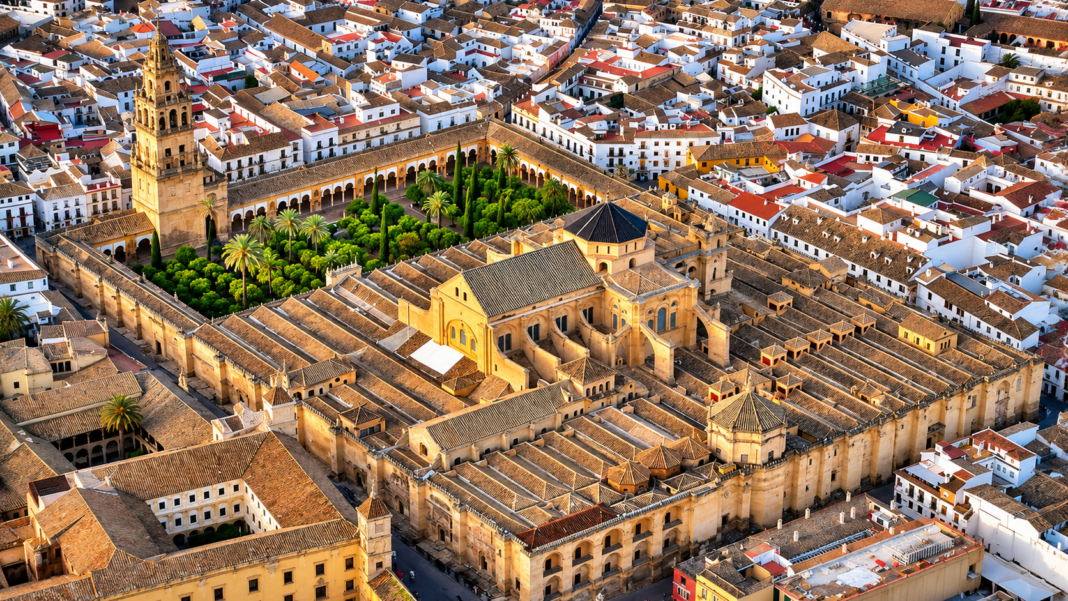

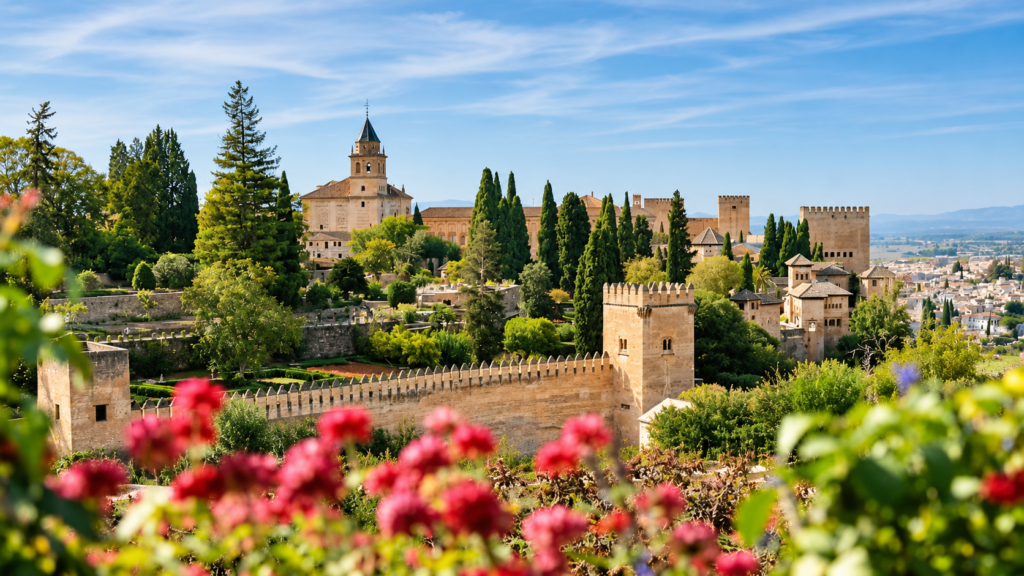
For nearly eight centuries, parts of the Iberian Peninsula were home to Al-Andalus — a civilisation that stood as a beacon of science, philosophy, medicine and architectural brilliance in Western Europe. From the soaring red-and-white arches of the Great Mosque of Córdoba to the intricate, water-fed courtyards of the Alhambra palace in Granada, Islamic Spain left an indelible mark on world history.
Yet the eventual collapse of Muslim rule in Spain in 1492 was not solely the result of the military superiority of external enemies. It was also the tragic consequence of internal decay, ruthless power struggles and a fatal willingness among Muslim rulers to ally with foreign powers against their own brethren.
A golden age of science and culture
Before political fractures tore it apart, Al-Andalus was one of the intellectual capitals of Europe. While much of the continent struggled through the early Middle Ages, tenth-century Córdoba boasted sophisticated urban infrastructure, advanced medical knowledge, extensive water systems and a royal library reputed to house hundreds of thousands of volumes. Scholars from across Europe travelled to Andalusi cities to study mathematics, astronomy, botany and philosophy, translating Arabic manuscripts that would later contribute to the European Renaissance.
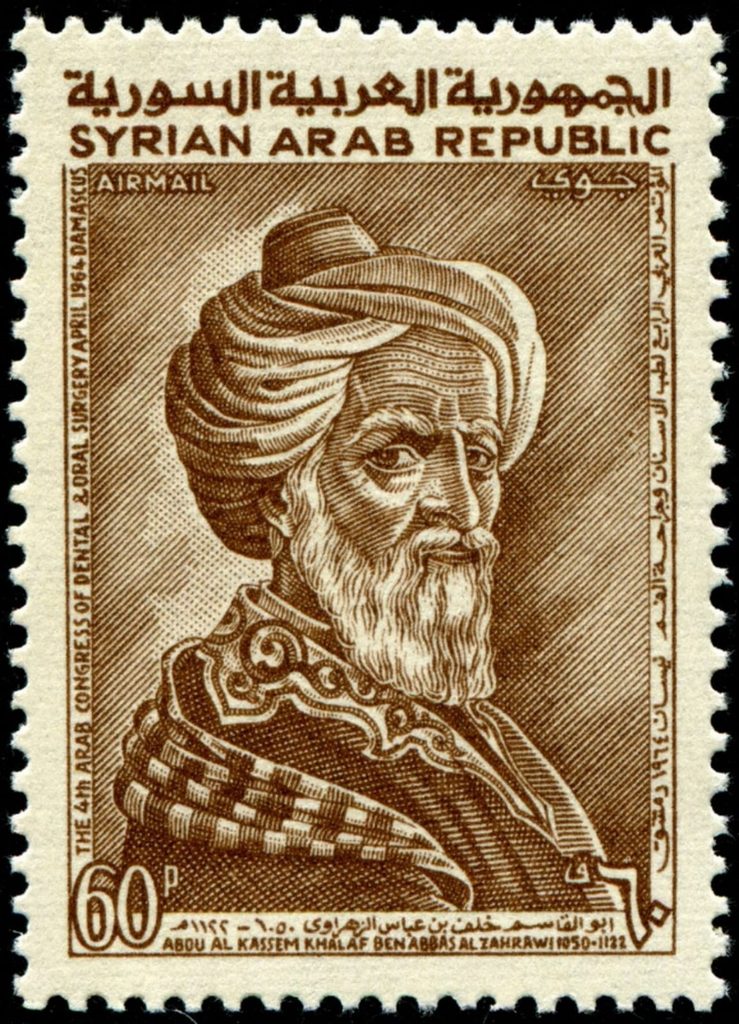
Pioneering Muslim minds flourished in this environment. In Córdoba, the tenth-century physician Abu al-Qasim al-Zahrawi — known in the West as Albucasis — authored the Kitab al-Tasrif, a 30-volume medical encyclopaedia that documented more than 200 surgical instruments and helped lay the foundations for modern surgery. In astronomy and engineering, figures such as Abbas ibn Firnas experimented with early flight and glassmaking, while al-Zarqali developed advanced astronomical instruments that contributed to advances in astronomy and navigation. Philosophers such as Ibn Rushd (Averroes) and Ibn Tufayl revived and expanded upon classical philosophy, influencing thinkers across the Mediterranean for centuries.
The seeds of division: Palace intrigue and mercenary rule
Despite these extraordinary intellectual and cultural achievements, political rot was quietly taking hold beneath the golden surface of the Umayyad Caliphate of Córdoba. By the late 970s, an ambitious chief minister named Ibn Abi Amir — known to history as al-Mansur — had consolidated his authority, reducing the young Caliph Hisham II to a powerless figurehead confined to his palace.
To secure his personal grip on power, al-Mansur restructured the traditional Andalusi military. Distrustful of the local Arab and Andalusi aristocracy, he recruited large numbers of Amazigh (Berber) soldiers from North Africa, while the Saqaliba — European slave-soldiers and palace administrators — also formed an influential faction within the state. While al-Mansur’s military reforms kept him in control during his lifetime, they deepened ethnic and social fault lines within the state. Loyalty increasingly shifted away from a unified community and shared faith towards competing military factions and personal interests.
Blood in the streets: The Fitna and the collapse of authority
Following the death of al-Mansur in 1002 and the subsequent collapse of his family’s rule, the fragile state imploded into the Fitna of Al-Andalus — a devastating civil war lasting from 1009 to 1031. With no leader commanding universal respect, Córdoba descended into anarchy.
The very security forces and palace guards meant to protect the state turned against one another and the people. Mercenaries, rival Umayyad claimants and competing military generals fought for control of the capital. The conflict saw the assassination of rulers, the looting of grand palaces and the killing of civilians in Córdoba. Madinat al-Zahra, the glittering royal city outside Córdoba, was sacked and largely destroyed. By 1031, the caliphate was formally abolished, leaving behind a traumatised populace and a fractured territory.
The fatal mistake: Muslim-Christian alliances
Out of the ruins of the caliphate emerged more than two dozen small, independent states known as the Taifa kingdoms — including Seville, Toledo, Zaragoza and Granada. Instead of uniting to protect their borders, many of these rulers became consumed by mutual jealousy and ambition.
In what proved to be one of the most catastrophic chapters of Andalusi history, Taifa rulers routinely collaborated with the Christian kingdoms of northern Spain — such as Castile, León and Aragon — to defeat their Muslim neighbours. Muslim emirs hired Christian mercenaries, most famously the Castilian warlord Rodrigo Díaz de Vivar (known as El Cid), to fight against fellow Muslims. Even worse, Taifa kings paid substantial annual tributes of gold, known as parias, to Christian monarchs in exchange for peace or military protection against rival Muslim states.
This short-sighted policy drained the Muslim kingdoms of wealth while helping to finance the armies of the Christian Reconquista. Divided, impoverished and exhausted by infighting, Muslim territories gradually fell to advancing Christian forces. Although the intervention of the North African Almoravid and, later, Almohad dynasties temporarily restored Muslim unity across much of Al-Andalus, renewed fragmentation and Christian military advances ultimately weakened Muslim rule.
Toledo fell in 1085, followed by Zaragoza in 1118, Córdoba in 1236, Valencia in 1238 and Seville in 1248. Eventually, only the Nasrid Emirate of Granada remained, surviving for more than two centuries through diplomacy, military resistance and periods of tributary dependence on Castile, until its final surrender on 2 January 1492.
The surrender of Granada
On 2 January 1492, Muhammad XII, better known as Boabdil, the last Nasrid ruler of Granada, surrendered his kingdom to Ferdinand II of Aragon and Isabella I of Castile, ending nearly eight centuries of Muslim rule in the Iberian Peninsula. Under the Treaty of Granada, signed on 25 November 1491, Muslims were guaranteed religious freedom, protection of their mosques and property, and the right to retain their Islamic laws and customs. However, these protections proved short-lived. By 1499, Archbishop Francisco Jiménez de Cisneros had initiated a campaign of forced conversions and the destruction of Arabic manuscripts, triggering Muslim uprisings in Granada and the surrounding Alpujarras region.
In 1502, a royal decree compelled Muslims living under the Crown of Castile to convert to Christianity or leave. Those who converted and their descendants became known as Moriscos, many of whom continued to practise Islam in secret despite religious persecution. Further restrictions on the Arabic language, traditional clothing and cultural practices culminated in the Alpujarras rebellion of 1568–1571. Between 1609 and 1614, the Spanish Crown expelled hundreds of thousands of Moriscos, many of whom sought refuge in North Africa.
Yet despite generations of persecution, forced assimilation and displacement, the Islamic legacy of Granada was never entirely erased. Its influence survives in Spain’s architecture, language, agricultural traditions, irrigation systems and craftsmanship, as well as in the cultural heritage carried by Andalusi families into North Africa. The Alhambra palace and the historic Albaicín quarter remain enduring reminders of a civilisation whose political authority was lost but whose cultural imprint could not be extinguished.
From minarets to bell towers: The architectural legacy
As major cities fell, the conquering monarchs transformed many of the grand congregational mosques of Al-Andalus into cathedrals, physically reshaping the skyline of Spain while preserving elements of Islamic architectural genius. The most famous example is the Mosque-Cathedral of Córdoba. Founded in 785 by Abd al-Rahman I, the Great Mosque of Córdoba was once one of the largest and most revered mosques in the Islamic world. After the city fell in 1236, it was consecrated as a cathedral. In the sixteenth century, a massive Renaissance cathedral nave was constructed within its famous forest of double-tiered horseshoe arches, creating a striking architectural hybrid that still stands today.
A similar transformation occurred in Seville, where the Great Mosque, built by the Almohad dynasty in the late twelfth century, was converted into a church in 1248 and later largely replaced by the world’s largest Gothic cathedral. Even so, its iconic bell tower, La Giralda, incorporates the original Almohad minaret, with a Renaissance belfry added in the sixteenth century. Its orange-tree courtyard, the Patio de los Naranjos, once served as the mosque’s ablution courtyard.
Further north, in Toledo, the city’s Great Mosque was converted into a cathedral shortly after King Alfonso VI captured the city in 1085. Though later demolished to make way for a Gothic cathedral, the site remains a testament to the city’s Islamic past. The nearby tenth-century Bab al-Mardum Mosque survived largely intact, having been converted into the Church of Cristo de la Luz. Likewise, in Zaragoza, La Seo Cathedral was built on the site of one of the oldest mosques in Al-Andalus following the city’s conquest in 1118, with archaeological remains bearing witness to its Islamic origins.
The history of Al-Andalus stands as both an inspiration and a solemn warning. Its libraries, scientific breakthroughs and monuments — from Córdoba to the Alhambra in Granada — testify to what a civilisation can achieve when knowledge and faith flourish together. Yet its downfall serves as a powerful reminder that internal division can be as destructive as any external enemy. When leaders prioritise personal power over unity, turn their weapons upon their own people and align with rivals against their own community, even the greatest civilisations risk crumbling from within.