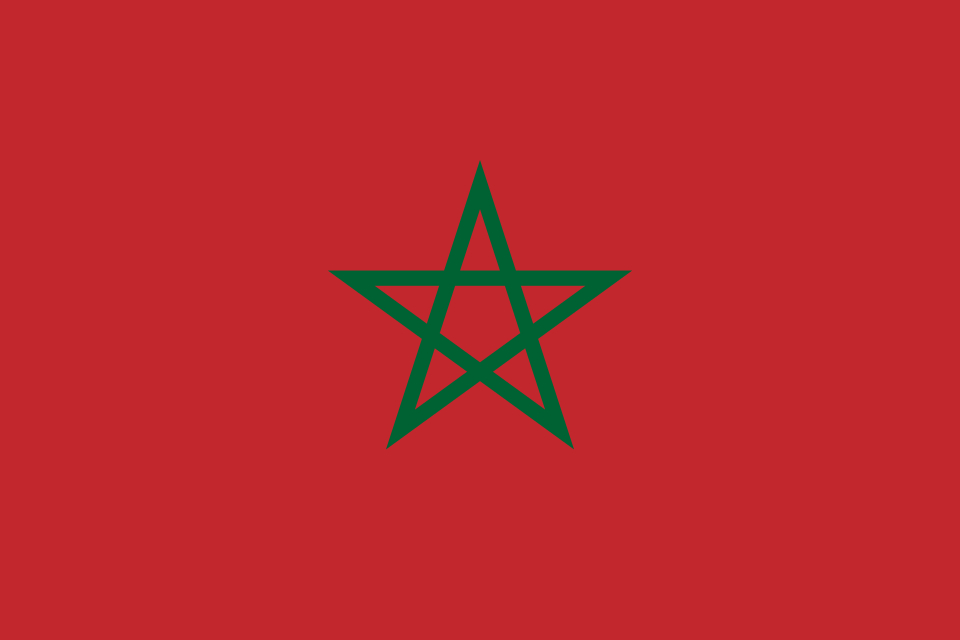

Morocco and Israel have agreed to upgrade their diplomatic relations by opening full embassies and appointing ambassadors, marking a further deepening of Rabat’s controversial normalisation with Israel.
The agreement was reached during a trilateral meeting in New York on Wednesday between Moroccan Foreign Minister Nasser Bourita, Israeli Foreign Minister Gideon Sa’ar and US Ambassador to the United Nations Mike Waltz.
According to statements issued following the talks, Morocco and Israel reaffirmed their commitment to upgrading their existing diplomatic missions to full embassies and exchanging ambassadors.
The two countries currently maintain liaison offices after restoring formal relations in 2020 under the US-brokered Abraham Accords.
Morocco was among four Arab countries — alongside the United Arab Emirates, Bahrain and Sudan — that moved towards normalising relations with Israel during US President Donald Trump’s first administration.
The agreement was particularly significant for Rabat because Washington simultaneously recognised Moroccan sovereignty over the disputed Western Sahara territory, a major foreign policy priority for the kingdom.
Under the original December 2020 trilateral declaration, Morocco and Israel agreed to restore diplomatic contacts, establish direct flights and expand economic cooperation, while Rabat maintained its stated support for the Palestinian cause and a negotiated two-state solution.
Wednesday’s meeting represents another step towards institutionalising those relations.
A joint statement issued on behalf of Morocco, Israel and the United States said the three sides believed that establishing full diplomatic relations between Rabat and Tel Aviv was in their mutual interest and would contribute towards regional peace.
Israel and Morocco also agreed to work towards concluding agreements on investment protection and the prevention of double taxation before the end of 2026, measures intended to increase bilateral trade and investment.
Officials also agreed to expand direct flights between the two countries and arrange reciprocal high-level visits over the coming months.
No specific timetable has yet been announced for when the embassies will formally open or when ambassadors will be appointed.
Normalisation with Israel
Efforts to deepen normalisation have continued despite strong opposition to Israel across much of the Arab and Muslim world, particularly following the genocide in Gaza.
The wider Abraham Accords process has also faced longstanding Palestinian criticism.
Palestinians have traditionally argued that Arab states should withhold full normalisation with Israel until an agreement is reached ending Israel’s occupation and establishing an independent Palestinian state.
That position was reflected in the 2002 Arab Peace Initiative, which offered Israel normal relations with Arab states in return for withdrawal from territories occupied in 1967 and the establishment of a Palestinian state.
The Abraham Accords broke significantly with that approach by allowing individual Arab governments to establish relations with Israel independently of progress towards resolving the Palestinian issue.
Despite that controversy, Washington has continued to promote the expansion and consolidation of Israel’s relations with Arab and Muslim-majority countries.
Wednesday’s agreement signals that Morocco and Israel intend to push ahead with that process by transforming the liaison-level relationship established six years ago into full ambassadorial ties.