
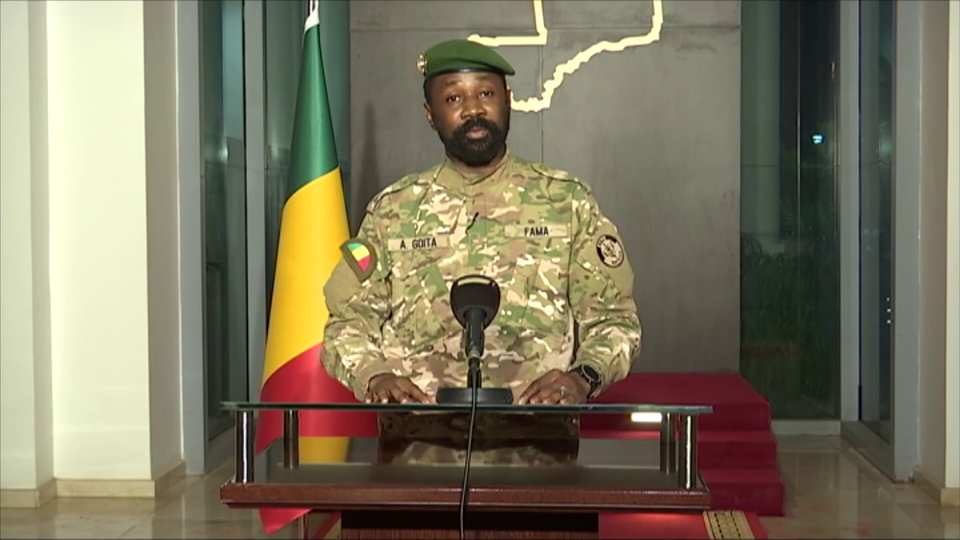

Mali has granted a presidential pardon to French national who was sentenced to 20 years in prison over an alleged French-backed coup plot to overthrow the government of President Assimi Goïta.
The Malian authorities announced on Thursday that Yann Vezilier would be released and immediately expelled from the country.
He was arrested alongside several Malian military officers and dozens of soldiers accused of involvement in an alleged attempt to undermine the country’s government.
Malian officials accused Vezilier of operating on behalf of French intelligence and attempting to recruit political figures, members of civil society and military personnel as part of the alleged plot.
France has previously rejected accusations that Vezilier was working as an intelligence operative, describing the claims against him as unfounded.
Announcing the pardon, Mali’s government stressed that the decision did not overturn his conviction or challenge the findings of the court that sentenced him.
It said the pardon was an act of clemency and would be followed by Vezilier’s immediate removal from Malian territory.
The case unfolded against the backdrop of increasingly hostile relations between Mali and its former colonial ruler France, whose military forces were expelled from the country after years of involvement in counterterrorism operations across the Sahel.
Mali has faced a prolonged armed insurgency since 2012, with groups including Jama’at Nusrat al-Islam wal-Muslimin (JNIM) expanding operations across large parts of the country despite repeated military campaigns.
Goïta first came to power through a military takeover in 2020 before leading another change of government in 2021, with worsening insecurity among the main justifications given by the military authorities.
The security situation has remained volatile. Earlier this year, Mali’s defence minister was killed in an apparent suicide truck bombing near Bamako during a wave of attacks, after which Goïta assumed the defence portfolio himself.
Armed groups have also imposed blockades on major roads and communities, disrupting fuel and commercial supplies and increasing pressure on the authorities.
Domestically, Mali’s military government has tightened its grip on political activity. Political parties were dissolved last year following anti-government demonstrations, while the transition back to civilian rule has repeatedly been delayed.
Goïta initially pledged elections within two years of taking power, but no national vote has taken place. Mali’s transition period was subsequently extended by five years, allowing him to remain in power until at least 2030.
Mali has meanwhile deepened security cooperation with Russia alongside neighbouring Burkina Faso and Niger after all three Sahel states downgraded or severed military ties with France.
The three countries have increasingly coordinated their political and security policies through the Alliance of Sahel States (AES) as they seek to confront armed insurgencies while reducing Western influence across the region.