
By Shonisani Lesoga
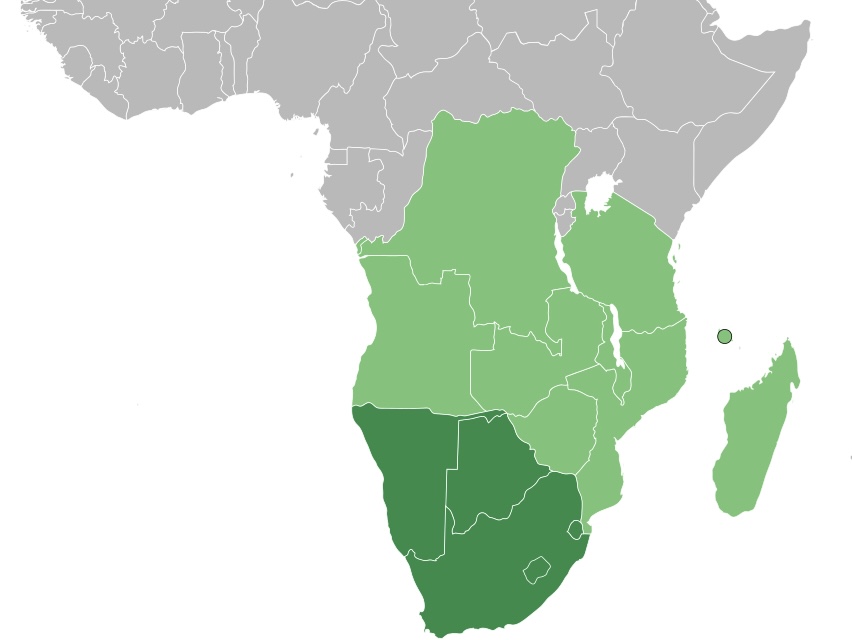
As South Africa assumes the chairmanship of the Southern African Development Community (SADC), questions around migration, economic inclusion and the place of Muslim communities within the region are coming into sharper focus.
President Cyril Ramaphosa took over leadership of the 16-member regional bloc from Zimbabwean President Emmerson Mnangagwa at SADC’s 46th summit in Durban on 17 August.
South Africa assumes the chairship at a challenging time domestically and regionally. At home, the country continues to grapple with high unemployment, violent and organised crime, deteriorating infrastructure and persistent service-delivery failures, while concerns over xenophobia and Islamophobia have intensified.
Against this backdrop, Ramaphosa has identified industrialisation, stronger regional value chains, infrastructure development, increased intra-SADC trade, peace and the implementation of SADC Vision 2050 among South Africa’s priorities during its tenure.
Whether these ambitions translate into tangible improvements for ordinary people across Southern Africa, however, remains a key question.
Intra-regional trade remains limited compared with trade conducted outside the region, while conflict, political instability and security challenges continue to affect communities in several SADC member states.
Greater regional integration and freer movement of people could also challenge political movements whose support has increasingly drawn on anti-migrant sentiment and exclusionary forms of nationalism.
For Muslim communities across Southern Africa, these debates carry particular significance.
Muslims live, work and trade across the borders of countries including South Africa, Malawi, Mozambique and Zimbabwe, making regional policies on migration, economic participation and social cohesion directly relevant to their everyday lives.
Ramaphosa also referred to the African Continental Free Trade Area as part of the broader continental dimension of SADC’s economic ambitions. Yet questions remain over how greater trade integration and regional mobility will work in practice, particularly for small businesses and cross-border entrepreneurs.
Failure to address the barriers faced by smaller enterprises and migrants risks leaving the benefits of a more integrated African market disproportionately accessible to large corporations and established economic interests.
While Muslims are active participants in communities and economies across Southern Africa, their collective political presence remains far less visible at SADC level.
For some, however, formal political representation is less important than creating meaningful opportunities for economic participation.
“Voting and representation in the political sphere don’t really make a difference, but the true difference only comes with partnering and investing in trade with the government,” a Muslim student at the University of Johannesburg told One Nation Media (ONM).
That perspective points towards a wider opportunity. For Muslim communities across Southern Africa, SADC is not simply a political bloc but potentially a platform through which businesses, entrepreneurs and communities can expand economic ties across national borders.
The intersection between migration and Islamophobia also deserves greater attention as governments debate the future of regional integration.
In South Africa, anti-migrant rhetoric has increasingly intersected with hostility towards communities perceived as foreign, including Muslims from elsewhere on the continent.
If South Africa uses its SADC chairship to encourage migration policies that balance legitimate security considerations with human rights, economic participation and social cohesion, it could help advance a more inclusive model of regional integration rather than one driven primarily by securitisation.
Dr Jameel Asani from the Department of Religion Studies at the University of Johannesburg told One Nation Media:
“There has been a noticeable shift where anti-migrant rhetoric is increasingly overlapping with Islamophobic narratives, affecting both foreign nationals and South African Muslims of Indian, Malay, and African backgrounds. Many Muslim communities in the region, including Malawian, Mozambican, Zimbabwean, and South African Muslims, are directly affected by these issues, particularly migration management, economic opportunity, and social cohesion.
“If South Africa uses the Chair role to push for more coherent, humane regional approaches to migration and development rather than purely securitised ones, it could create some positive space.”
His comments highlight a broader challenge confronting SADC: whether regional integration will be shaped predominantly by the interests of states, borders and large economies, or whether it will also address the lived realities of communities whose families, livelihoods and commercial networks extend across national boundaries.
For Muslims in Southern Africa, that distinction matters.
Regional integration has the potential to strengthen trade, entrepreneurship and cooperation between communities, while more coherent migration frameworks could reduce the vulnerability of people caught between restrictive immigration systems, economic hardship and increasingly hostile public rhetoric.
South Africa’s SADC chairship therefore presents a dual test: whether Pretoria can advance industrialisation and regional cooperation while confronting exclusionary politics at home.
How SADC approaches migration will be central to that test. Whether the bloc treats cross-border movement primarily as a security threat to be contained, or as an economic and social reality requiring humane management, could determine whether regional integration ultimately benefits ordinary people — including Muslim communities that live, work and trade across Southern Africa’s borders.
For now, SADC’s promise of binding the peoples and economies of Southern Africa more closely together remains an aspiration rather than a fully lived reality.