
Johannesburg’s worsening water crisis is putting new pressure on the Muslim community, with thousands of worshippers relying on water for daily prayers. As Level 2 restrictions take hold and reservoirs struggle to recover, mosques are now facing a difficult practical question: what happens if the taps run dry?
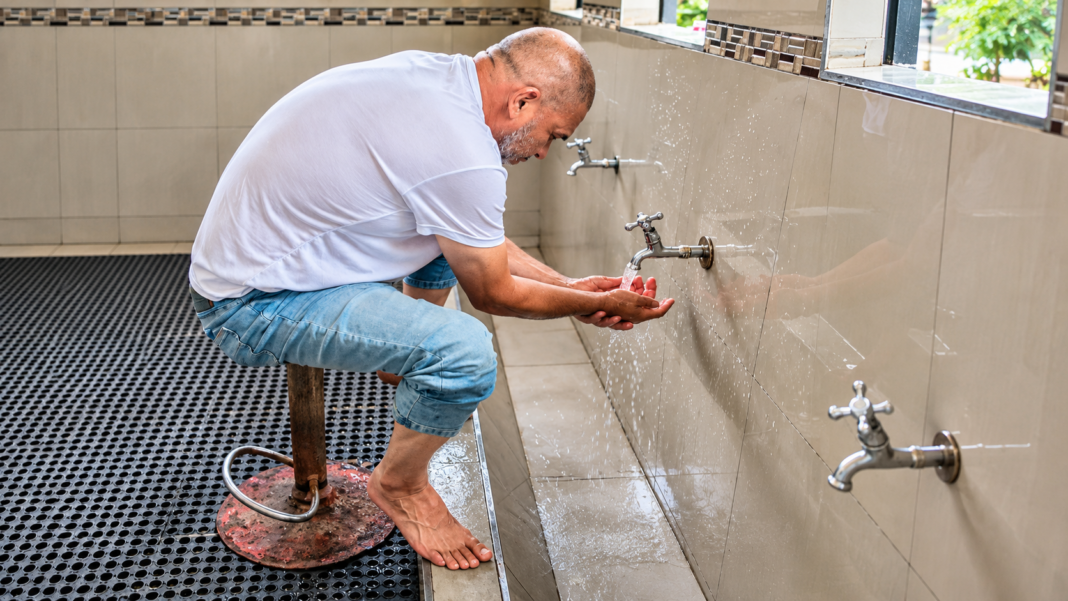
Water is an essential part of everyday life, but for Muslims, it also plays a central role in worship. Before performing their five daily prayers, Muslims are required to be in a state of ritual purity, which can be achieved through wudhu, which involves washing specific parts of the body.
With Johannesburg introducing stricter water restrictions, concerns are growing about how mosques will continue providing water for worshippers, particularly those that accommodate hundreds of people during congregational prayers.
Johannesburg’s water restrictions
According to Johannesburg Water, Level 2 water restrictions came into effect across the city on 21 November 2026, following increasing pressure on its water supply system. The restrictions aim to reduce daily consumption by 200 million litres and allow reservoirs to recover.
Residents are prohibited from using municipal drinking water to irrigate gardens, lawns and public spaces or to hose down driveways and pavements. Johannesburg Water has also announced measures to reduce water supply volumes by 20% in areas with deemed-consumption and prepaid meters, with new restriction tariffs taking effect on 1 December.
Although the restrictions do not prohibit water use for religious practices, reduced supply and ongoing interruptions could create challenges for mosques. Many worshippers rely on mosque ablution facilities before performing their daily salaah, particularly during Jumu’ah, when larger congregations gather.
What happens when there is no water for wudhu?
Speaking to One Nation Media (ONM), Moulana Ridwaan from Masjid-ul-Furqaan in Houghton explained that Islam makes provisions for situations where water is unavailable. However, he emphasised that worshippers cannot simply abandon wudhu because water restrictions have been introduced.
“If there is water present, then we have to use that,” he said.
He explained that where water is available but needed for drinking, a serious threat to a person’s life could permit the use of tayammum instead.
Tayammum is a form of dry purification performed using clean earth or a suitable natural surface when water cannot be used under conditions permitted by Islamic law. It allows Muslims to fulfil their obligation of purification before prayer without using water.
Moulana Ridwaan also explained that Muslims may be able to perform only the compulsory actions (fardh) of wudhu during a severe water shortage, rather than completing the entire Sunnah wudhu. However, he stressed that the circumstances must be assessed before general religious guidance is issued.
“That decision will have to be placed in front of the Mufti, or in front of the organization that makes decisions,” he explained.
He added that recognised Islamic authorities would need to examine Johannesburg’s specific circumstances before issuing guidance to the public.
How mosques can prepare
The restrictions raise practical questions for mosque committees, including whether existing water storage will be sufficient during extended interruptions. Backup tanks, boreholes and water-saving taps could help mosques manage shortages, although their availability and effectiveness will vary between mosques.
Encouraging worshippers to perform wudhu at home, repairing leaking taps and reducing unnecessary water use are other measures mosques could consider. However, the challenge becomes greater when surrounding households are also experiencing water interruptions.
Islam’s teachings on conserving water
Islam teaches Muslims that water is a blessing from Allah and should never be wasted, even when it is readily available.
In Surah Al-A’raf (7:31), Allah says: “Eat and drink, but do not waste. Surely He does not like the wasteful.” Although the verse addresses consumption generally, its message of avoiding waste also applies to water usage, particularly during Johannesburg’s ongoing water crisis.
The Prophet Muhammad (peace be upon him) also demonstrated the importance of conserving water through his own actions. According to Sahih al-Bukhari (201), the Prophet performed wudhu using one mudd of water, approximately 750 millilitres, showing that large quantities of water are not necessary for purification.
His example reminds Muslims that conserving water is not simply a response to government restrictions but part of their Islamic responsibility to avoid waste and consider the needs of others.
A test of preparation and amanah
As Johannesburg continues to struggle with water shortages, mosques and worshippers may need to rethink how they use and conserve water. While Islamic teachings provide guidance for situations where water is scarce, the responsibility also falls on the city’s authorities to ensure that communities have access to a reliable water supply.
For Muslims, the challenge is not simply about having enough water for wudhu but also about ensuring that a resource essential to everyday life is not taken for granted.
With restrictions now in place, the focus is shifting to whether Johannesburg’s mosques are prepared for the possibility of their taps running dry — and whether the community will treat every drop as an amanah.