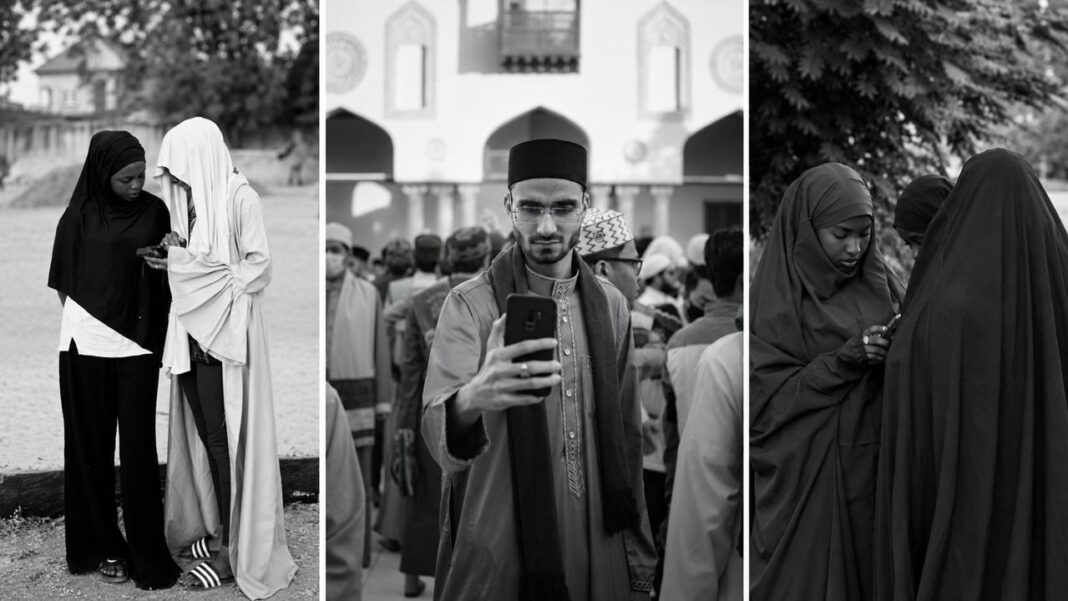

For generations, mosques and madressahs have been at the heart of Islamic education in South Africa. Today, however, a growing number of young Muslims are also turning elsewhere for religious guidance: TikTok, Instagram, YouTube and Google.
From learning how to perform salaah to understanding what is halaal and haraam, answers are now often just a few clicks away. This shift has made Islamic knowledge more accessible than ever, but it has also raised an important question: are young Muslims learning more about Islam from social media than from their mosques and madressahs?
Why the scroll is winning
Traditionally, Muslim children attended madressah after school, where they learnt to read the Qur’an, perform salaah and understand the fundamental teachings of Islam. Mosques provided religious guidance, community and a sense of belonging.
That model is now competing for the attention of a generation that has grown up online. Instead of attending a class or approaching an imaam, young people can search for answers within seconds.
Platforms such as TikTok and Instagram have transformed Islamic learning into short videos, personal stories and live question-and-answer sessions. Young Muslims can follow scholars from around the world, listen to lectures and explore subjects that may not always be openly discussed at their local mosque or madressah.
For some, the appeal lies in privacy. Social media allows young people to seek answers to sensitive questions about relationships, marriage, mental health and identity without feeling embarrassed or judged.
This does not necessarily mean young Muslims are abandoning mosques. In many cases, online platforms may simply be filling gaps in the religious education or guidance available to them.
Moulana Yusuf Ahmad, principal of Darul Arqam, said some young Muslims feel too shy to approach religious teachers. Online platforms, he explained, offer quick answers without requiring users to identify themselves.
His observations raise an important question about whether Islamic institutions are doing enough to make young people feel comfortable seeking guidance in person.
Sheikh Isa Kabungaidze, an Islamic teacher, curriculum developer and da’ee, said the amount of time young people spend scrolling makes it almost inevitable that they will encounter Islamic content.
Once someone engages with a religious video, social media algorithms are likely to recommend similar content. Whereas people once had to physically visit a madressah or scholar for guidance, religious content now reaches them directly.
When knowledge becomes entertainment
However, that accessibility also carries significant risks.
Social media platforms are designed to promote content that attracts attention and engagement, not necessarily material that is accurate, balanced or properly contextualised.
A controversial religious opinion may reach millions of people, while a careful, detailed explanation from a qualified scholar receives only a fraction of that attention.
A 30-second video declaring something halaal or haraam may sound convincing, but Islamic rulings often require a deeper understanding of the Qur’an, Hadith, Islamic jurisprudence and the relevant context, including recognised differences of opinion among scholars.
Short-form content can easily overlook these complexities.
Popularity can also be mistaken for religious authority.
An influencer with thousands or even millions of followers may appear knowledgeable despite having little or no formal Islamic education. Young viewers may accept that person’s advice without examining their qualifications or understanding the evidence behind their claims.
“Popularity is misconstrued as authority,” warned Imaam Zakariyya du Preez, a teacher at Qurtuba Online Academy.
He urged young Muslims to examine the qualifications of those they learn from and, wherever possible, seek guidance from recognised local scholars.
Without such scrutiny, social media can become fertile ground for misinformation, particularly when Islamic teachings are taken out of context or presented as absolute rulings despite legitimate scholarly differences.
The danger of following the wrong voices
Islam places considerable importance on seeking knowledge from reliable and qualified sources.
Moulana Ahmad pointed to the Qur’anic instruction to consult those with knowledge when one does not know:
“Ask the people of knowledge if you do not know.” (Surah An-Nahl, 16:43)
The Qur’an also instructs believers to verify information before acting upon it:
“O believers, if an evildoer brings you any news, verify it so you do not harm people unknowingly, becoming regretful for what you have done.” (Surah Al-Hujurat, 49:6)
These principles are particularly relevant in the digital age, when almost anyone can present themselves as a religious authority.
Misleading information can influence how young Muslims understand their faith, practise Islam and perceive other Muslims.
Some online personalities promote harsh or divisive interpretations, while others oversimplify religious obligations in ways that may attract followers but deprive Islamic teachings of their necessary context and depth.
Public disputes between online personalities can create further confusion, particularly among younger Muslims who may lack the foundational knowledge needed to assess competing religious claims.
However, scholars emphasise that social media itself is not inherently the problem.
Many qualified scholars and Islamic institutions use these platforms effectively to disseminate authentic Islamic knowledge and reach audiences who might otherwise have limited access to formal religious education.
Sheikh Kabungaidze cautioned against dismissing everyone who shares Islamic reminders online. He highlighted an important distinction between offering beneficial reminders and encouragement, and issuing religious rulings without the necessary qualifications.
The problem arises when individuals speak beyond their knowledge.
The challenge, therefore, is helping young Muslims distinguish between trustworthy religious guidance and content designed primarily to generate views, followers and engagement.
Are mosques and madressahs keeping up?
The rise of online Islamic learning also raises another important question: are traditional Islamic institutions sufficiently addressing the realities and challenges facing younger generations?
Madressahs remain essential in providing foundational knowledge of the Qur’an, salaah, Islamic beliefs and religious practice.
However, young Muslims are also seeking guidance on issues that increasingly shape their daily lives, including social media, mental health, relationships, career choices and personal identity.
When these subjects are not adequately addressed in madressahs or mosques, young people may turn to online personalities who appear to understand the world they inhabit.
This presents both a challenge and an opportunity for Islamic institutions.
Mosques and madressahs could introduce youth discussions, interactive question-and-answer sessions and digital programmes addressing contemporary challenges while grounding young Muslims in sound Islamic knowledge.
Moulana Ahmad said scholars must also reflect on their own approachability and actively engage with young people rather than always expecting the younger generation to initiate conversations.
Du Preez similarly encouraged younger scholars to develop meaningful relationships with youth through informal activities, including sport and community programmes.
Rather than treating social media solely as competition, Islamic institutions could use digital platforms to extend their reach while encouraging young Muslims to maintain meaningful connections with mosques, madressahs, scholars and in-person learning.
Du Preez suggested that South African Islamic scholars should make greater use of social media to provide reliable religious content while encouraging young people to remain connected to their local mosques.
Sheikh Kabungaidze advocated a similarly balanced approach, arguing that scholars should embrace digital platforms without allowing online content to replace direct learning from qualified religious teachers.
Finding a balance
Social media has fundamentally transformed how religious knowledge is shared, but access to information does not automatically translate into genuine understanding.
A short Islamic reminder may inspire someone to strengthen their relationship with Allah, abandon a harmful habit or deepen their interest in Islam.
However, it cannot fully replace the discussion, context, personal guidance and accountability that come from learning directly from knowledgeable scholars and teachers.
The answer, therefore, may not lie in choosing between TikTok and the mosque.
Both can play valuable roles, provided young Muslims understand the difference between consuming Islamic content and pursuing structured religious education.
For young Muslims, the responsibility is to critically assess what they encounter online, verify religious claims and seek guidance from trustworthy, qualified scholars.
For mosques and madressahs, the challenge is to remain accessible, relevant and approachable in an increasingly digital world.
Ultimately, if young Muslims are turning to social media for answers about their faith, perhaps the more pressing question is whether their mosques and madressahs are doing enough to encourage them to seek those same answers in person.