
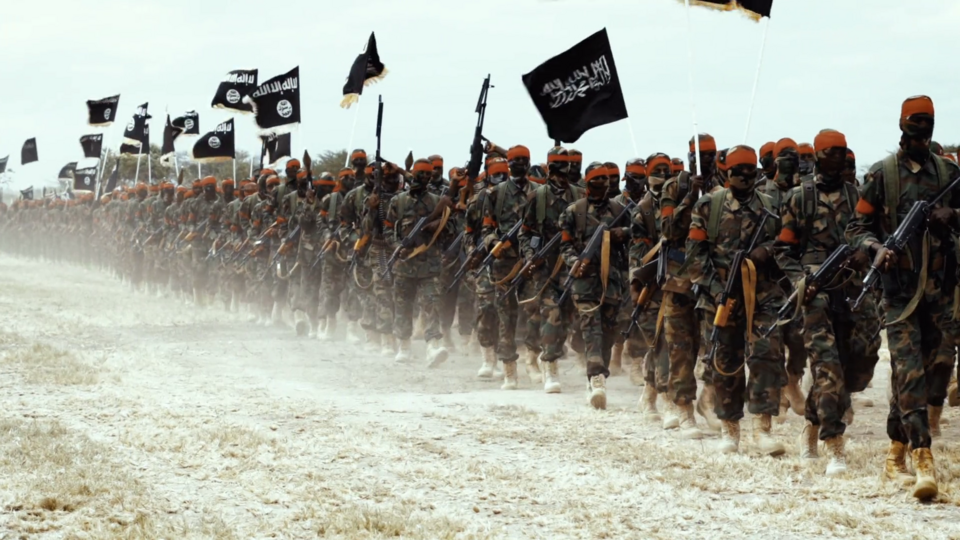

A reported defection from Somalia’s intelligence agency to Al-Shabaab has brought renewed attention to a largely hidden struggle between two competing intelligence organisations: the government’s National Intelligence and Security Agency (NISA) and Al-Shabaab’s formidable intelligence apparatus, the Amniyat.
A former senior officer of NISA’s Turkish-trained Duufaan unit, identified in Somali media reports as Luqman, has reportedly defected to Al-Shabaab, raising concerns that sensitive intelligence may have fallen into the movement’s hands.
According to security sources cited by Somali media, the officer previously served as Duufaan’s chief of staff before being removed from his position over unspecified security concerns. He reportedly travelled from Mogadishu through Lower Shabelle to Al-Shabaab-controlled territory in Middle Juba.
Other accounts allege that he departed with computers, communications equipment and intelligence files, potentially exposing details of government operations and informants. The reported defection and transfer of sensitive material have not been independently confirmed.
Nevertheless, the allegations have brought renewed scrutiny to a longstanding problem confronting Somalia’s intelligence establishment: the ability of Al-Shabaab to penetrate government institutions while maintaining an extensive intelligence network of its own.
The intelligence apparatus behind Al-Shabaab’s resilience
Much of the international coverage of Somalia’s conflict focuses on military offensives, territorial control and battlefield casualties. Yet one of the most consequential dimensions of the struggle takes place away from the front lines.
Al-Shabaab’s intelligence and security apparatus, known as the Amniyat, has developed into one of the movement’s most important institutions. Its responsibilities extend beyond gathering information about government movements. Research into the organisation identifies intelligence collection, internal security, counterintelligence and covert operations among its functions.
The Amniyat has enabled Al-Shabaab to maintain an operational presence far beyond areas under its direct territorial control. This is particularly significant in Mogadishu, where the federal government exercises formal authority but has struggled to eliminate the movement’s clandestine networks.
A 2025 assessment by the European Union Agency for Asylum acknowledged the continued presence of Amniyat operatives in government-held areas, noting the difficulties Somali security agencies have faced in disrupting their activities. The movement’s reach also extends into government security institutions themselves.
In a 2023 academic presentation examining the Amniyat’s organisation and capabilities, researcher Gábor Sinkó identified its infiltration of NISA and the African Union Mission in Somalia (AMISOM) as one of its notable characteristics. Sinkó described the Amniyat as an organisation operating with considerable independence within Al-Shabaab, combining intelligence and counterintelligence functions with internal security and operational responsibilities.
His assessment suggests that the Amniyat’s significance lies not merely in its ability to gather intelligence, but in the organisational structure through which Al-Shabaab has maintained its intelligence capabilities despite sustained pressure.
The implication is significant: controlling territory does not necessarily mean controlling the intelligence environment within it. Al-Shabaab has demonstrated that it can lose ground militarily while retaining networks capable of collecting information and conducting operations inside government-held areas.
The battle to penetrate each other’s ranks
The alleged Duufaan defection is particularly interesting because it follows previous cases of infiltration of Somalia’s intelligence establishment.
In August 2023, NISA announced that it had arrested at least ten government employees accused of spying for Al-Shabaab. Two additional suspects, Abdisatar Abdulkadir Isse and Ayanle Mohamed Ali, were publicly identified as fugitives. A subsequent Kaab TV investigation alleged that both had previously belonged to Al-Shabaab before joining government intelligence structures and obtaining senior positions.
The incident exposed a fundamental challenge for NISA: distinguishing genuine defectors from personnel who may retain clandestine connections with the organisation.
Somalia’s security establishment has previously incorporated former Al-Shabaab members into its ranks. In 2021, former NISA deputy director Abdisalam Guled warned about the recruitment of former Al-Shabaab fighters into the country’s military, police and intelligence services, raising concerns about the potential for infiltration.
The 2023 arrests demonstrated that these concerns were not merely theoretical. Somalia’s own government acknowledged that individuals within its institutions were suspected of passing information to Al-Shabaab.
For NISA, the challenge is especially serious because intelligence depends on trust, confidentiality and the ability to protect sources. An intelligence agency compromised from within risks exposing the very people and operations upon which its effectiveness depends.
Why the Amniyat has proven to be effective
The contrast between NISA and the Amniyat has attracted scholarly attention. A comparative study published in the International Journal of Intelligence and Counterintelligence concluded that Al-Shabaab’s intelligence capabilities were more advanced than those of NISA.
The authors contrasted the effective organisation and management of the Amniyat with the institutional weaknesses undermining Somalia’s intelligence establishment.
While the Amniyat benefits from organisational discipline, effective management and its integration into Al-Shabaab’s broader structures, NISA has been weakened by political interference, a lack of transparency, poor coordination with other security institutions and the continued dominance of clan-based loyalties.
The researchers also identified the Amniyat’s effective management as an important factor in Al-Shabaab’s ability to survive and recover from military setbacks.
In his subsequent research, Sinkó identified several characteristics of the Amniyat that help explain its effectiveness, including its relative organisational independence, its combined intelligence and counterintelligence responsibilities, and its compartmentalised structure. He also identified the penetration of government and African Union security institutions as part of the Amniyat’s activities.
These findings highlight a significant difference between the two organisations.
NISA is the officially recognised intelligence institution of the Somali state, possessing formal authority, established security structures and access to government resources. The Amniyat operates as the intelligence apparatus of a non-state armed movement, yet has maintained networks capable of gathering information, challenging government security measures and operating within territory beyond Al-Shabaab’s direct control.
The contrast suggests that the difference in effectiveness is not simply a question of resources. Despite possessing the authority and resources of a state institution, NISA has struggled with internal divisions and institutional dysfunction, while the Amniyat has maintained a more cohesive intelligence apparatus capable of operating even within government-controlled territory.
Targeting the Amniyat’s leadership, but failing to break its networks
Somalia’s government has attempted to eliminate Al-Shabaab’s intelligence leadership.
In October 2026, NISA announced that it had killed Bashir Ahmed Haji Nunow, whom it identified as a former head of the Amniyat between 2016 and 2024. The claim has not been independently verified, and discrepancies remain between NISA’s identification of the officer and earlier international records.
Nevertheless, the operation illustrates the government’s continuing efforts to target senior figures within Al-Shabaab’s intelligence establishment. Yet the persistence of the Amniyat’s networks suggests that removing individual commanders has not been sufficient to dismantle the wider organisation.
Despite repeated operations against its leadership, the Amniyat has retained the ability to gather intelligence and operate within government-controlled territory, suggesting that its wider networks have proved considerably more difficult to dismantle than individual commanders.
Questions at the top of Somalia’s intelligence establishment
The controversy also extends to NISA’s leadership.
NISA’s director, Mahad Mohamed Salad, is reportedly a cousin of Mahad Karate, a senior Al-Shabaab leader who oversees the Amniyat. Karate, whose real name is Abdirahman Mohamed Warsame, serves as one of Al-Shabaab’s deputy emirs and holds a senior leadership role within the movement’s intelligence apparatus. Both men belong to the Hawiye clan.
Reports have raised allegations of direct communication between the two figures. While these allegations remain unverified, the reported family relationship and claims of communication have raised questions about the complicated intersection of clan affiliations, political loyalties and intelligence structures in Somalia.
Who Is winning Somalia’s intelligence war?
The alleged Duufaan defection presents another test for Somalia’s government.
If the reported departure is confirmed, NISA will face questions about how an officer previously entrusted with sensitive responsibilities was able to leave the country’s security establishment and reportedly reach Al-Shabaab-controlled territory. If claims concerning the removal of intelligence equipment are also established, the implications could be considerably more serious.
But the wider issue extends beyond any individual officer. The persistence of the Amniyat’s networks reveals the limits of assessing Somalia’s conflict primarily through territorial control and conventional military strength.
The intelligence struggle also challenges conventional understandings of territorial control in Somalia. Although Mogadishu remains under government administration, Al-Shabaab continues to extract revenue from businesses in the capital, adjudicate disputes involving its residents and maintain intelligence networks within government-controlled territory.
The lines separating the two sides are therefore far less clear than military maps suggest. The government’s control of territory does not necessarily translate into exclusive authority within it, particularly when its opponent retains influence over the population and maintains networks within the very institutions tasked with confronting it.