
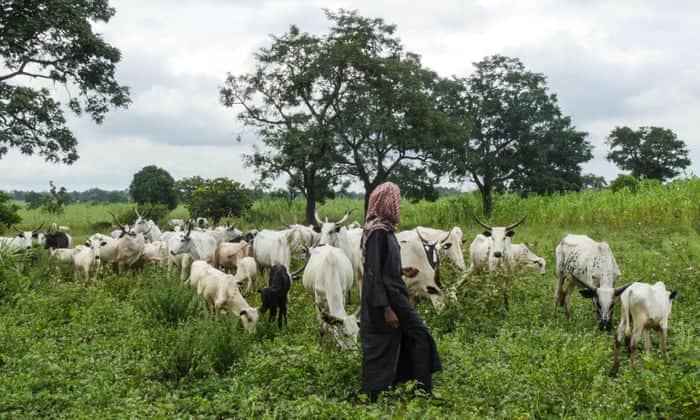

For years, the bloodshed in Mangu, Plateau State, had a simple explanation: farmers versus herders. Land. Cattle. Grazing routes. That explanation is no longer enough, if it ever was.
In Mangu today, a stolen cow can become a burned village. A rumour on WhatsApp can become a revenge killing. An armed robber can become, in the public mind, an entire ethnic or religious community.
What is unfolding in this part of North-Central Nigeria is not one conflict, but a cycle in which resource disputes, organised crime, retaliation and misinformation feed into one another until the original trigger barely matters.
Competition over land and pasture remains real. The European Union Agency for Asylum still identifies it as a major driver of violence in Plateau State, complicated by religious identity. Many pastoralists are Muslim, while many farming communities are Christian.
But researchers tracking the violence say the conflict has evolved.
The Armed Conflict Location & Event Data Project (ACLED) has documented a growing pattern of reprisal attacks in Mangu. In August 2026 alone, it recorded attacks involving both Mwaghavul farming communities and Muslim Fulani pastoralists.
The pattern has become grimly familiar. Someone is killed in one community. Another community is blamed. Houses are torched, cattle slaughtered and people attacked not necessarily for what they did, but for who they are perceived to be.
Each attack creates a fresh grievance — and, for some, a justification for the next one.
Gunmen, rustlers and the blur between crime and conflict
Armed actors have poured fuel on the fire.
Plateau State’s insecurity now involves bandits, militias, vigilantes and self-defence groups operating alongside — and sometimes within — communal disputes. In Mangu, accusations fly from all sides about “armed elements” carrying out attacks.
But such labels can be dangerous when they are applied without evidence.
A gunman may kill for cattle, money, land or revenge. Yet the moment he is labelled “Fulani” or “Mwaghavul”, “Muslim” or “Christian”, an individual crime can become a communal one.
The perpetrator disappears. The community inherits the blame.
Criminality thrives in that confusion. Cattle rustling, theft and illegal mining can all trigger violence in their own right. When perpetrators are not arrested or prosecuted, communities lose faith in the authorities and increasingly turn to vigilantes.
More guns then enter an already fragile environment.
The WhatsApp accelerator
Then comes the spark that travels fastest of all: misinformation.
During outbreaks of violence, rumours can spread across Mangu within minutes. A photograph from 2019 is shared as “this morning”. A video from another state is captioned “Mangu now”. Unverified claims identify perpetrators before investigators have even reached the scene.
A 2026 Premium Times investigation found that unverified social media claims surrounding violence in Plateau State had contributed to reprisal attacks. Corrections, when they came, often arrived after anger had already turned into action.
Research published this year has reached a similar conclusion: misleading narratives deepen perceptions of threat on both sides and harden communal victimhood into polarisation.
Not just religion, but religion can make it worse
To describe Mangu simply as a religious war is misleading.
To ignore religion altogether would also be wrong.
Because many farming communities are Christian and many pastoralists are Muslim, a dispute over cattle, grazing land or a farm boundary can quickly acquire a religious dimension. The same applies to ethnicity.
People can end up being attacked not as individuals, but as representatives of a wider community.
That is how collective punishment begins.
This is perhaps the most dangerous feature of Mangu’s crisis: the different drivers of violence interact.
A land dispute leads to an attack. The attack spawns a rumour. The rumour triggers mobilisation. Mobilisation leads to retaliation. Retaliation creates a new grievance.
Round and round it goes until the original cause is almost forgotten — and all that remains is the question of who will be blamed next.
Breaking that cycle will require more than deploying soldiers after blood has already been spilled.
Analysts say it will require credible investigations, prosecutions regardless of identity, action against illegal weapons and criminal networks, fairer management of land disputes and a faster, trusted response to false information.
Above all, communities need to believe that justice is possible without revenge.
Until then, in Mangu, every unresolved killing risks becoming the justification for the next one.