
Less water. For masjids, where hundreds of worshippers perform wudu before salaah every day, this is not just another municipal notice — it is a test of faith, planning and amanah (responsibility).
Cape Town is heading into summer with a warning it knows all too well. The City has announced Level 1 water restrictions from 1 December 2026, after dam levels dropped to 70.4% — 13.4 percentage points lower than at the same time last year — following a drier winter.
Recent hot weather has pushed collective water consumption to 951 million litres a day (MLD), exceeding the City’s target of 860 MLD by 91 million litres. As temperatures rise, demand is expected to increase further.
For most households, that means shorter showers and more careful water use in gardens. For masjids, it means something more urgent: how do you keep wudu facilities running when the City is asking everyone to use less water?
‘We cannot afford to wait’
Leonardo Manus, the City’s Executive Director for Water and Sanitation, said households need to use at least 10% less water this summer and into next winter. Acting now with proactive, lower-level restrictions will allow the City to manage demand early and reduce the risk of more severe restrictions later.
“We cannot afford to wait until dam levels are critically low before acting. Level 1 restrictions give us the opportunity to manage demand early, protect our available water resources and reduce the risk of more stringent restrictions later,” Manus said.
“Every household, visitor, business and organisation has a role to play. Small changes in how we use water, along with ongoing City water saving initiatives, can make a meaningful difference when we all act together,” he added.
As a guide, residents should aim to use no more than 85 litres of water per person per day. This includes water for personal hygiene, cooking, cleaning and laundry.
Why masajid feel the pressure
Water plays an essential role in Islamic worship, with Muslims required to be in a state of ritual purity before performing salaah. Wudu (Arabic: وضوء) is the Islamic ritual of washing specific parts of the body with clean water to achieve a state of minor ritual purity (taharah). It is a requirement for performing salaah and certain other acts of worship.
Multiply water usage by hundreds of worshippers attending the five daily prayers, particularly during Friday Jumu’ah, and it is understandable why masjids cannot simply “turn off the tap”. That is why several masjids across Cape Town have already started preparing.
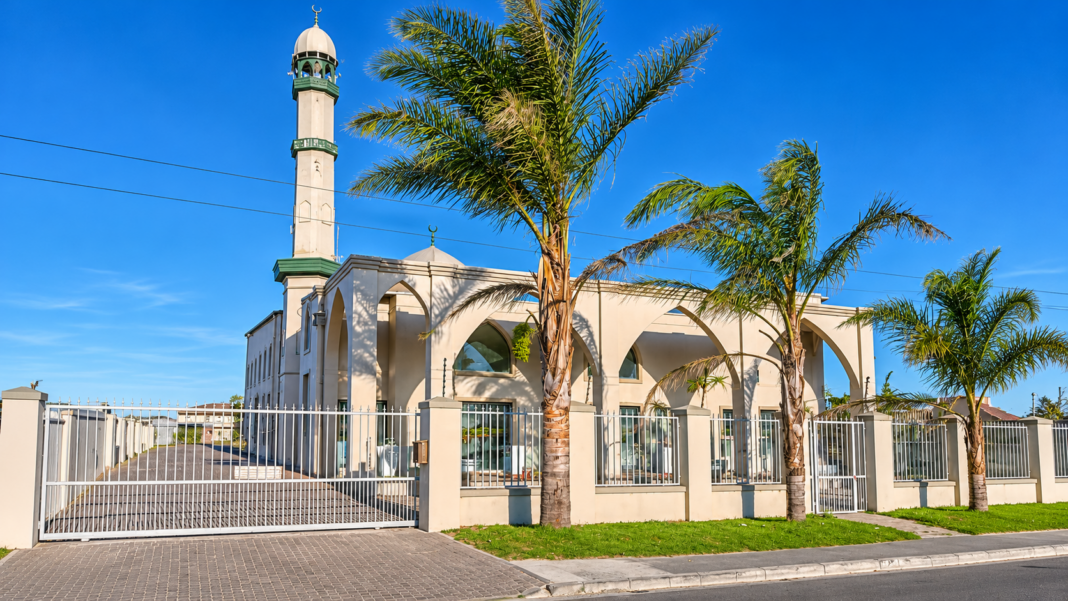
Al-Jaamia Mosque, also known as Stegman Road Masjid in Claremont, is constantly exploring ways to conserve as much water as possible.
Nazeem Jamie, Chairperson of Al-Jaamia/Stegman Road Mosque, said: “With water restrictions returning as a concern, Al-Jaamia is continuing its commitment to responsible water use.”
“Conservation is not new to us. During the Day Zero period, we introduced practical measures to reduce consumption and have continued to build on that experience ever since.”
“Water-saving taps and filters have been installed at the mosque and our ablution facilities, toilets and gardens are supplied by an on-site borehole, reducing our reliance on the municipal supply for these uses,” he said.
“Borehole water is treated through a dedicated filtration system before use and we monitor the system to ensure it is managed responsibly,” he added.
The masjid has also made bottled water and dispensers available for drinking and is exploring various measures to reduce its dependence on municipal water. However, it is also appealing to every congregant to make water conservation a personal responsibility.
“We are exploring the installation of solar water heaters as part of our wider efforts to reduce energy use and our environmental footprint,” Jamie said.
“We ask every congregant to make water conservation a personal responsibility, at the mosque and at home. Keep wudu (ablution) brief, turn taps off while not in use, perform wudu at home before arriving whenever practical.”
“Al-Jaamia will continue to address leaks promptly, encourage mindful water use and consider further ways to conserve water while maintaining a safe and welcoming place of worship.”
“Caring for this precious resource is a responsibility we share as a community and we firmly believe that small, consistent actions by each of us can make a meaningful difference,” he concluded.
Schaapkraal Masjid cuts water flow by 50%
Schaapkraal Masjid has also taken a direct, practical step by reducing its water flow.
“We have already turned our water supply down by about 50%,” said Hadji Cassiem Saiet.
“Even if anyone opens the tap fully, they will only get a certain flow of water.”
It is a simple measure, but in a busy ablution facility, it can make a significant difference by reducing water wastage without preventing worshippers from performing wudu.
Constantia Masjid has also made the necessary preparations.
Chairperson Monier Natheem Hendricks said: “We have installed a borehole for wudu. So the restriction will not affect us immediately.”
“We will also remind musallees to use the available water sparingly,” he added.
For Constantia Masjid, the borehole offers some breathing room, but not an excuse to waste water. The message remains the same: use water sparingly.
What the Level 1 restrictions mean for Cape Town
The following restrictions on the outdoor use of municipal drinking water will apply from 1 December 2026:
- Gardens: Sprinklers, handheld hosepipes fitted with trigger nozzles and drip irrigation systems may be used for a maximum of one hour per day, irrespective of the watering method, on Tuesdays and Saturdays. Watering is only permitted before 09:00 or after 18:00.
- Buckets and watering cans: Permitted for garden watering, subject to the same watering times and daily one-hour limit.
- Sports fields and public parks: Sprinkler irrigation is allowed for a maximum of one hour on Tuesdays and Fridays, before 09:00 or after 18:00.
- Paved areas and hard surfaces: Hosing down is not allowed.
- Swimming pools: Topping up and filling of swimming pools is permitted, but pools must be covered when not in use to reduce evaporation. In addition, rainwater should be used for pool topping up and backwash water recovered where practically possible.
- Car washing: Private and informal car washes may use buckets or high-pressure, low-volume equipment. Commercial car washes remain allowed, subject to best-practice water conservation norms and the recycling of at least 50% of the water used.
These measures are in addition to the City’s permanent water by-law regulations, which remain in effect throughout the year.
A test Cape Town has faced before
Cape Town knows what water scarcity looks like. The Day Zero crisis of 2017–2018 remains fresh in the memories of Capetonians, including masjid committees that had to find ways to keep their doors open, toilets working and wudu facilities running. This time, the City says the aim is to act early, before the situation becomes more severe.
For masjids, the lessons from Day Zero remain: boreholes, water-saving taps, prompt leak repairs and reminding musallees to keep wudu brief. It is not about stopping worship. It is about protecting the very water that makes worship possible.
As Jamie of Al-Jaamia put it, caring for this precious resource is a responsibility shared by the community. And in Cape Town this summer, that responsibility starts with every drop.