

MYTH THREE, PART TWO : The creation of secular religiosity
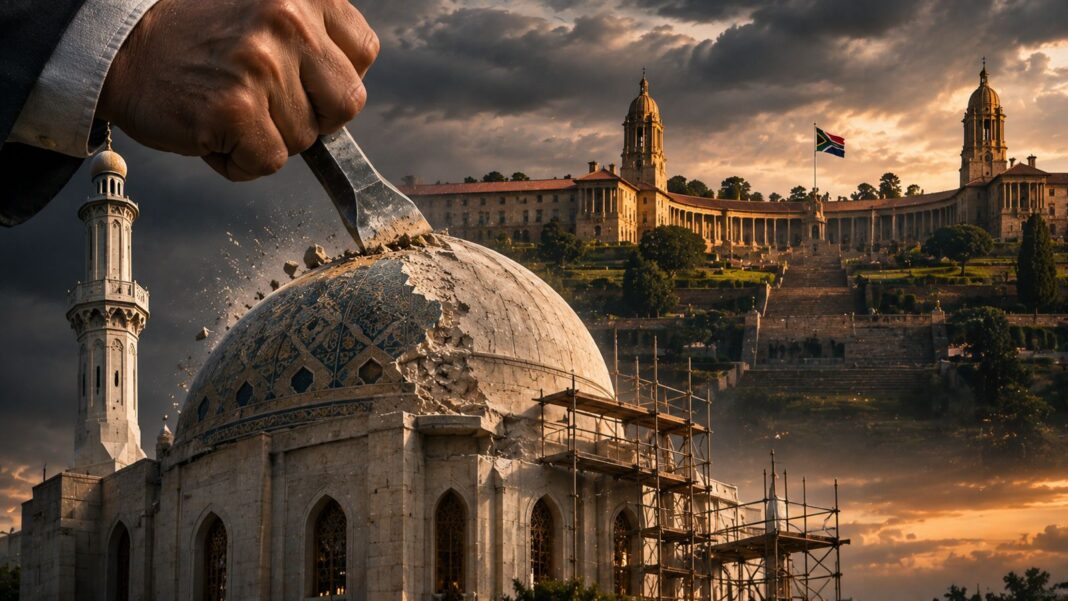
In the previous article I argued that secularism subjugates religion by claiming the authority to define its boundaries, classify its practices and decide what the law will tolerate. But there is a second, subtler process. The modern state does not always need to suppress religion. It may prefer to encourage a version of religion that is predictable, governable and reassuringly compatible with the political order. That is what I mean by the creation of secular religiosity, writes Moulana Uwais Dockrat.
The distinction matters as South Africa held its municipal elections on Wednesday. A Muslim community may be allowed to build mosques, teach children, maintain charities and celebrate festivals. These are real freedoms, not imaginary ones. But if religion is welcomed only on condition that its moral and political claims never challenge the assumptions of the state, we have not discovered neutrality. We have discovered the terms of accommodation. The question is not whether Islam may be visible; it is whether Islam may remain intellectually and morally whole.
One revealing South African example is found in Cedric Mayson’s chapter on engaging religious communities, published by the Institute for Security Studies in 2007. Describing his vision of African spirituality and public transformation, he speaks of “a deeply spiritual secularity” focused on ubuntu. He goes further, proposing “a new view of African Islam, African Judaism and African Hinduism” within a wider rethinking of politics, education and society. Read those words slowly. We are not being offered a religion-free public square. We are being invited to imagine religious traditions afresh within a particular civilisational vision.
This shows us that government wants religious traditions to become: partners in a shared political and spiritual project whose terms are set elsewhere. The important question for Muslims is who defines this reconstructed Islam, what is retained from revelation, and what must be adjusted to make it acceptable.
An even clearer illustration appears in the ANC’s 2007 discussion document, The RDP of the Soul. It called for “comprehensive programmes for secular transformation by spiritual values” and imagined work through education, religious bodies, the media, government and political structures. The ANC distinguished this discussion material from adopted policy, so it would be false to present the proposal as an existing government programme. Yet its very language challenges the familiar claim that secular politics merely leaves religion alone. It envisages spiritual commitments actively contributing to a project of secular transformation.
Look also at the educational sphere. South Africa’s policy distinguishes education about religion from religious instruction designed to cultivate adherence, while public-school learning is framed within the constitutional order. More recently, the Department of Basic Education’s Siyalingana early-childhood materials have described gender identity as an internal sense of being male, female, both or neither, as part of anti-discrimination education. Supporters see an effort to prevent exclusion and bullying. Critics, including myself, see a contested account of the human being presented through official educational authority. The central point is not whether children should be treated kindly; of course they should. It is that the state, too, transmits substantive moral and anthropological ideas.
The result can be a remarkably convenient Islam: public enough to decorate national harmony, private enough not to question the foundations, and flexible enough to accommodate whatever moral assumptions the surrounding culture treats as settled. Its language remains Islamic, while its governing reference points gradually move elsewhere. Islam becomes identity; secular liberalism becomes the arbiter of acceptability.
With the elections now over, Muslims should reject both isolation and uncritical assimilation. We can cooperate with our neighbours, protect peaceful coexistence and respect the dignity of others without allowing a secular agenda to reshape our dīn. A religion reshaped to conform to the state may still look familiar. The more fundamental question is whether it remains answerable, above all, to Allah.


