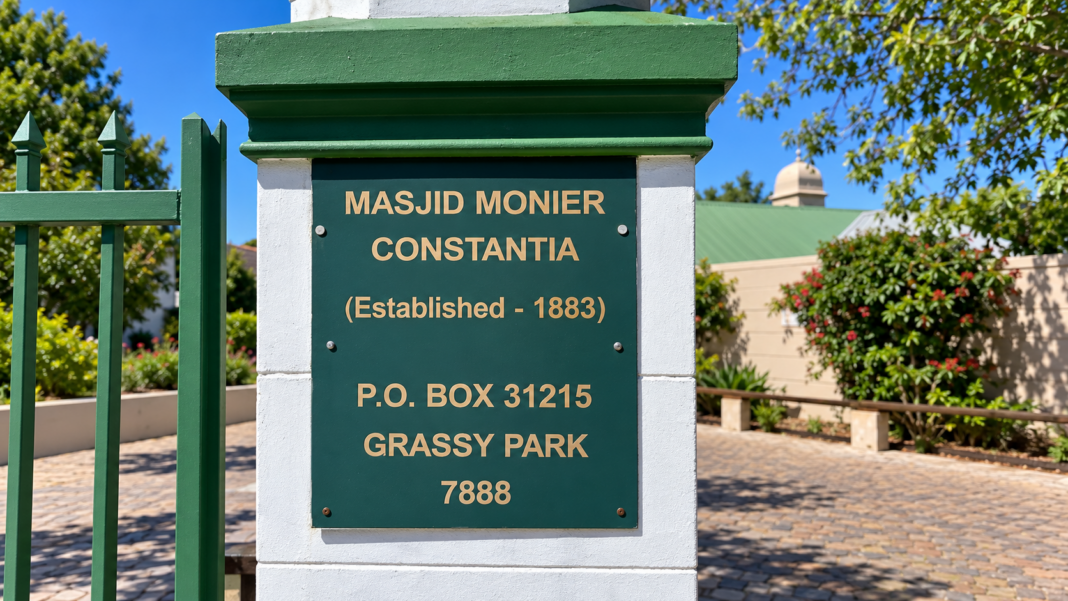

Cape Town’s Constantia is one of the city’s oldest suburbs. Nestled in a lush valley of wine farms and some of South Africa’s most expensive properties, it was zoned as an exclusively white area in the 1960s, with people of colour forcibly removed to the Cape Flats.
Today, the mosque on Spaanschemat River Road and the Muslim cemetery remain enduring symbols of how a community was deliberately erased from among the wine estates.
Every Friday, Muslims drive back into the suburb that expelled them, past multi-million-rand homes, to a small mosque built in 1883. They park on the grass verge — there is nowhere else — and they pray. They are the removed people of Constantia. And more than 60 years later, the bitterness still lingers.
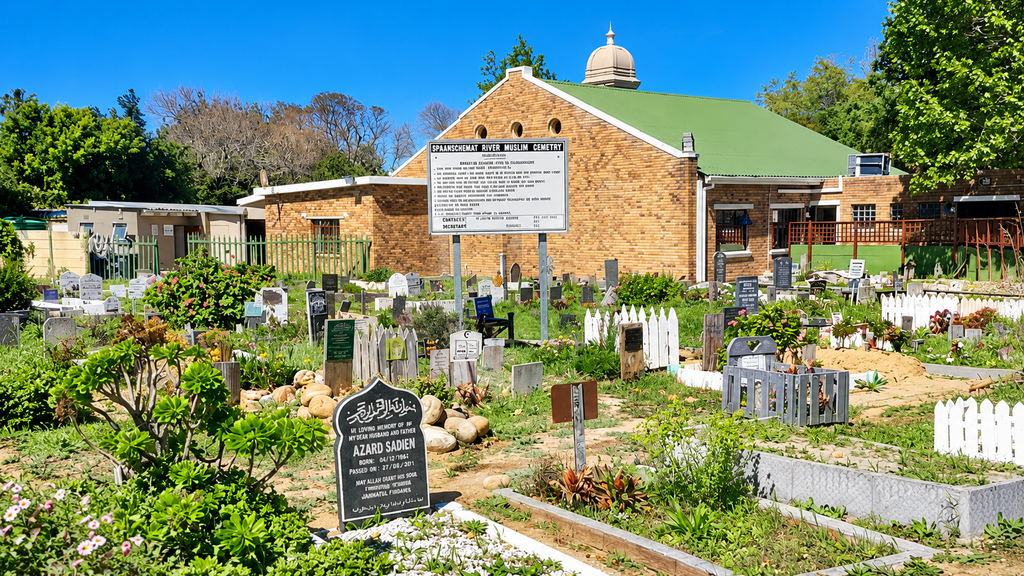
Masjied Monier, the earliest formal mosque in the Constantia valley, stands as both sanctuary and scar. Next to the historic Muslim cemetery — bought in 1924 by 105 families for £3 and 5 shillings — it is one of the few things the Group Areas Act could not bulldoze.
Islam here dates back to 1667, when the Dutch exiled Sheikh Abdurahman Matebe Shah and Sayyid Mahmood from Sumatra to the Constantia forests, where they taught runaway slaves. The mosque ground itself was bequeathed by David Damonse, also known as Kiamdien, and donated to the masjied in 1901 by Cassiem Damonse.
That living history walks through its doors every Jumuah.
“This masjied serves the entire community of Cape Town, you will find at this masjied not only new residents of the area but the people of Constantia of previous years that resided here that was forcefully removed by the Group Areas Act,” says resident Imam Sheikh Omar Davids, 58, who studied in Cairo and Medina and has served the community for almost 15 years.
“They have a sense of belonging to this masjied so they also frequent here especially during Ramadaan, Eid, Jumaah and on other big days,” he said.
Among them is 83-year-old Abduraghman Allie. A committee member, caretaker of the mosque and cemetery and now a resident of the Cape Flats, he is Constantia-born and bred. He married at this mosque in 1963 and attended Constantia Primary School opposite his grandfather’s land. In 1960, aged 20, he was forced out with his parents and nine siblings to Athlone on the Cape Flats.
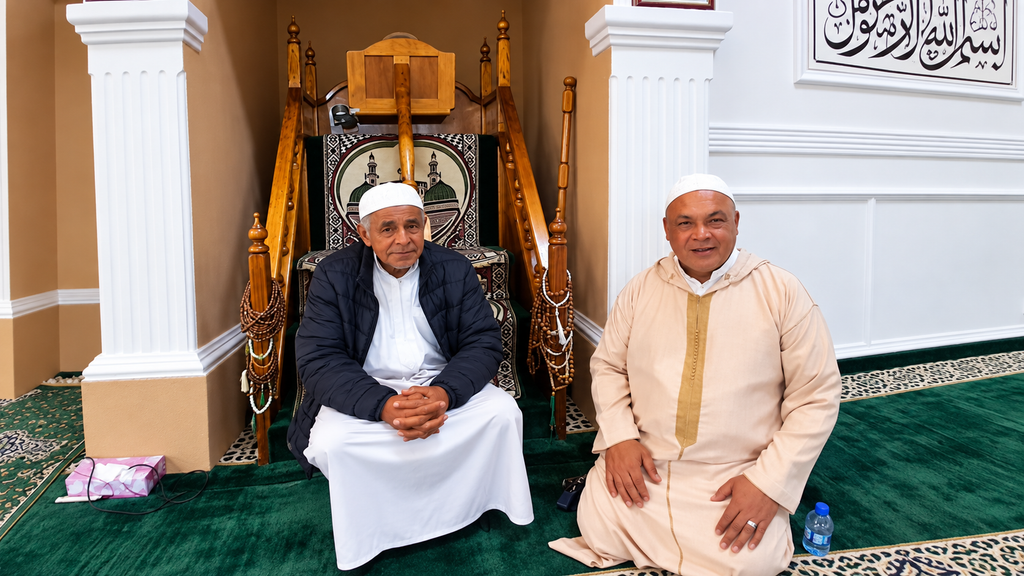
“I was born and grew up here in Constantia,” Allie says, his voice steady but hard. “In 1960, I was twenty years old, we had to leave here because of the Group Areas Act.”
What galls him still is not only the removal, but its selectivity.
“This area had no lights back at the time and this was all farmland here, people were farming with flowers and various vegetables,” he recalls.
“Many different people of different races, religions and backgrounds lived here but not all were treated equally when it came to the Group Areas Act. It was sad to have to leave here and that all of us who loved one another had to be divided, we had to go to various areas of the Cape Flats while the white people were given farms in Constantia and all the way up to Durbanville.”
Then comes perhaps the bitterest detail.
“Up until today, not a brick has been laid on the grounds where we lived, the land is still vacant.”
Allie lodged a land claim, like many others. Some neighbours have had their land returned. He has not.
“Only some families have received their land back here in Constantia. We also lodged a land claim for our land but to date, we haven’t received anything. It’s not just my family, there are many other families that lived here that are also still waiting,” he says.
“I just hope and pray that it will come while I am still alive, inshallah.”
That unresolved loss hangs over the mosque. Its heritage status means expansion is restricted, while parking on Fridays and other special days remains a serious challenge. Plans have been drawn up, but have been blocked. The Athan cannot be broadcast outside.
“it’s always inside the masjied,” Imam Davids says, a quiet compromise in a majority-white suburb.
Inside, however, there are no divisions, the Imam insists: “We do not divide people… we want to build as one Ummah and one nation.”
Renovations have expanded the women’s area and created space for fundraisers and food distributions. The mosque runs on community donations and is managed by a seven-member committee.
But beyond those walls, Constantia remains one of Cape Town’s most upmarket and predominantly white areas — built, in part, on land from which families were forcibly removed.
The mosque and cemetery endured because the people refused to abandon them. Week after week, they return to pray in the place where apartheid told them they did not belong.
It is devotion. It is also defiance.
And for men like Abduraghman Allie, every return is a reminder of a historic grievance and injustice — and a debt still unpaid.