
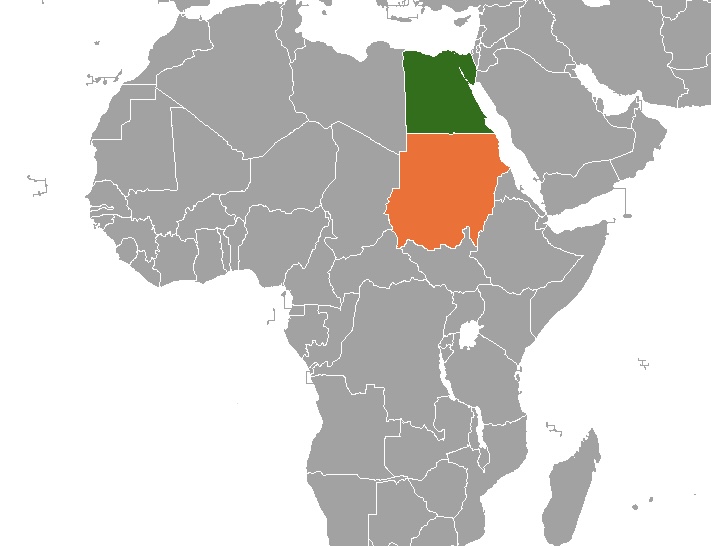

Sudan’s army chief Abdel Fattah al-Burhan has ordered an investigation into deadly airstrikes on a gold mine near the Egyptian border that reportedly killed at least 72 civilian workers, amid allegations that Egyptian warplanes carried out the attack.
The strikes hit the Jabal al-Uqaydat mining area in northern Sudan on Saturday, October 10, prompting widespread condemnation and renewed concerns over the safety of civilians working along the disputed border.
The Sudanese human rights organisation Emergency Lawyers accused the Egyptian air force of targeting the miners, saying preliminary reports indicated that 72 civilians had been killed.
The group warned that the death toll could rise as efforts continued to locate victims and verify casualties in the remote mountainous region.
Egypt has not officially acknowledged responsibility for the attack, and the allegations have not been independently verified.
On Monday, October 12, Sudan’s Transitional Sovereignty Council announced that Burhan had established a fact-finding committee comprising prosecutors, judicial officials and security representatives to investigate the circumstances of the strikes.
The council stressed the state’s responsibility to protect Sudanese citizens and safeguard the country’s territorial integrity.
Survivors describe scenes of devastation
Survivors described terrifying scenes as aircraft reportedly launched repeated strikes on the mining site, sending workers fleeing into the surrounding mountains.
Miner Abdelaziz Youssef said a military aircraft appeared overhead at approximately 8am on Saturday before launching five strikes.
Many workers were killed, while others scrambled uphill, fearing further bombardment.
Another survivor, Sharaf Ali, said thousands of people had been working at the remote mining site when the attack occurred.
Workers fled in different directions, making it difficult to establish the full number of casualties.
Survivors reported seeing bodies scattered across the site, with fears that others remained trapped beneath rubble.
The mine’s isolated location, several hours from the nearest urban centres, has further complicated rescue and recovery efforts.
Second deadly attack this year
Saturday’s attack was the second reported airstrike on Jabal al-Uqaydat this year.
In June, strikes reportedly killed 23 workers at the same informal gold mining site, with Egyptian forces again accused of responsibility.
Although Cairo did not explicitly claim responsibility for those deaths, the Egyptian military subsequently announced that it had conducted a large-scale operation against illegal gold mining and cross-border smuggling.
Egyptian authorities maintained that the operation had taken place within Egyptian territory.
The military also announced the detention of 223 people, including 136 foreign nationals, as part of a wider crackdown on illegal mining, weapons trafficking and other cross-border activities.
Emergency Lawyers insisted that Saturday’s attack had occurred inside Sudanese territory and accused Egyptian authorities of attempting to extend their control over mineral-rich borderlands.
“The repeated attacks on the gold- and mineral-rich border regions reflect a desire by Egyptian authorities to expand and assert control over Sudan’s natural resources,” the organisation said.
Disputed territory and Sudan’s gold economy
The deadly strikes have renewed attention on longstanding territorial disputes between Sudan and Egypt, particularly the resource-rich Halayeb Triangle, which both countries claim.
The mountainous borderlands contain significant gold deposits and have attracted thousands of informal miners seeking livelihoods amid Sudan’s devastating economic collapse.
Since April 2023, Sudan has been engulfed in a brutal war between the Sudanese Armed Forces (SAF), led by Burhan, and the paramilitary Rapid Support Forces (RSF), which have received extensive support from the United Arab Emirates.
The conflict has killed vast numbers of civilians, displaced millions and devastated the country’s economy, forcing many Sudanese into dangerous and largely unregulated industries, including artisanal gold mining.
Gold has also become a critical source of revenue for armed groups involved in the conflict, with smuggling networks facilitating the movement of Sudanese resources across regional borders.
Egypt remains a key regional ally of Sudan’s army and has backed Burhan throughout the conflict against the RSF.
However, Cairo also regards instability along its approximately 1,200-kilometre border with Sudan as a major national security concern.
The frontier has long served as a corridor for informal gold trading, smuggling and human trafficking, prompting repeated Egyptian security operations and deportation campaigns.
The latest killings have exposed growing tensions surrounding territorial sovereignty, mineral resources and civilian protection, even as Cairo maintains close relations with Sudan’s military leadership.
With investigations underway and the full casualty toll still uncertain, questions remain over responsibility for the strikes and whether those behind the deaths of Sudanese civilian miners will face accountability.