
How a deadlocked religious dispute among Cape Muslims prompted British colonial authorities to seek help from Istanbul, bringing an Ottoman scholar to South Africa and laying the foundations for the historic Noor El-Hamedia Masjied.
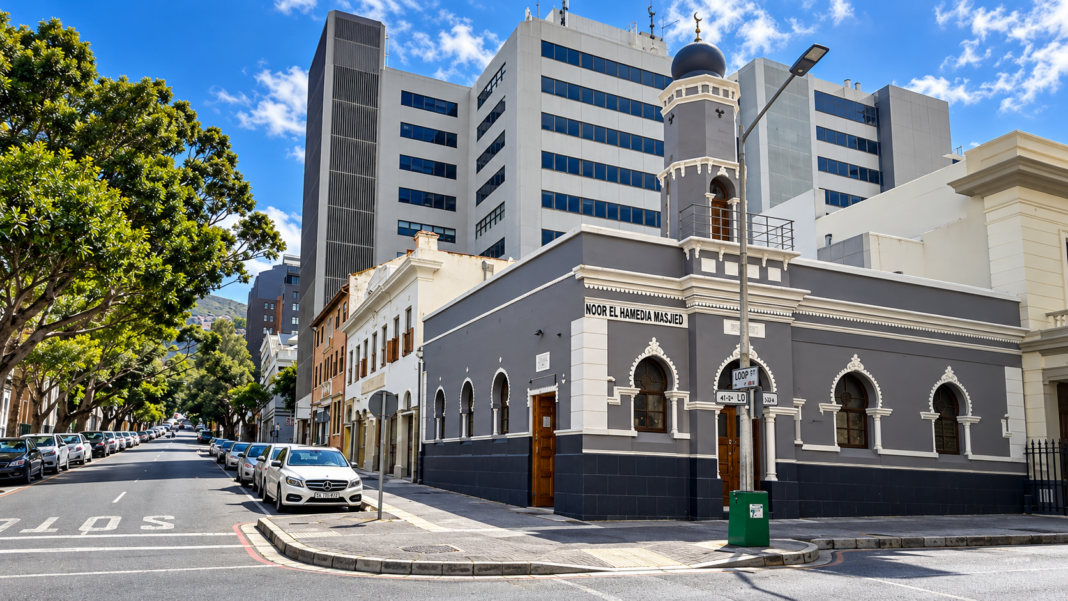
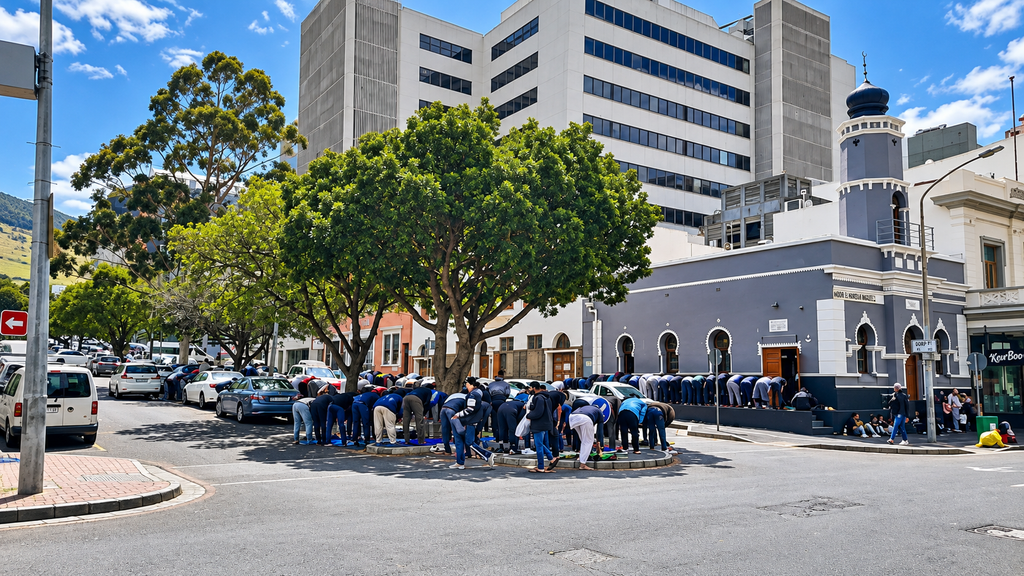
At the corner of Long and Dorp streets in Cape Town, a small mosque carries a remarkable connection to one of the great Muslim empires of the 19th century. Alongside South Africa’s national flag, Turkey’s flag is raised on special occasions, commemorating a history that stretches back to 1862, Queen Victoria and the intervention of the Ottoman Caliphate.
That year, Muslims at the Cape were facing a serious internal crisis. Religious disputes had reached a deadlock, while British colonial authorities struggled to resolve matters involving Islamic jurisprudence.
The dispute eventually reached London, where assistance was sought from the Ottoman authorities.
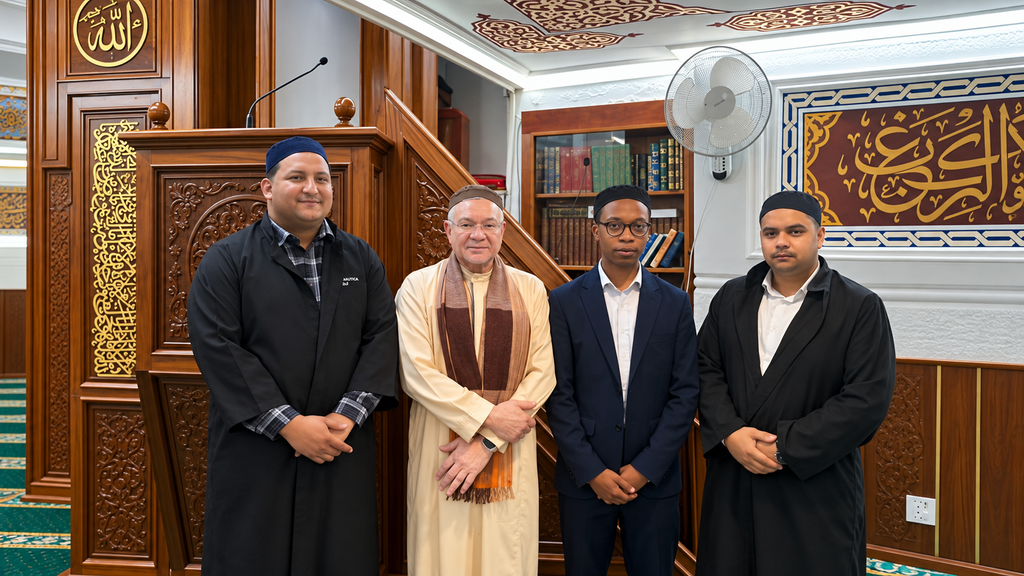
“1862, we had conflicts and it deadlocked where the British could not resolve the problem and they had to address someone of authority which was Queen Victoria,” said Imam Ishtiyaaq Abdurahman of the Noor El-Hamedia Masjied.
Historical accounts indicate that the Cape colonial authorities sought Ottoman assistance in resolving religious disputes among local Muslims.
According to the mosque’s oral history and archival accounts, Queen Victoria appealed to the Ottoman leadership at a time when Britain and the Ottoman Empire maintained close diplomatic relations.
The Ottoman authorities responded by dispatching one of their Islamic scholars, Sayed Abu Bakr Effendi, who arrived at the Cape in January 1863.
The scholar from the Ottoman Empire
Born around 1814 in the Ottoman region of Shahrizor, in what is today Iraq, Abu Bakr Effendi came from a family steeped in Islamic scholarship.
His father, Molla Omer, was a scholar who ran a madrasah, while Effendi pursued further religious studies in centres of Ottoman learning, including Erzurum and Istanbul.
Dispatched in 1862 under Sultan Abdulaziz, Effendi arrived as a mudarris, a teacher and scholar of Islamic law, tasked with helping resolve religious disputes and educating the Cape Muslim community.
What followed was far more than the temporary settlement of a dispute.
Effendi established an institution for advanced Islamic education in Cape Town, immersed himself in the languages spoken by the community and became one of the most influential, and at times controversial, Muslim scholars of the colonial Cape.
Although trained in the Hanafi school of jurisprudence, Effendi possessed knowledge of the four Sunni schools. His promotion of Hanafi rulings occasionally brought him into conflict with sections of the predominantly Shafi’i Cape Muslim community.
Nevertheless, his influence extended well beyond jurisprudential disagreements.
Effendi helped strengthen formal Islamic education and contributed to the development of Muslim intellectual and communal life among people whose religious identity had endured slavery, dispossession and colonial rule.
He also left an important literary legacy through Bayan al-Din, an Islamic religious text written in an early form of Afrikaans using Arabic script, contributing to the remarkable literary tradition later known as Arabic-Afrikaans.
While in Cape Town, he married Tahora Saban Cook, a student at his school, and had five children.
Effendi died on June 29, 1880, and was buried at the historic Tana Baru cemetery in Bo-Kaap.
The honorific “Sayed” is used by his descendants and within the mosque’s tradition because the family traces its lineage to the Quraysh, the tribe of Prophet Muhammad ﷺ.
Effendi is also remembered for travelling beyond the Cape and engaging with Muslim communities elsewhere under colonial rule.
From two houses to an Ottoman-linked masjied
Effendi never lived to see the mosque that would become one of the most enduring symbols of his Ottoman legacy.
“His demise came in 1880 and there was no masjied yet,” Imam Abdurahman explained.
“It was only afterwards that his disciples, students and descendants decided to keep the anchor of his legacy in place and built the mosque between 1881 and 1884.”
Two houses at the corner of Long and Dorp streets were combined to establish the place of worship.
According to the mosque’s historical tradition, its construction received support linked to Sultan Abdul Hamid II, the 34th Sultan of the Ottoman Empire, who ruled from 1876 to 1909.
That connection is preserved in its name, Noor El-Hamedia, meaning the Light of Hamid.
“The word HAMEDIA is after Sultan Abdul Hamid II. The founders made sure that the masjid will always have a link to Sayed Abu Bakr Effendi and the Ottoman Empire,” the imam said.
Among those associated with the community were prominent students, descendants and later Cape Muslim figures, including Muhammad Dollie, members of the Jongie Siers family and Dr Abdullah Abdurahman, a pioneering Black South African political leader and medical doctor.
The masjied developed as a Hanafi institution in a city where the Shafi’i school had long been dominant, reflecting the theological debates that accompanied Effendi’s arrival at the Cape.
Why the Ottoman connection survives today
More than a century later, the mosque’s historical relationship with Turkey remains visible.
In February 2019, the Turkish and South African flags were officially hoisted together outside the masjied during a ceremony attended by Turkish diplomatic representatives, other ambassadors and members of the Muslim Judicial Council.
For the mosque community, the flags represent more than a ceremonial gesture. They symbolise a historical connection stretching back to the Ottoman intervention in Cape Muslim affairs.
Permission for the flags was required from local authorities and heritage bodies, with the South African flag retaining its status as the dominant national symbol.
The Turkish flag is raised only on specific occasions, particularly during visits by Turkish government representatives.
“We only hang the Turkish flag when we are expecting Turkish government officials, senators, ministers or ambassadors,” said mosque committee member Dr Eshaam Palmer.
Despite its longstanding Ottoman connections, the mosque leadership has sought to preserve the institution’s independence, including resisting proposals that could give Ankara direct influence over its religious administration.
“The Turkish government asked on more than one occasion to take over the management of the mosque and to have a permanent Imam, but in principle we disagreed because it will allow them to control the Khutba on Fridays. We want to have a level of independence, which is why we have Imams from UICT,” Palmer explained.
That independence reflects a broader chapter in Cape Muslim history: a community strengthened by scholars arriving from distant lands, yet firmly rooted enough to establish and sustain its own religious institutions.
For Imam Abdurahman, the story that began when British colonial authorities sought assistance from the Ottoman Caliphate illustrates a larger historical reality: Islamic scholarship retained an authority that colonial administrators could not simply replace with their own institutions.
“Our organisation is the inheritance of the empire itself,” he said.
More than 160 years after an Ottoman scholar arrived at the Cape, Noor El-Hamedia Masjied remains a living testament to that legacy, preserving a remarkable connection between South Africa’s Muslims and the Ottoman Caliphate.