
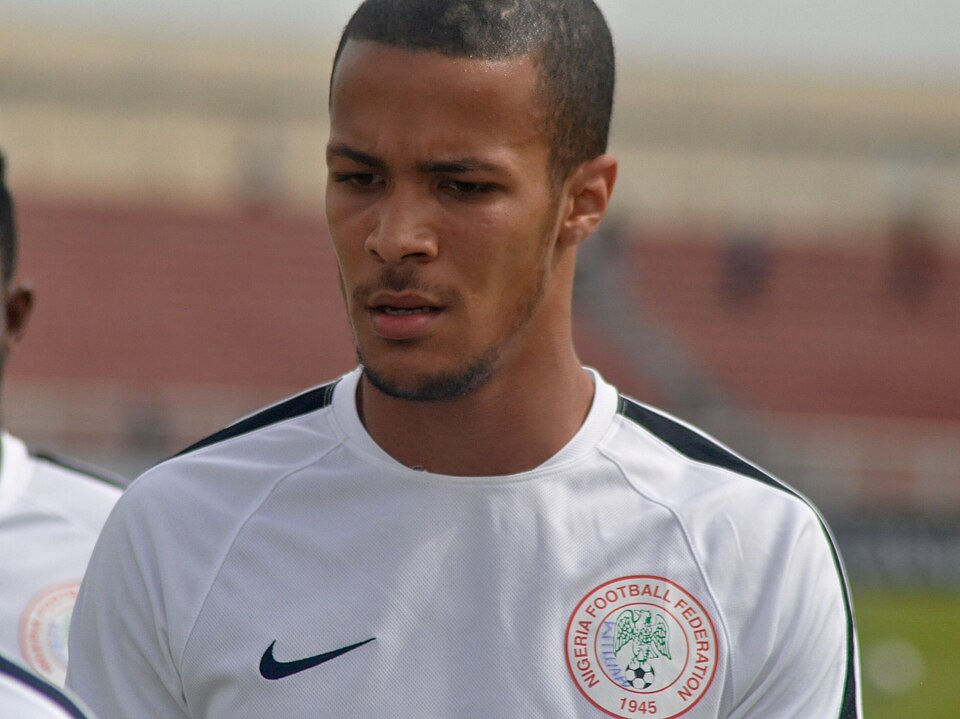

William Troost-Ekong, the former captain of Nigeria’s Super Eagles and one of the country’s most recognisable footballers, has publicly embraced Islam, putting a spotlight on a deeply personal choice that most Nigerians make far from the cameras.
In Doha, Qatar, the 33-year-old defender looked into a camera and recited the Shahada in Arabic.
No press conference. No explanation. Just a declaration that travelled far beyond Doha.
Troost-Ekong has not publicly explained what led him to Islam. There is no interview detailing the questions he asked or the experiences that moved him. What we have seen is his declaration of faith.
Other prominent Nigerians have spoken about their encounters with Islam, though their stories differ.
In 2025, Grammy-winning artist Burna Boy said he had been raised Christian and had converted to Islam during a wider exploration of religion. He also said he was still searching for answers. His account is therefore one of continuing questions, rather than a settled explanation of what he believes today.
In Nollywood, Mercy Aigbe embraced Islam after marrying filmmaker Kazim Adeoti and later performed Hajj. Actress Lizzy Anjorin announced her conversion in 2016, while former footballer Emeka Ezeugo adopted the name Mustafa Mohammed.
Different lives. Different paths. Each public account has drawn attention to a decision that, for most people, takes place away from the cameras.
A personal choice in a deeply religious nation
Nigeria has both one of the world’s largest Muslim populations and one of its largest Christian populations. Islam’s roots in the country run centuries deep, particularly in the north, while Muslim communities are also firmly established in the southwest and elsewhere.
So are these famous faces evidence of a wider wave of conversions?
There is no authoritative annual count of Nigerians embracing Islam. A 2025 Pew Research Center survey found that at least 95% of Nigerian adults still identified with the broad religious group in which they were raised. A handful of high-profile stories cannot establish a national trend.
But a Shahada is not a census figure. For the person who says it, it marks a profound beginning.
For many who find Islam, the path is quiet and unfilmed: reading the Qur’an, studying the life of Prophet Muhammad ﷺ, speaking with a Muslim friend or wrestling with questions about God and purpose.
The Qur’an repeatedly calls on people to reflect. And Islam offers more than a declaration of belief. It asks believers to shape their daily lives around prayer, charity, fasting, mercy and accountability.
Islam is not an ethnicity
If these stories challenge one misconception, it is that Islam belongs to a single Nigerian community.
Nigerian Muslims are Hausa, Fulani, Yoruba, Kanuri, Ebira, Nupe, Igbo and more. Becoming Muslim does not require someone to stop being Yoruba, Igbo or Nigerian.
That is part of why public declarations resonate. They make visible a choice that usually remains private: someone questioning, reading and deciding what they believe.
Troost-Ekong’s Shahada was seen around the world. Most Nigerians who embrace Islam will have no camera present. They may say the words in a masjid, a living room or in the company of a friend after months of searching.
For them, too, it is more than a headline. It is a new beginning.


