
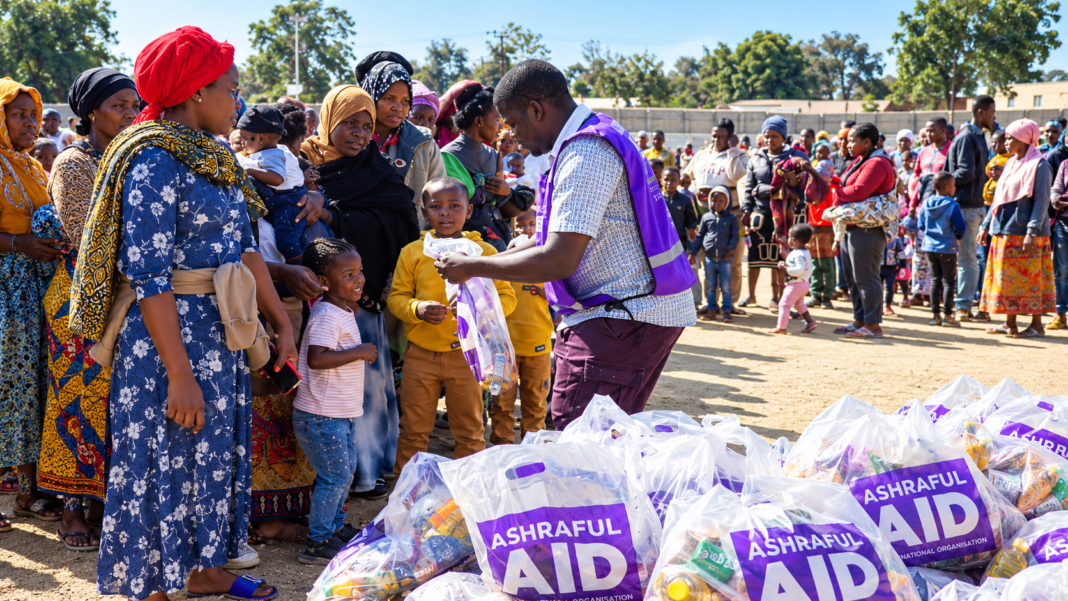

Every year, South African Muslims contribute millions of rands in Zakaah to alleviate poverty and financial hardship. But how much of this wealth is creating lasting change, and how much is merely providing temporary relief? Ra’eesah Hassim examines whether Zakaah distribution is doing enough to help Muslims escape the cycle of poverty and achieve financial independence.
Every year, Muslims across South Africa contribute millions of rands in Zakaah to support those struggling with poverty, debt and financial hardship. Food parcels are distributed, families receive emergency assistance and students are supported with their education costs.
But an important question remains: Is enough of that Zakaah creating lasting change, or are we repeatedly addressing the same problems year after year?
While some recipients will understandably require ongoing assistance, others may be capable of achieving financial independence if provided with the appropriate support. The question is whether current Zakaah distribution models adequately distinguish between these different circumstances.
An obligation, not optional charity
Zakaah is not simply voluntary charity. It is a religious obligation upon Muslims who possess qualifying wealth above the Nisaab, the minimum threshold of wealth required before Zakaah becomes obligatory.
Zakaah is generally calculated at 2.5% of a Muslim’s net Zakaatable assets, provided the relevant conditions, including the Nisaab threshold and the passage of a lunar year, are fulfilled. The Nisaab determines liability; it is not an amount deducted from Zakaatable wealth. Channel Islam International’s economic indicators have placed the Nisaab at approximately R19,425, although the threshold fluctuates with gold and silver prices. This means many working and financially established Muslims fall within the annual Zakaah system.
The Qur’an is clear about who is entitled to receive Zakaah. Surah At-Tawbah (9:60) identifies eight categories of eligible recipients, including the poor, the needy, those burdened by debt, stranded travellers and those appointed to administer Zakaah. Allah describes these categories as an obligation from Him, making the correct distribution of Zakaah a serious religious responsibility.
Zakaah is also an act of worship with objectives extending beyond poverty alleviation. Allah states in the Qur’an: “Take from their wealth a charity by which you purify them and cause them increase” (9:103). Zakaah therefore serves not only to fulfil the rights of eligible recipients, but also to purify the wealth and soul of the giver. Its success cannot be measured solely through economic outcomes, but must first be understood in terms of fulfilling the obligation as prescribed by Allah.
The question, therefore, is not whether Muslims should give Zakaah. It is whether the way Zakaah is distributed in South Africa is doing enough to help people escape long-term financial dependence.
A food parcel can help a family survive this month. But what happens when the same family needs another parcel next month, and again the following year?
Immediate relief vs long-term independence
Abdullah Panjwani, CEO of Ashraful Aid Malawi, believes there is a place for both immediate relief and long-term assistance. He argues that charitable organisations should engage directly with beneficiaries to understand their specific circumstances. A family struggling with debt, school fees or electricity bills, for example, may not necessarily benefit most from another food parcel.
South Africans are already contributing substantial amounts to charitable causes. Nedbank Private Wealth’s Giving Report VI found that affluent South Africans donated approximately R2.9 billion in cash and a further R2.9 billion in goods during 2025. Religious beliefs were among the major motivations for giving, highlighting the significant role faith continues to play in charitable contributions.
However, the report also raises important questions about how donors evaluate charitable organisations and their impact. According to its findings, approximately 80% of respondents considered whether an organisation was responding to a particular need, while 27% considered good governance and 23% looked at proven impact. Just 6% considered financial management when deciding where to donate.
Although the report examines South African philanthropy generally rather than Zakaah specifically, its findings raise questions Muslim donors should also be asking: How many Zakaah recipients eventually become financially independent? How much Zakaah is being used, within the limits prescribed by Shariah, to help eligible recipients achieve self-sufficiency through education, skills development, productive assets or small-business support?
However, such initiatives must operate within the framework prescribed by Shariah. A fundamental requirement in Zakaah distribution, according to established juristic approaches, is Tamleek, the transfer of ownership to an eligible recipient. Zakaah funds cannot simply be redirected towards general development projects, nor can organisations retain ownership of assets supposedly distributed as Zakaah. Programmes involving education, business development or other forms of empowerment must therefore be structured to fulfil the relevant Shariah requirements while respecting the rights and ownership of beneficiaries.
Signs of a shift
There are indications that major Muslim charitable organisations are already working to move beyond short-term relief towards longer-term economic empowerment.
The South African National Zakah Fund (SANZAF) reported collecting more than R225 million during its 2025 financial reporting period across its charitable activities, including Zakaah and other forms of giving. More than R50 million was channelled into education, while its programmes also cover welfare, food security and community development.
Panjwani highlighted a farming initiative he encountered in Malawi, where beneficiaries who initially received agricultural assistance subsequently became Zakaah contributors themselves after a successful farming season.
“The receivers have become givers,” he said. He believes the objective should be to equip eligible recipients with the means to support themselves, rather than simply addressing their immediate financial needs.
At Ashraful Aid, Panjwani says monitoring and evaluation take place before, during and after projects, including food parcel distributions, to assess their effectiveness and identify areas for improvement.
The challenge now is whether South Africa’s wider Zakaah ecosystem can build on such models, ensuring that alongside feeding families today, Muslim communities are also helping create a future in which those same families may no longer need Zakaah tomorrow.
The ultimate measure of success is not simply how much Zakaah is collected or distributed, but whether it fulfils its religious obligations while genuinely improving the lives of those entitled to receive it. For those capable of achieving financial independence, the ambition should be to help transform today’s recipients into tomorrow’s contributors.


