
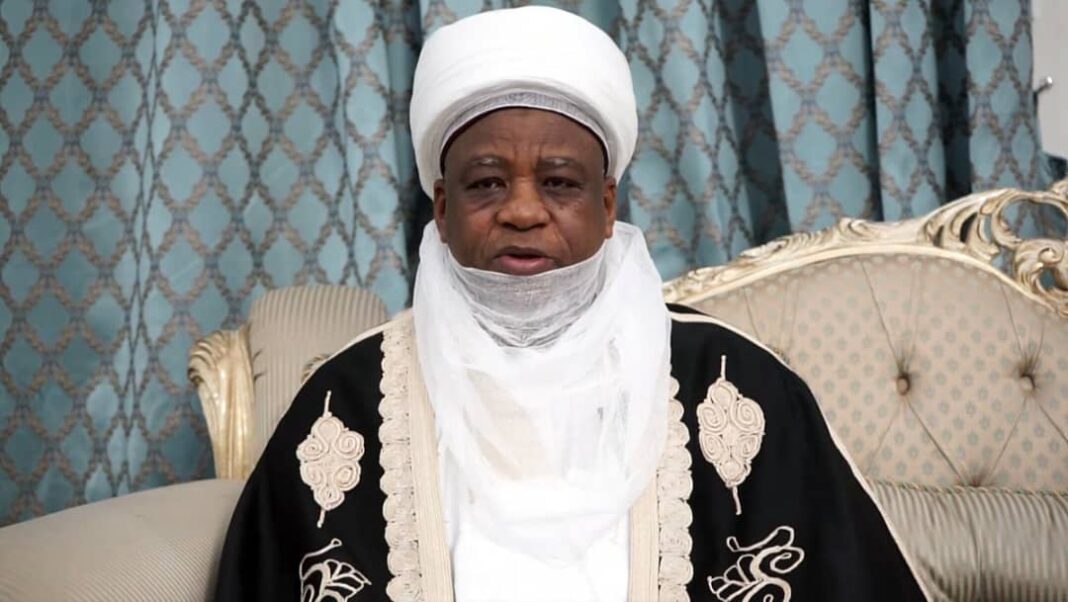

It was supposed to be a routine interfaith meeting. Instead, Nigeria’s most senior Muslim leader used the platform to issue a warning as the country moves closer to the 2027 general elections: stolen public money cannot be turned into religious virtue.
Politicians should not loot the treasury and then use the proceeds to send Muslims to Mecca or Christians to Jerusalem, Sultan of Sokoto Muhammadu Sa’ad Abubakar III told the Nigeria Inter-Religious Council (NIREC) in Abuja on September 23.
A pilgrimage, his message made clear, does not cleanse corruption.
It was a moral argument with clear political relevance. As Nigeria moves towards the 2027 elections and politicians increasingly court religious constituencies, the Sultan is challenging the use of religious patronage as a shield for questionable wealth and political influence.
The pilgrimage economy
In Nigeria, the sponsorship of pilgrims has long carried significance beyond religious charity.
Governors, lawmakers and other political figures have funded Hajj and Christian pilgrimage programmes, sometimes through public resources or government-backed schemes. The imagery is deeply religious: pilgrims dressed in ihram, airport departures and prayers before their journeys.
But the Sultan’s intervention raised a more fundamental question: where does the money come from?
His argument was straightforward: spending money on a religious cause does not remove the obligation to account for how that money was obtained.
It amounts to a challenge to a long-established political culture in which office holders cultivate relationships with religious institutions and influential faith leaders through patronage, donations and community programmes.
The Sultan went further, calling on the Economic and Financial Crimes Commission (EFCC) to pursue corruption suspects “without regard to political or religious affiliations”.
The message was that neither political office nor religious identity should provide protection from accountability.
Preachers in the spotlight
The Abuja meeting also saw the unveiling of an interfaith anti-corruption manual developed with the EFCC for use by imams and pastors.
The initiative seeks to bring discussions about corruption directly into mosques and churches, encouraging religious leaders to address graft, money laundering and illicit enrichment not only as crimes against the state, but as moral violations.
The Sultan, who co-chairs NIREC alongside Christian Association of Nigeria president Archbishop Daniel Okoh, also warned against allowing mosques, churches and other religious gatherings to become campaign platforms or spaces for inflammatory political rhetoric ahead of 2027.
Secretary to the Government of the Federation George Akume reinforced the message, urging politicians to keep partisan campaigning within the political process rather than importing religious and ethnic divisions into places of worship.
The warnings reflect longstanding concerns over the influence religious institutions can wield during Nigerian elections, and the efforts of politicians to secure the support of influential clerics and their communities.
Why 2027 matters
Nigeria’s elections are shaped not only by policy and party politics, but also by regional, ethnic and religious identities.
Faith leaders command significant social influence, particularly in communities where mosques and churches remain central institutions.
The Sultan has recently urged Nigerians to scrutinise campaign promises and focus on issues rather than divisive identity politics. He has also cautioned political actors against exploiting insecurity for electoral advantage.
His latest intervention also turns attention towards religious leaders themselves and the responsibility they carry when politicians seek their endorsement or support.
During an election season, political patronage can take many forms: donations, pilgrimage sponsorships, development projects or financial support for religious institutions.
The concern raised in Abuja is whether such relationships compromise the ability of religious leaders to hold political figures accountable.
Insecurity as political currency
The corruption warning also comes amid continuing insecurity across parts of Nigeria.
Communities in northern Nigeria continue to face kidnappings, armed attacks and displacement, while frustration has grown over the ability of authorities to protect civilians.
The political debate surrounding that insecurity has increasingly taken on religious dimensions, with officials warning against portraying complex security crises simply as a conflict between Christians and Muslims.
Information Minister Mohammed Idris has urged religious leaders not to frame the country’s insecurity as a religious war.
The Sultan’s message follows a similar principle: political failure, corruption and insecurity should not be disguised or amplified through religious identity.
The danger is twofold. Public funds intended to protect communities can be vulnerable to corruption, while insecurity itself can be exploited politically to deepen religious divisions.
The test ahead
The Sultan’s intervention places responsibility on both sides of Nigeria’s political-religious relationship.
For political leaders, religious donations and pilgrimage sponsorships cannot erase questions about the source of public money.
For imams, pastors and other religious figures, political access and patronage bring their own questions of accountability.
And for the EFCC, the challenge is whether investigations will proceed without favour when politically connected figures or influential religious networks are involved.
As 2027 approaches, Nigeria will once again confront the intersection of public money, religious influence and political ambition.
The Sultan has drawn the line clearly: faith cannot be used to cleanse corruption.
Whether Nigeria’s politicians, religious leaders and anti-graft institutions uphold that principle as election campaigning intensifies will be the real test.


