
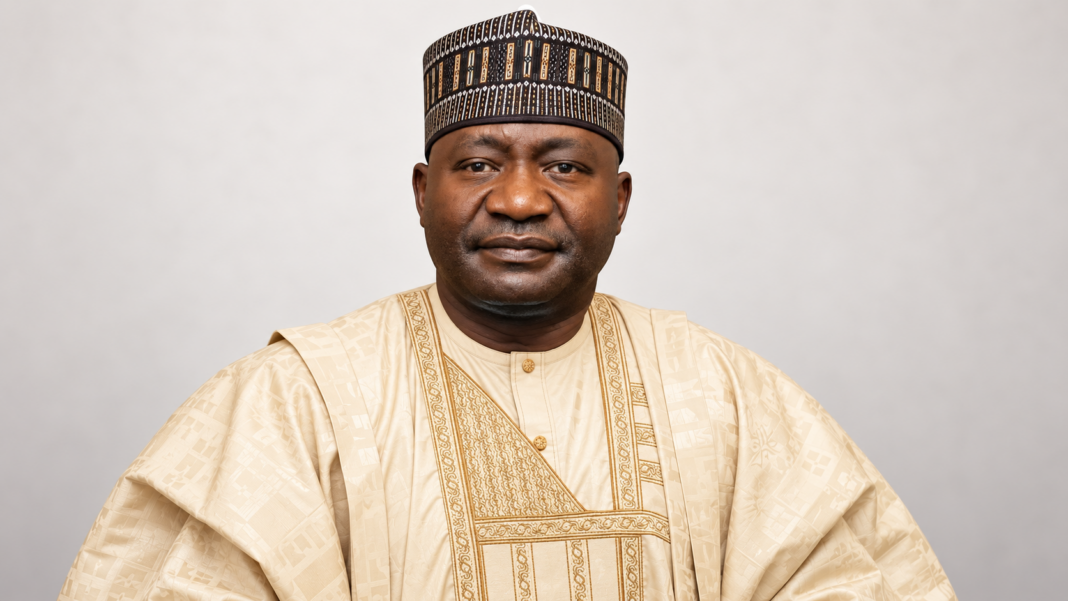

From Tudun Biri to Jilli and Zamfara, repeated reports of civilians being killed in Nigerian military airstrikes during Christopher Musa’s years at the centre of the country’s defence establishment have raised increasingly difficult questions about intelligence, targeting and accountability.
When General Christopher Musa was appointed Nigeria’s Chief of Defence Staff in June 2023, he assumed the country’s highest uniformed military position at a time when the armed forces were confronting multiple security threats — from Boko Haram and the Islamic State West Africa Province (ISWAP) in the north-east to banditry, kidnapping and other armed groups elsewhere.
Musa served as Chief of Defence Staff until October 2025 before returning to government as Minister of Defence in December that year.
Throughout this period, he has repeatedly defended the military’s commitment to protecting civilians. While serving as CDS, Musa said Nigerian forces sometimes cancelled operations specifically to avoid civilian casualties, even when doing so meant losing a tactical opportunity.
Yet a succession of controversial air operations during the period in which Musa has occupied senior defence positions has raised a difficult question: at what point do repeated civilian deaths cease to be viewed as isolated mistakes and instead become a matter of intelligence, military doctrine and institutional accountability?
One of the most devastating incidents came on 3 December 2023, when a Nigerian Army drone strike hit Tudun Biri in Kaduna State.
Villagers had gathered for a Maulud celebration commemorating the birth of the Prophet Muhammad (Peace be upon him) when they were struck. Nigeria’s National Emergency Management Agency put the death toll at 85, while Amnesty International reported a substantially higher figure based on its investigation and testimony from residents.
The victims were predominantly Muslim villagers.
The tragedy generated national outrage and demands for a transparent investigation into how civilians attending a religious gathering could have been identified as a military target.
Musa described the Tudun Biri strike as a mistake that should never have happened and called the incident “avoidable”.
The military subsequently announced that its investigation had implicated two Army officers who would face court martial. Government assistance to the affected community has also included compensation-related measures and reconstruction initiatives.
But questions remain over the transparency of the investigation, the outcome of disciplinary proceedings and what operational changes were introduced to prevent a similar tragedy.
Tudun Biri was not the last controversy.
On Christmas Day 2024, Nigerian military airstrikes targeting suspected Lakurawa fighters hit the Gidan Sama and Rumtuwa areas of Sokoto State.
At least 10 people were reported killed.
Sokoto State authorities described the victims as innocent villagers, while Musa — still serving as Chief of Defence Staff — disputed suggestions that the operation itself had been a mistake and maintained that those targeted were associated with criminal activity.
Defence Headquarters attributed the civilian deaths to secondary explosions, while Vice President Kashim Shettima later expressed regret and apologised to families affected by the strike.
The conflicting explanations illustrate one of the central problems surrounding civilian casualties in Nigeria’s counterterrorism campaign.
Was the intelligence wrong? Were civilians misidentified? Were people killed simply because they happened to be near legitimate military targets? Or did the military consider some of those killed to be members or supporters of armed groups?
Those distinctions matter, particularly when the dead can no longer speak for themselves.
Then came Jilli.
On 11 April 2026, Nigerian military aircraft struck the Jilli axis in Gubio Local Government Area of Borno State, close to the border with Yobe, during an operation targeting Islamist militants.
Local officials and residents cited by Reuters said as many as 200 people were feared dead after the strike hit an area where a market was operating.
The Federal Government strongly defended the operation, describing it as a deliberate, intelligence-led strike against confirmed terrorist targets in an insurgent-controlled area reportedly used by Boko Haram and ISWAP for logistics, supplies and attack planning.
Authorities said surveillance had confirmed militant activity before the strike.
At the same time, the government expressed regret over civilian losses and ordered an investigation into the intelligence, targeting and execution of the operation.
The official justification therefore differed from the language surrounding Tudun Biri.
Jilli was not initially presented simply as an accidental strike on the wrong target. Authorities maintained that the military had deliberately struck an area associated with militant activity following intelligence and surveillance.
That makes the accountability question even more important.
If Jilli had been subjected to sustained surveillance and a rigorous targeting process, how was the presence of civilians assessed before the strike? What precautions were taken? And how was the anticipated risk to civilians weighed against the military objective?
Less than a month later, another controversy emerged in Zamfara State.
Amnesty International said at least 100 civilians were killed in May when a military airstrike struck the crowded Tumfa market in Zurmi Local Government Area, with witnesses saying women and girls were among those killed.
The military disputed the account and said there was no evidence that civilians had been killed.
Nigeria’s National Human Rights Commission subsequently expressed concern over repeated reports of civilian deaths and injuries resulting from military air operations and called for explanations from the Nigerian Air Force.
It is against this record that Musa’s latest assessment of Nigeria’s security situation deserves scrutiny.
Speaking on Channels Television’s Politics Today on 3 September 2026, Musa said Nigeria had defeated terrorism to a significant extent, arguing that Boko Haram and ISWAP attacks were no longer as widespread as before and that kidnapping had increasingly become the more prominent security challenge.
If Nigeria has indeed made substantial progress against organised terrorist groups, that progress should be accompanied by an equally ambitious standard of civilian protection.
Improved intelligence and surveillance capabilities should, in principle, also lead to better target identification and fewer civilian casualties.
That creates an important benchmark against which these incidents should be judged.
If intelligence capabilities are improving, why are large numbers of civilians still reportedly being killed in controversial military air operations?
And when authorities maintain that people killed in places such as Jilli were connected to terrorist groups, where is the publicly available evidence?
Where are the independent investigations? What intelligence identified the targets? Were commanders held accountable where negligence was established? Were victims’ families compensated? And what operational changes followed earlier incidents?
There have been investigations and accountability measures in some cases. Two officers were implicated following Tudun Biri, and assistance has been provided to the affected community. An investigation was also announced following Jilli.
Those steps should be acknowledged.
But accountability requires more than announcing investigations. The public should know what those investigations found, whether disciplinary proceedings were completed, what operational failures were identified and what procedures were changed to prevent recurrence.
The religious identity of many of the victims also requires careful treatment.
Several of the communities affected are in predominantly Muslim areas of northern Nigeria, while Tudun Biri was unmistakably a Muslim tragedy: villagers attending a Maulud gathering were struck by their own country’s military.
That reality should not be erased.
But neither should it be transformed, without evidence, into a claim that Muslims were deliberately targeted.
The issue is more fundamental.
Nigerian Muslims, like every Nigerian citizen, are entitled to expect that the state will protect their lives and that when its armed forces kill civilians, the circumstances will be investigated transparently and independently.
The fact that armed groups deliberately operate among civilian populations does make counterterrorism exceptionally difficult.
But that reality cannot become a permanent explanation for civilian casualties.
It makes accurate intelligence, target verification, proportionality, precautions against civilian harm and credible post-strike investigations more important, not less.
Ultimately, the issue is bigger than Christopher Musa personally.
He did not necessarily plan or authorise every individual airstrike.
But as Chief of Defence Staff and now Minister of Defence, Musa has occupied positions at the centre of Nigeria’s defence establishment during a period in which civilian casualties from military air operations have repeatedly generated national controversy.
A professional military can make mistakes.
Counterinsurgency operations against armed groups embedded among civilian populations are difficult, dangerous and often conducted with incomplete information.
But when those mistakes repeatedly result in civilian deaths, the response cannot end with expressions of regret or assurances that procedures are being improved.
There must be credible investigations, transparency about their findings, accountability where negligence or wrongdoing is established and demonstrable changes to operational procedures.
For the families who lost loved ones in Tudun Biri, Gidan Sama, Rumtuwa, Jilli, Tumfa and other affected communities, competing explanations will never bring back the dead.
But accountability still matters.
The fundamental question is therefore no longer simply whether any one particular airstrike was an accident.
It is whether repeated civilian deaths point to a deeper failure in intelligence, targeting, command responsibility and accountability — and at what point a pattern of “accidents” becomes evidence that the system itself needs to change.


