
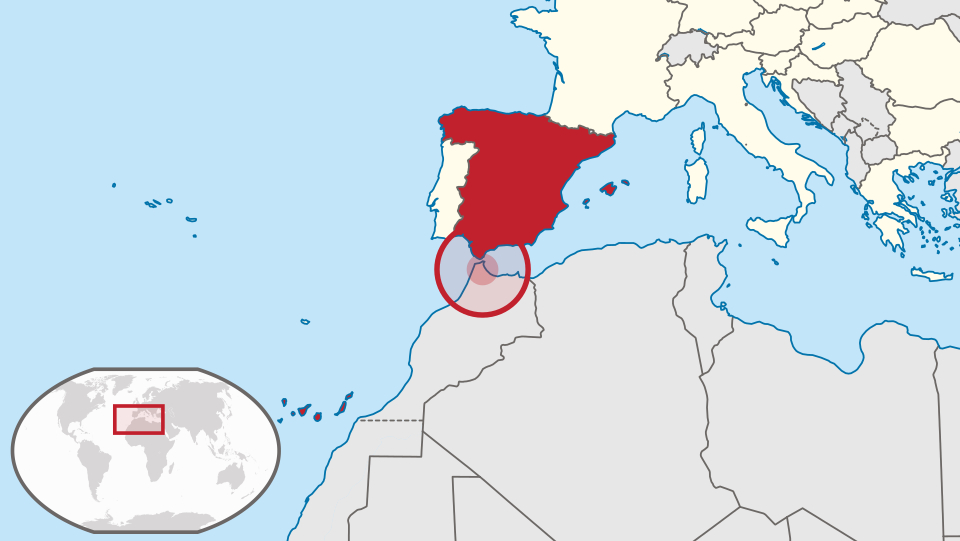

Morocco has renewed its longstanding claim to the Spanish-controlled North African cities of Ceuta and Melilla, calling for formal talks with Madrid over their future and eventual integration into Moroccan territory.
Moroccan Justice Minister Abdellatif Ouahbi said Rabat considers the two cities a “historical and geographical right” and has no intention of abandoning its territorial claims.
Speaking to Morocco’s public broadcaster 2M on Friday, Ouahbi proposed establishing a bilateral dialogue mechanism or commission through which Morocco and Spain could discuss what he described as a “definitive solution” to the dispute.
“The question of Ceuta and Melilla will remain a subject of dialogue between us and Spain,” Ouahbi said, adding that Morocco would continue asserting what it regards as its historical and geographical rights over the territories.
Ouahbi said the process should ultimately result in Ceuta and Melilla returning to what he described as “the bosom of the motherland”.
Spain immediately rejected the proposal.
The Spanish Foreign Ministry said Madrid had communicated its “categorical rejection” of Morocco’s claims through diplomatic channels, insisting that both cities form an internationally recognised part of Spanish territory.
“Ceuta and Melilla are two Spanish cities,” the ministry said, adding that they form part of Spain’s sovereignty and territorial integrity as well as the territory of the European Union.
The latest dispute follows similar comments by Ouahbi earlier this month, when he said Morocco routinely raises the status of Ceuta and Melilla during discussions with Spain and considers the issue to remain “on the table”.
Madrid responded at the time by declaring that the sovereignty of the two territories was not open for negotiation.
The renewed diplomatic tensions come weeks after an unprecedented migration crisis in Ceuta.
An estimated 72,000 people crossed from Morocco into the territory during a mass border movement in late July, overwhelming local authorities. At least 96 people were reported killed during the crossings.
Ceuta and Melilla sit on Morocco’s Mediterranean coastline but have remained under Spanish control for centuries.
Spain considers both autonomous cities integral parts of its sovereign territory, while Morocco has formally maintained its claim to them since gaining independence from France and Spain in 1956.
Rabat regards the territories as remnants of European colonial rule in North Africa and argues that sovereignty should eventually be transferred to Morocco, while successive Spanish governments have rejected negotiations over their status.