

By Shaheesta Khan
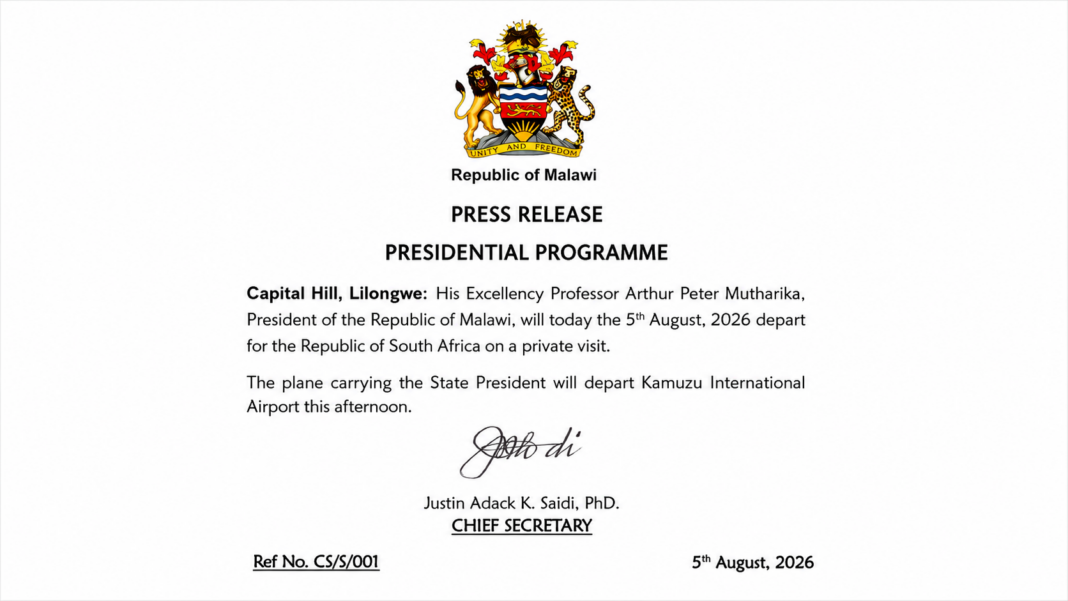
President Arthur Peter Mutharika’s latest medical trip to South Africa has renewed debate over the state of Malawi’s struggling public healthcare system, where many ordinary citizens continue to face shortages of medicines, equipment and medical personnel.
Millions of Malawians rely on public hospitals and clinics for treatment. However, health facilities across the country have for years faced shortages of essential medicines, medical equipment and trained healthcare workers, while some hospitals also struggle with ageing infrastructure and limited access to basic services.
Mutharika’s repeated medical visits to South Africa, often described by the presidency as “private visits”, have also prompted questions about confidence in Malawi’s public healthcare system.
Critics argue that political leaders should have confidence in the hospitals and healthcare systems their governments oversee, particularly when ordinary citizens have little alternative but to depend on public facilities.
Others, however, maintain that every individual has the right to seek medical treatment wherever they believe they can receive the best care. They also note that specialised medical services are not available in every country, making overseas treatment necessary in some cases.
The debate extends beyond Malawi, with several African leaders having travelled abroad for medical treatment over the years. Critics say the trend highlights the need for governments across the continent to invest more heavily in hospitals, modern medical equipment and healthcare personnel.
Speaking about the state of public healthcare in Malawi, Sheikh Saleem Twaleeb, a local Muslim leader at Tsangano Masjid, said many ordinary Malawians struggle to access quality medical services because of medicine shortages, long waiting times and limited staffing.
He said patients often travel long distances to reach hospitals only to discover that essential medicines or equipment are unavailable, warning that repeated overseas medical trips by political leaders could further weaken public confidence in state hospitals.
“Many people may question why leaders seek treatment abroad while ordinary citizens depend on public facilities and continue to face shortages of medicines and equipment,” Twaleeb said.
Commenting on the issue, Siraj Bakali said mosques and local communities continue to support vulnerable families by raising funds for medical treatment and encouraging donations to those in need, but stressed that responsibility for providing reliable healthcare ultimately rests with the government.
He called for greater investment in public hospitals to ensure that all citizens, regardless of their social or economic status, can access quality medical care.
Bakali said the government should prioritise the availability of essential medicines, modern medical equipment and adequate staffing in hospitals and clinics. He also called for improvements to healthcare infrastructure and working conditions for medical personnel.
He argued that strengthening Malawi’s healthcare system would not only improve treatment for ordinary citizens but could also reduce the need for the country’s leaders to seek medical care abroad.
As Mutharika receives medical care in South Africa, debate over Malawi’s healthcare system continues. For many Malawians, the issue extends beyond where the president chooses to receive treatment to whether the country’s public hospitals can provide reliable, accessible and quality healthcare for everyone.