
Amid rising Islamophobia in South Africa, King Misuzulu kaZwelithini has called on Africans to learn from Islam, praising the religion’s teachings and the unity he observed among Muslims.
The Zulu monarch made the remarks at the launch of the Bayede Islamic Business Ummah at the Coastlands Hotel in Umhlanga, KwaZulu-Natal, where Muslim religious leaders, businesspeople and traditional leaders gathered to strengthen relations between their communities.
“As Africans, I want us to learn from the culture of Islam and also from their religion; it’s very deep and it is very lively… it is very alive,” King Misuzulu said.
His remarks stood in contrast to the anti-Muslim rhetoric increasingly heard in South Africa, with the traditional leader holding up Islam as an example from which his own people could learn.
A call to learn from Islam
The king singled out the unity and brotherhood of Muslims as qualities he believed the Zulu nation should seek to emulate.
“Please can the Zulus look at the Muslim culture and the religion, it is unity, it is peace and it is togetherness, none of what we have on our side… They are together… We need to get off that boat as Africans and start being together as Muslims,” he said.
His remarks drew attention to qualities deeply rooted in Islamic teachings, including brotherhood, honesty, charity, mutual responsibility and concern for others.
The bonds of the Muslim Ummah are not based on common ancestry, nationality or language but on a shared faith that brings together believers from across the world.
King Misuzulu encouraged his people to strengthen their relations with Muslims, expressing confidence that such cooperation would benefit their communities.
“As a nation, the Zulu nation, please I invite you today to hold hands with our Muslim brotherhood,” he said.
Islam’s deep roots in Africa
The event also provided an opportunity to highlight Islam’s long history among African peoples and challenge the perception that the religion belongs to any particular race or ethnic community.
Islam has been present on the African continent since the earliest days of the religion, spreading across North, West and East Africa and becoming deeply rooted in numerous African societies long before European colonial rule.
In South Africa, Muslim communities have maintained their religious identity for centuries despite colonial repression and attempts to restrict their religious practices.
Moulana Habeeb Milanzi, president of the Sunni African Ulama Council (SAUC), opened the event with a prayer in Arabic and isiZulu, reflecting the presence of Islam among indigenous African communities.
“One of our proudest moments was being entrusted with the opening prayer by me, alhamdulillah, in that programme, and it was a very beautiful reminder that Islam is not foreign to Africa,” Moulana Milanzi said.
His remarks pointed to Islam’s universal character, with Muslims across different societies and languages united by their belief in Allah and adherence to the teachings of His Messenger ﷺ.
Strengthening relationships and economic cooperation
The gathering also marked the launch of the Bayede Islamic Business Ummah, an initiative intended to promote economic development and cooperation between Muslim businesspeople, traditional leaders and other communities.
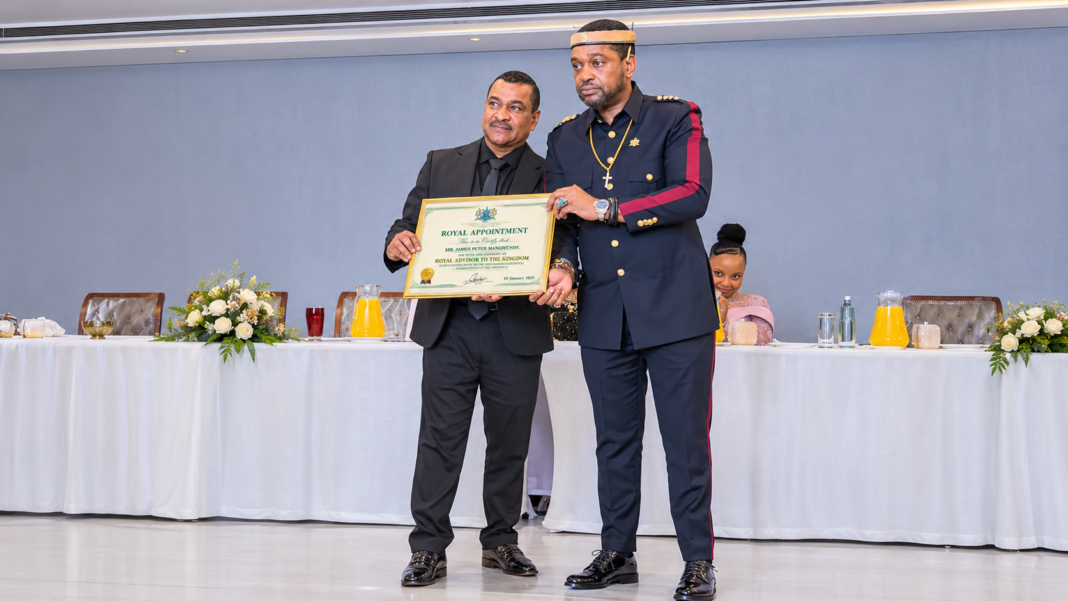
At the event, Mr Fayzel Muhomad Raschid was appointed Royal Ambassador of Social Cohesion and Economic Development to King Misuzulu.
According to Moulana Milanzi, the initiative seeks to strengthen relationships between communities, encourage entrepreneurship and investment, and create opportunities for disadvantaged communities.
“The Bayede Islamic Business Ummah has the responsibility to promote, unite, strengthen relationships between different communities, and encourage economic development as well,” he said.
He also emphasised the responsibility of Muslim communities to assist those in need.
“As Muslims, we have to serve the poorest of the poorest as well,” he said.
A significant message amid anti-Muslim sentiment
The king’s public praise of Islam comes at a time when Muslims in South Africa continue to face hostility and suspicion over their religious identity.
Rather than portraying Islam as a foreign influence or a source of division, the Zulu monarch pointed to the religion and the bonds it creates among its followers as an example worthy of recognition.
His remarks also challenged the perception of Islam as a religion belonging to one ethnic or cultural community, highlighting its presence and relevance among African peoples.
For Moulana Milanzi, the king’s remarks were also a reminder of the responsibility Muslims bear in representing their religion, particularly when others are observing and learning from them.
“The message from King Zwelithini reminded us as well that we need to also look after ourselves and make sure that our religion also is well represented because there are a lot of people who are watching and they are also learning,” he said.
The occasion highlighted an opportunity for Muslims to promote a greater understanding of Islam and its teachings beyond their own communities while remaining committed to their religious identity.
“So as Muslims, SubhanAllah, let us remain firm in our faith, proud of our African heritage, and committed to serving humanity,” Moulana Milanzi said.