
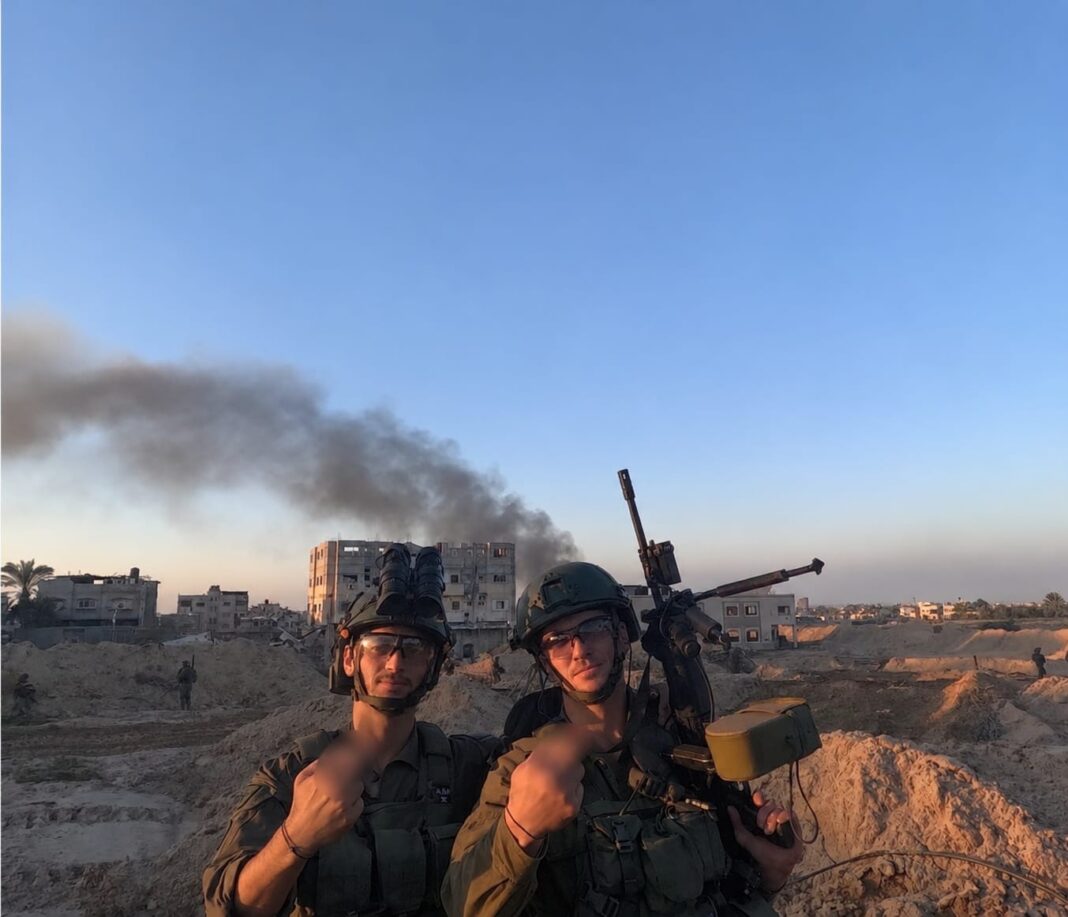

While South Africa pursues Israel before the International Court of Justice (ICJ) over allegations of genocide in Gaza, its own citizens who have served in the Israeli occupation army have yet to face prosecution at home, raising troubling questions about whether the country’s commitment to international justice is being matched by action against those who may have participated in an armed force accused of grave atrocities against Palestinians.
The apparent disparity becomes particularly striking when compared with the case of South African citizen Ziyadh Hoorzook, who was arrested in January 2025 and charged with terrorism financing over an R11,500 ($700) cryptocurrency transaction made in 2017. Hoorzook maintains that the funds were intended to support humanitarian relief in war-torn Syria, while prosecutors allege that the money was transferred to an organisation linked to terrorist financing. His case has proceeded through the criminal justice system, with court records confirming pre-trial proceedings in January 2027.
While Hoorzook has faced criminal proceedings over a financial contribution he maintains was intended for humanitarian purposes, questions persist over the absence of prosecutions against South Africans who have served in an occupation army accused of committing war crimes, crimes against humanity and genocide in Gaza. Although the cases involve different legislation and legal allegations, the contrast raises a fundamental question about the consistency of South Africa’s approach to investigating possible involvement in foreign conflicts.
The Israeli occupation forces’ operations in Gaza have devastated entire neighbourhoods, displaced families and destroyed critical civilian infrastructure. Allegations involving unlawful killings, starvation as a method of warfare and attacks on civilians have placed Israel’s military conduct under intense international scrutiny. Yet, according to lawyer and human rights activist Sirhaan Che Khan, South Africans who have served within that same military have not faced prosecution under the country’s foreign military assistance legislation.
Khan says South African authorities must account for the apparent disparity in how the Regulation of Foreign Military Assistance Act 15 of 1998 is being enforced, arguing that the legal framework already exists to investigate and prosecute individuals who unlawfully participate in foreign military activities.
“Yet there remains no prosecution of South Africans for serving in the Israeli Defense Forces,” he said.
International accountability, domestic inaction
His concerns arise against the backdrop of international legal proceedings examining Israel’s conduct in Gaza. In November 2024, the International Criminal Court (ICC) issued arrest warrants for Israeli Prime Minister Benjamin Netanyahu and former Defence Minister Yoav Gallant over alleged war crimes and crimes against humanity, including starvation as a method of warfare, murder, persecution and attacks directed against civilians. The warrants are not convictions but underscore the seriousness of the allegations surrounding Israel’s military campaign.
South Africa has separately pursued its genocide case against Israel at the ICJ, placing the protection of Palestinians and accountability under international law at the centre of its foreign policy.
The issue is not without a legislative framework. The Regulation of Foreign Military Assistance Act regulates the provision of foreign military assistance by South African citizens and other persons falling within its scope. It requires authorisation for certain forms of foreign military assistance, including recruitment, military services and operational support.
In December 2023, the Department of International Relations and Cooperation (DIRCO) warned South Africans against joining the Israeli occupation army without the necessary authorisation. The department specifically cautioned that South African citizens and permanent residents who joined the IDF without permission could face prosecution under domestic legislation.
DIRCO further warned that participation in foreign armed forces could contribute to violations of international law and the commission of international crimes, potentially exposing those involved to legal consequences in South Africa.
However, no South Africans who have served in the Israeli occupation army have been prosecuted to date, according to Khan.
The absence of prosecutions is particularly concerning given the gravity of the alleged violations committed during Israel’s military campaign in Gaza. While service in the IDF does not itself establish individual responsibility for war crimes, Khan’s concerns raise questions about whether South African authorities have adequately investigated possible unlawful military participation or involvement in international crimes.
Prosecutions over the Russia-Ukraine war raise questions
He drew attention to recent cases involving alleged recruitment and participation in the Russia-Ukraine war, questioning why the same legislation has not resulted in prosecutions involving South Africans who served in Israel’s occupation army.
In December 2025, five accused appeared in the Kempton Park Magistrates’ Court on charges relating to alleged recruitment and travel to join the Russian military.
More recently, nine Zimbabwean nationals were arrested by the Hawks on 8 November 2026 at OR Tambo International Airport and a hotel in Bruma over alleged plans to travel to participate in the Russia-Ukraine war. Five appeared in the Kempton Park Magistrates’ Court, while four appeared in the Johannesburg Magistrates’ Court on charges relating to the Regulation of Foreign Military Assistance Act.
“These cases demonstrate that the authorities can investigate, intercept and bring charges concerning unlawful foreign military assistance, even before individuals reach these foreign militaries,” Khan said.
He argued that the absence of comparable action against South Africans who served in the IDF raises serious questions about the consistency of law enforcement, particularly when that military faces grave allegations of atrocities against a civilian population.
“South Africans who unlawfully serve in the military enforcing the oppressive genocidal system must face investigation and prosecution,” he said.
Calls for the NPA to explain lack of prosecutions
Khan called on the National Prosecuting Authority (NPA) to account for any investigations undertaken into South Africans serving in the Israeli occupation army and explain why no prosecutions have followed.
“The NPA must account for investigations undertaken and explain why no South Africans participating in the Israeli military have been prosecuted to this day,” he said.
His concerns go beyond the question of unauthorised military service. They raise a broader issue of whether South Africa is prepared to examine the possible involvement of its own citizens in military operations associated with alleged violations of international humanitarian law, including crimes against Palestinian civilians.
The prosecution of individuals accused of involvement in other foreign conflicts, alongside the apparent absence of comparable proceedings involving South Africans who served in Israel’s occupation army, has brought the question of consistent legal enforcement into sharper focus.
Khan added that South Africa’s commitment to accountability for crimes against Palestinians must be reflected in its domestic legal processes.
“There must be consistency between the principles we defend internationally and the decisions we make at home,” Khan said.
For a country that has positioned itself internationally as a defender of Palestinian rights and a leading voice demanding accountability for Israel’s conduct in Gaza, the apparent absence of domestic prosecutions raises difficult questions about the consistency of its legal and political commitments.
As South Africa continues to pursue accountability for genocide and other grave violations against Palestinians, the question is whether its own authorities will investigate citizens who may have unlawfully served in the Israeli occupation army or whether those individuals will remain beyond the reach of the very laws intended to regulate such participation.


