
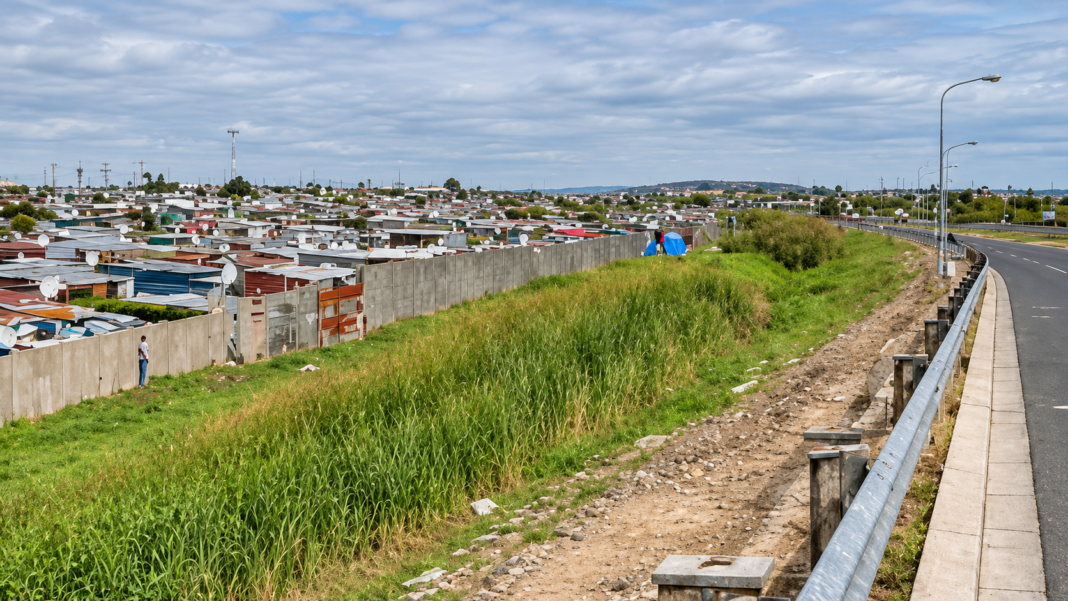

Civic groups and opposition parties slam Cape Town’s 9km concrete barrier along the N2 as divisive, saying the money should go towards housing and basic services.
The City of Cape Town’s plan to build a R114 million, nine-kilometre concrete safety wall along the N2 highway is facing fierce opposition, with critics accusing the DA-led municipality of building walls around poverty instead of addressing it.
The project, dubbed the “N2 Edge” by the City, is in its early planning stages. The City says the proposed barrier will help curb crime along one of Cape Town’s most dangerous stretches for motorists and tourists. Mayor Geordin Hill-Lewis, who is standing for a second term in Wednesday’s municipal elections, has defended the project as a commuter safety intervention. Opposition parties disagree.
ANC: ‘Build homes, not walls’
ANC Western Cape manager Faiez Jacobs said the wall was a painful reminder of apartheid-era planning. “Build homes, not walls. The N2 wall is another painful reminder of apartheid in Cape Town. Instead of bringing our people together, the DA is putting up more walls between us, separating, dividing and ruling us,” he said.

He argued that spending R114 million on a 9km wall along the N2 could not be justified when more than 270,000 households in Cape Town still live in informal settlements. “Our people need jobs, safety, security and dignity. They do not need high walls that hide our poverty from their view.”
He cited the City’s own figures: 95% of formal homes have water inside, compared with only 16% in informal settlements. “This is inequality that we must fight,” he said.
Jacobs also drew a parallel with Palestine. “These walls remind us of Israel’s high barriers separating Palestinian communities and creating open-air prisons. We cannot have first-class and second-class Capetonians.”
He claimed that overwhelming public opposition had been ignored. “In a recent public consultation, more than 16,000 people out of 17,000 opposed this wall. Why are our voices not being heard?”
“To us, this is the same divide-and-rule, control and kragdadig mentality. We want safer roads, but we also want safer homes, decent housing and communities where everyone belongs. Stop building walls around poverty. Start breaking down the barriers that keep our people poor.”
“We condemn this wall and we reject the politics of separation. Cape Town belongs to all its people,” Jacobs added.
SDP: Unconstitutional and misdirected
The Service Delivery Party (SDP), contesting Wednesday’s municipal elections for the first time, also condemned the project, saying it violated the spirit of the Constitution. Co-founder Farouk Cassiem said: “We are wholly supportive of measures that will allow for the prevention of the problems that have been occurring on that stretch of the road on which the mayor wants to build a R114 million concrete wall.”
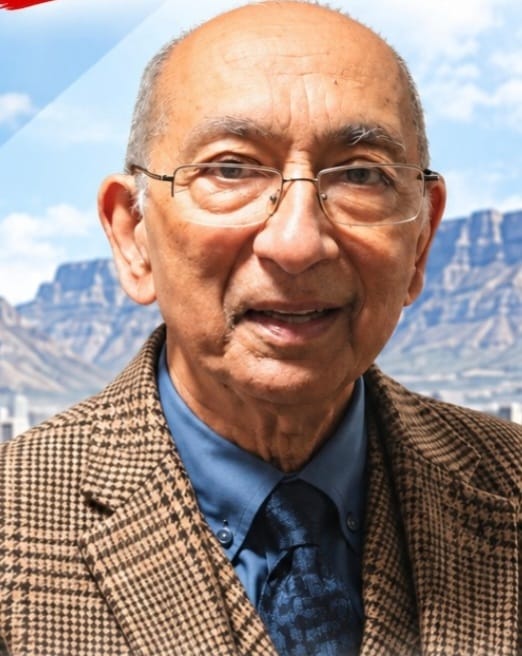
“The problem is that for decades, there has been underdevelopment, spatial exclusion and huge unemployment, yet the City’s response has been to keep expanding its security apparatus.”
He pointed out that the Safety and Security Directorate now accounts for roughly R6.8 billion in operating expenditure — about 9% of the City of Cape Town’s total operating budget. “In spite of this humongous amount being spent on security, the underlying conditions that feed gangsterism and crime remain largely unaddressed.”
Cassiem argued that Sections 152 and 153 of the Constitution require local government to prioritise basic needs and promote social and economic development. “The spending of ever larger sums of money on reactive policing and physical barriers, while not investing sufficiently in development, will never solve the problem. The result is that the budget for security will go on rising, but the problem will be expanding at the same time.”
“Cape Town would be better served if the DA, or any other party that governs it, directed a greater share of its resources towards genuine development. We need more formal jobs, affordable housing, functional services and, most particularly, opportunities for young people in affected communities to have jobs.”
“If we do that, there will be a better outcome than building a concrete wall. We are totally opposed to the building of the wall.”
Activist: Yes to safety, but double the investment in communities
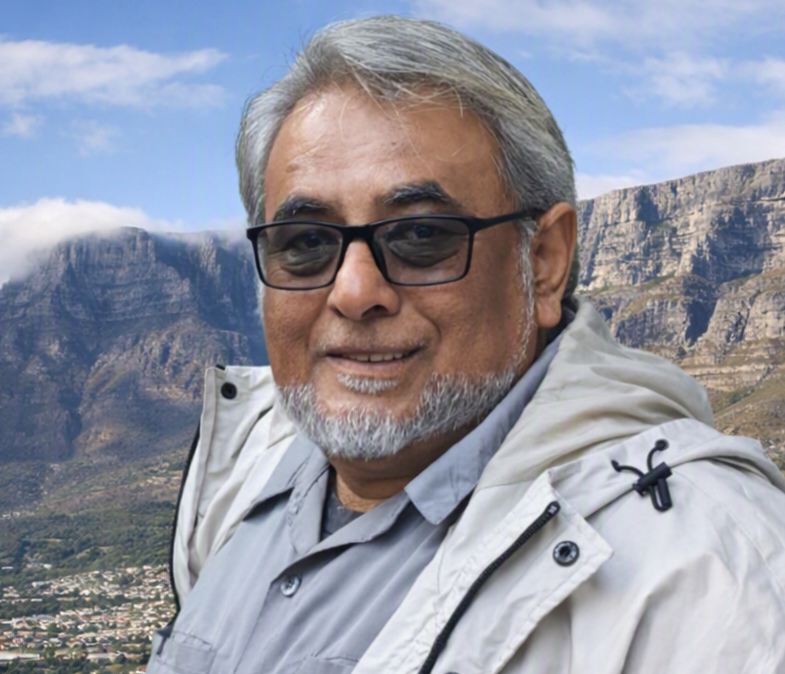
Anti-crime activist Iemrahn Mukkadam offered a conditional position, acknowledging the potential safety benefits of the wall while calling for greater investment in surrounding communities.
“As an anti-crime activist, I do believe the wall along the N2 will improve safety for commuters and tourists, as we’ve seen too many tragic incidents there. But we can’t let the City treat this as a simple fix. The root causes of crime lie in the socioeconomic conditions of these communities living along the N2.”
He proposed that communities should only agree to the wall if the City matched the expenditure with double the investment in social crime prevention. “This includes building community safety structures, empowering community patrols and creating employment. I also advocate for replicating the success of the walking bus model, which once safeguarded schoolchildren. It could create safe corridors not just for learners, but for all travellers, anchoring safety in the hands of the community.”
City: Still early, public participation to come
The City of Cape Town says the project remains in its early stages and that public participation will follow. Councillor Rob Quintas, Mayoral Committee Member for Urban Mobility, said: “The N2 Edge project remains in the early planning phase, and a number of technical, statutory and governance processes are still underway.”
“As these processes progress, the City will engage relevant stakeholders, including impacted communities and residents of Cape Town, and provide further information at the appropriate stages of the project.”
“All comments that are submitted as part of the public engagement process will be considered once the process has commenced. The City will inform the public well ahead of time when this process will commence. Safe to say, it is anticipated to be only in the new year.”


